
Full Contour Zirconia for Bruxism: Complete Guide
Table of Contents
Bruxism patients put restorations through forces that most conventional materials simply aren’t built to survive long-term, which is exactly why full contour zirconia for bruxism has become the default recommendation for many clinicians dealing with heavy occlusal loads. Layered ceramics chip, composites wear down, and even some monolithic materials fracture under repeated grinding forces that bruxers generate night after night.
In these cases, material selection isn’t just an esthetic decision it’s a structural one. Choosing the wrong restoration for a confirmed bruxer often means revisiting the same tooth within a year or two, which adds cost and chair time for both the patient and the practice.
This guide covers the clinical reasoning behind full-contour zirconia in bruxism cases, when it’s the right call, and what factors determine long-term success.
What Is Full Contour Zirconia for Bruxism and Why Does It Matter for Bruxism?
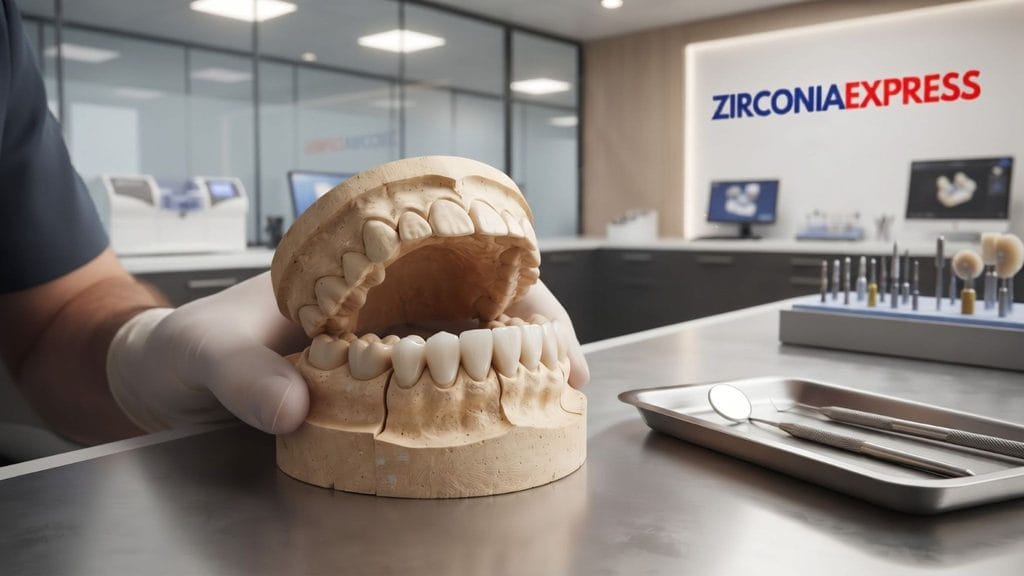
Full Contour Zirconia for Bruxism refers to a monolithic restoration milled entirely from a single block of zirconia, with no porcelain layering added on top for esthetics. This construction eliminates the weakest link in traditional layered restorations: the porcelain veneer, which is the part most prone to chipping under heavy parafunctional forces.
For bruxism patients specifically, this matters because the restoration needs to withstand repetitive, high-magnitude forces that occur largely during sleep, when patients have no conscious control over bite force. A material without a fracture-prone layer removes one of the most common failure points seen in bruxers over time.
How Does Full Contour Zirconia Perform Under Heavy Occlusal Forces?
Monolithic zirconia offers significantly higher flexural strength than layered ceramic systems, which translates directly into better resistance against the repetitive loading patterns typical of bruxism. Where a porcelain-veneered crown might chip or fracture under sustained grinding, a full contour zirconia restoration distributes that force through a single, structurally uniform material.
Clinical data consistently shows lower chipping and fracture rates with monolithic zirconia compared to porcelain fused to metal or layered zirconia in high force patients. This strength advantage is precisely why zirconia crowns for bruxism are increasingly favored over traditional layered options in restorative planning.
When Should You Choose Full Contour Zirconia for Bruxism Over Other Materials?
Not every patient needs full contour zirconia, but certain clinical indicators make it a strong choice. Recognizing these signs early helps avoid restorative failures down the line.
Consider full contour zirconia when you observe the following in a patient:
- Diagnosed or suspected bruxism, confirmed through wear facets, muscle tenderness, or patient-reported grinding
- Heavy occlusal wear patterns already visible on existing natural teeth or prior restorations
- History of repeated restoration failure, particularly chipped porcelain or fractured crowns
- Limited interocclusal space, where a thinner but strong material is needed
- Posterior restorations under high functional load, especially in molars bearing the brunt of grinding forces
When several of these factors overlap, full contour zirconia bruxism crowns typically outperform layered alternatives in long-term durability.
What Are the Advantages of Full Contour Zirconia for Bruxism Patients?
Beyond raw strength, Full Contour Zirconia for Bruxism offers several practical advantages specific to managing bruxism cases in a restorative practice. These benefits extend past durability into esthetics, maintenance, and predictability.
Key advantages include:
- Reduced risk of chipping, since there’s no separate porcelain layer to fracture off
- Simplified adjustments, as occlusal corrections can be polished directly into the zirconia surface
- Strong wear resistance, which protects opposing natural dentition when properly polished
- Consistent long-term performance, reducing the need for frequent remakes or repairs
- Improved esthetics in modern formulations, since newer zirconia materials offer better translucency than earlier generations
These combined factors make full contour zirconia a practical, lower maintenance option for patients whose grinding habits would compromise most other restorative materials.
Which Is Better for Bruxism, Full Contour Zirconia or Layered Zirconia Crowns?
Layered zirconia crowns combine a strong zirconia core with a porcelain overlay for improved esthetics, but that porcelain layer remains vulnerable to the same chipping risk seen in traditional PFM crowns. For patients without significant parafunctional habits, this trade-off is often acceptable since esthetics may take priority.
This distinction becomes especially important when practices are deciding between materials purely based on patient preference rather than clinical risk. A patient who insists on the most natural-looking option may not realize the long-term trade-off they’re accepting. In these situations, walking patients through the actual failure data for their specific habit pattern helps set realistic expectations. This is often where Full Contour Zirconia Bruxism Crowns become the more defensible recommendation, even if the initial esthetic appeal seems slightly lower.
For confirmed bruxers, however, full contour zirconia is generally the more defensible choice clinically. The absence of a porcelain layer removes the primary failure point, making full contour restorations more predictable for patients who exert sustained, uncontrolled occlusal force during sleep.
How Does Opposing Dentition Wear Factor Into Treatment Planning?
One legitimate concern with monolithic zirconia has historically been its potential to wear opposing natural teeth if the surface isn’t properly polished. Modern high-translucency zirconia formulations, when finished with proper polishing protocols, have significantly reduced this concern compared to earlier generations of the material.
Clinicians should still verify polish quality before cementation, since a poorly finished zirconia surface can behave more abrasively against opposing enamel. Working with a laboratory that follows consistent polishing protocols removes much of this variability from the equation entirely.
What Should Dentists Communicate to Patients About Full Contour Zirconia Bruxism Cases?
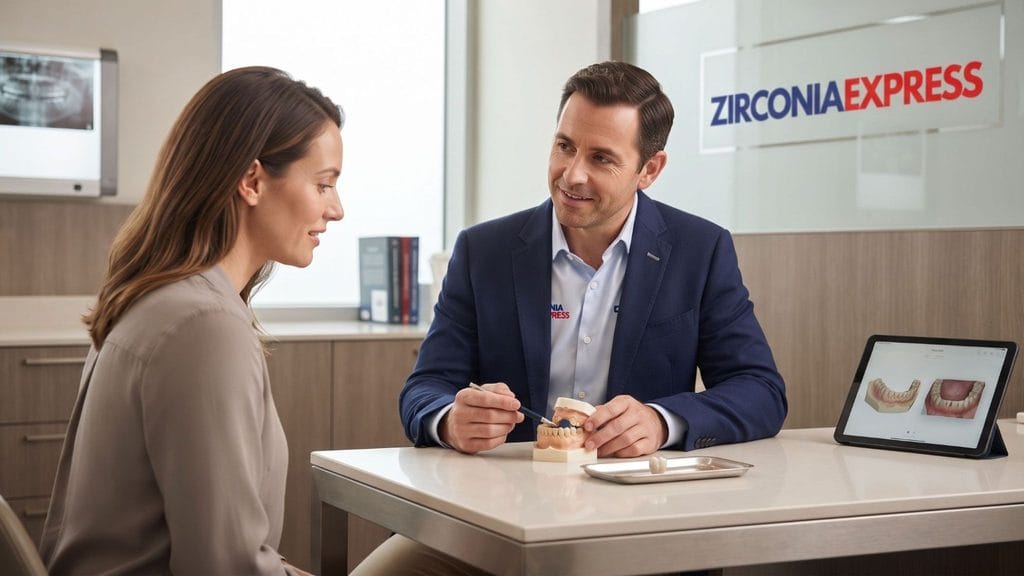
Patient education plays a meaningful role in the long-term success of any bruxism restoration, regardless of material choice. Even the strongest zirconia crown performs better with supporting behavioral management alongside it.
Dentists should cover a few key points with bruxism patients receiving zirconia restorations:
- Night guard use remains important, since a strong crown reduces failure risk but doesn’t eliminate the underlying grinding habit.
- Some occlusal adjustment may be needed over time, as bite patterns can shift gradually even with a durable restoration in place.
- Esthetic expectations should be set clearly, since full contour zirconia, while esthetic, differs slightly in appearance from layered options in certain lighting conditions.
- Follow-up visits matter, allowing early detection of any wear or bite changes before they become larger issues.
Setting these expectations upfront reduces confusion later and reinforces the clinical reasoning behind the material choice.
Why Partner With Zirconia Express for Your Full Contour Zirconia Bruxism Cases?
Getting consistent results with full contour zirconia depends heavily on the laboratory producing the restoration, not just the material itself. Milling precision, polishing protocol, and design accuracy all directly affect how well a crown performs in a high-force bruxism case.
Zirconia Express produces premium zirconia crowns and bridges backed by up to a 5-year warranty, giving dental practices a dependable option for patients who need restorations built to withstand sustained occlusal stress. High-strength zirconia combined with careful attention to natural esthetics means practices don’t have to choose between durability and a restoration that looks right in the mouth.
For practices working within digital workflows, Zirconia Express also offers AI-powered digital dental cases with three anatomical shape options, allowing for precise, efficient case planning that fits directly into modern digital dentistry protocols. This combination of consistent quality and reliable turnaround time makes it easier for dentists to plan full contour zirconia bruxism cases with confidence rather than uncertainty about lab variability.
If you’re looking for a dental laboratory partner that understands the specific demands of bruxism restorations, reaching out to Zirconia Express is a practical next step for your practice.
Conclusion
Full contour zirconia for bruxism cases offers a level of structural reliability that layered restorations often can’t match under sustained, high force grinding patterns. Choosing this material comes down to matching the restoration to the patient’s actual occlusal demands rather than defaulting to whatever’s most commonly used in the practice.
For clinicians managing patients with confirmed parafunctional habits, dental crowns for bruxism built from full contour zirconia remain one of the more predictable long-term solutions available today. Working with a laboratory that understands the clinical nuances of these cases makes the difference between a restoration that lasts and one that needs early replacement.
FAQ’s
Is full contour zirconia strong enough for severe bruxism cases?
Yes, full contour zirconia offers high flexural strength and is generally considered one of the more durable options for patients with severe grinding habits, particularly compared to layered ceramic restorations.
Does full contour zirconia wear down opposing natural teeth?
Properly polished full contour zirconia has a significantly lower abrasive effect on opposing dentition compared to earlier generations of the material, though polish quality from the laboratory plays a major role in this outcome.
Can full contour zirconia crowns be adjusted after cementation?
Yes, occlusal adjustments can be made directly on the zirconia surface, though proper repolishing after any adjustment is important to maintain smoothness and reduce wear on opposing teeth.
Do patients still need a night guard after receiving zirconia crowns for bruxism?
Yes, a night guard is still recommended even with durable zirconia restorations, since it protects the overall dentition and reduces ongoing strain from the underlying grinding habit.
How long do full contour zirconia bruxism crowns typically last?
With proper case selection, correct occlusal adjustment, and continued use of protective measures like a night guard, full contour zirconia crowns can offer many years of reliable service in bruxism patients.