
Translucent Zirconia vs Lithium Disilicate: A Clinical Guide
Translucent Zirconia vs Lithium Disilicate comes down to a trade-off between strength and esthetics. Lithium disilicate offers superior natural light behavior and adhesive bonding, while translucent zirconia offers higher fracture resistance and broader indications, especially for posterior and multi-unit cases.
The choice comes down to strength versus esthetics. Lithium disilicate offers better natural light behavior and a strong adhesive bond, making it ideal for anterior and highly visible restorations. Translucent zirconia offers higher fracture resistance and wider indications, especially for posterior crowns and multi-unit bridges. This guide compares both on strength, appearance, bonding, thickness, and clinical use, so you can match the right material to each case.
This guide compares both materials across strength, appearance, bonding, thickness, and clinical indications, so you can match the material to the case instead of defaulting to habit.
What Is the Difference Between Translucent Zirconia and Lithium Disilicate?
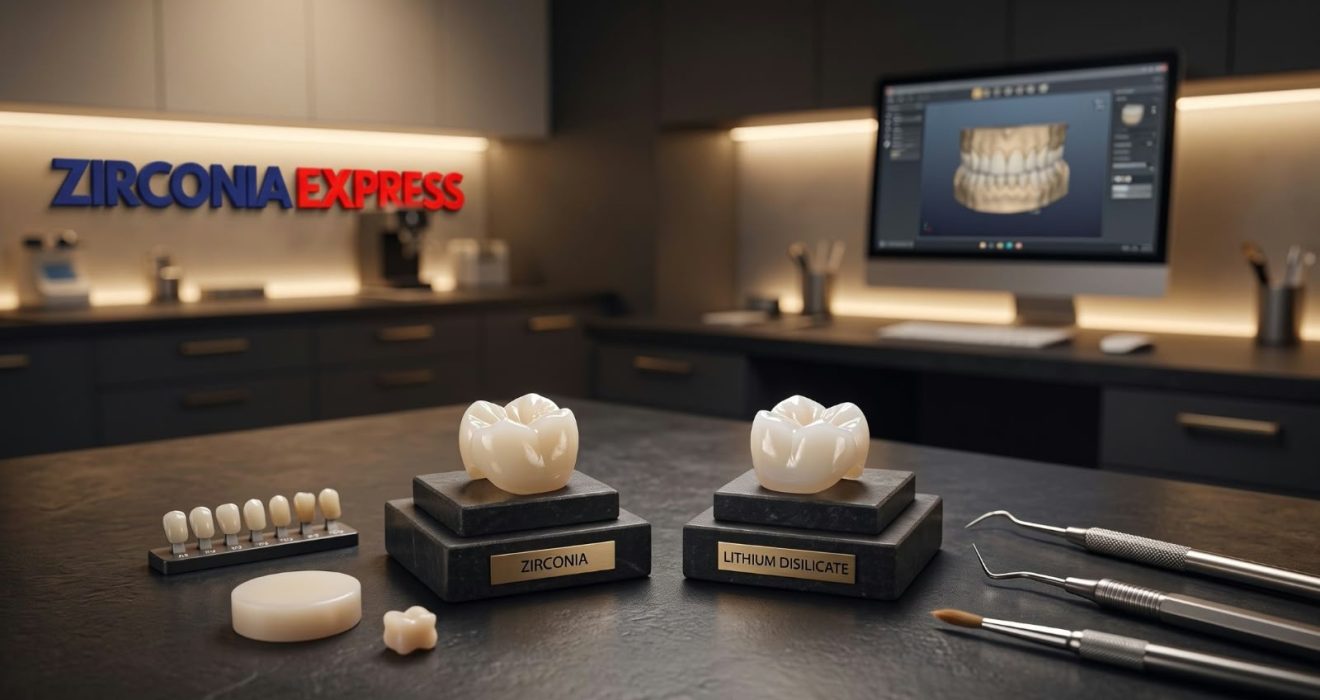
Translucent zirconia is a polycrystalline ceramic with higher yttria content than conventional zirconia, allowing more light to pass through the restoration. Lithium disilicate is a glass ceramic reinforced with interlocking crystals, and it has long been valued for its natural, enamel-like translucency.
These structural differences drive almost every clinical difference between them. Zirconia relies on a dense crystalline structure for strength, while lithium disilicate relies on a glass matrix that can be etched and bonded to tooth structure.
How Do Strength and Durability Compare?
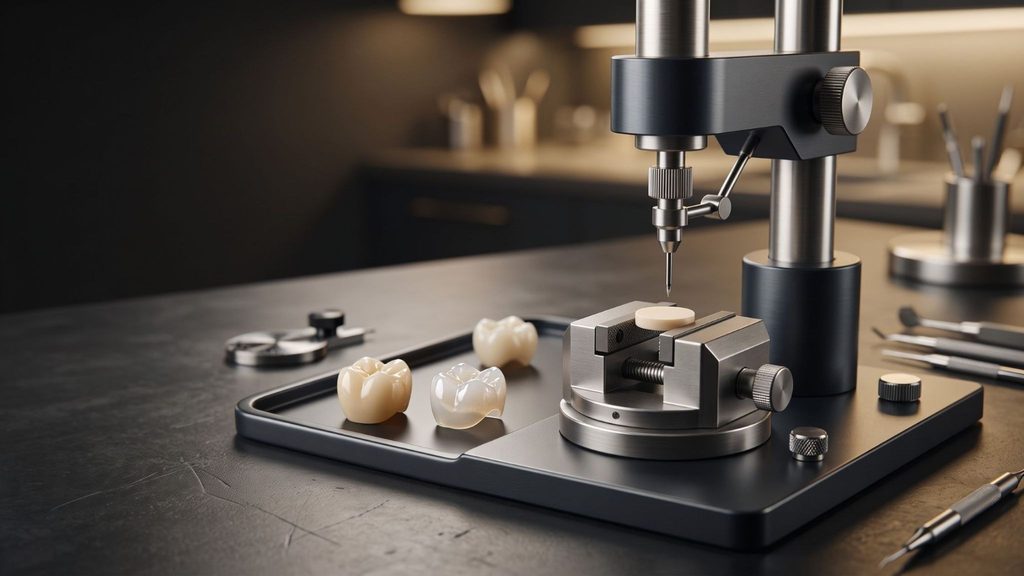
Translucent zirconia is generally stronger than lithium disilicate. Typical flexural strength for lithium disilicate sits around 360 to 500 MPa, while high translucency zirconia formulations usually reach several hundred MPa higher, and conventional zirconia exceeds that again.
When you look at HT zirconia vs lithium disilicate durability, zirconia offers greater resistance to fracture under heavy load, particularly in the molar region. Lithium disilicate performs very well in single crowns, but it carries a higher fracture risk in high-stress situations such as bruxism or thin occlusal reduction.
Manufacturer formulations vary, so always check the published data for the specific product you plan to use.
Which Material Looks More Natural?
Lithium disilicate still has the edge in raw esthetics. Its translucency and light scattering closely resemble natural enamel, which makes it a favorite for highly visible anterior teeth.
Translucent zirconia has improved dramatically in recent years and now delivers very acceptable esthetics for most cases, especially when stained and glazed with care. The difference becomes most noticeable in patients with high esthetic expectations, bright natural teeth, or a high smile line.
Shade matching also depends on the underlying tooth. A dark prep or a discolored abutment shows through lithium disilicate more easily, while zirconia masks discoloration better.
What Are the Main Translucent Zirconia Crown Benefits?
The translucent zirconia crown benefits that matter most in daily practice are strength, versatility, and thinner preparation requirements. These advantages make it a practical choice across a wide range of cases.
- High fracture resistance: It handles heavy occlusal loads, including parafunctional habits.
- Wide indications: It works for single crowns, long span bridges, and implant restorations.
- Conservative thickness: It can be fabricated with thinner minimum dimensions than most glass ceramics.
- Masking ability: It hides discolored preparations or metal cores more effectively.
- Monolithic fabrication: It avoids veneer layer chipping because no porcelain layer is needed.
What Are the Main Lithium Disilicate Crown Benefits?
The lithium disilicate crown benefits center on esthetics and adhesion. Together, they make it the go-to option for highly visible, conservative restorations.
- Excellent esthetics: It provides natural translucency and depth in the anterior zone.
- Strong adhesive bond: It can be etched with hydrofluoric acid and bonded with resin cement, which supports conservative preparations.
- Versatile restoration types: It suits veneers, inlays, onlays, and single crowns.
- Proven track record: Years of clinical data support its use in single-unit restorations.
- Easier tooth preservation: Adhesive bonding often allows less aggressive reduction.
How Do the Two Materials Compare Side by Side?
The table below summarizes the practical differences clinicians weigh most often.
| Factor | Translucent Zirconia | Lithium Disilicate |
| Strength | Higher | Moderate |
| Esthetics | Very good | Excellent |
| Bonding method | Primer with resin cement or conventional cementation | Etch and adhesive bonding |
| Best location | Posterior and multi-unit cases | Anterior and conservative cases |
| Fracture risk in heavy load | Low | Higher |
| Masking dark preps | Better | Limited |
Use this as a starting point, then adjust for each patient’s occlusion, tooth color, and esthetic goals.
How Does Cementation and Bonding Differ?
Lithium disilicate bonds strongly through hydrofluoric acid etching and silane treatment, followed by adhesive resin cement. This produces a high bond strength and supports retention even with shorter or more conservative preparations.
When comparing zirconia vs lithium disilicate crowns, bonding is a key difference. Zirconia does not etch in the same way. Surface preparation usually involves airborne particle abrasion and an MDP-containing primer, followed by a resin cement or conventional cementation depending on retention. A well-retentive preparation lets you cement zirconia conventionally, which can simplify the appointment.
What Preparation Thickness Does Each Material Need?
Lithium disilicate generally needs more reduction, often around 1.0 to 1.5 millimeters depending on the product and location. Zirconia can often be fabricated thinner, which helps when interocclusal space is limited or when you want to preserve tooth structure on an already compromised tooth.
This difference affects case planning. If the tooth has limited height or a conservative preparation is the goal, zirconia gives you more room to work with while keeping strength. If the preparation can support the extra reduction and esthetics is the priority, lithium disilicate becomes a practical option.
Always follow the manufacturer’s minimum thickness guidelines, since going below them raises the fracture risk for any ceramic.
When Should You Choose Each Material?
A simple decision framework helps you choose with confidence. Start with the location, then check the load, then confirm the esthetic demand.
- Anterior single crown, high esthetics: Lithium disilicate is often the first choice.
- Posterior molar with heavy occlusion: Translucent or conventional zirconia is usually safer.
- Bruxism or parafunction: Choose zirconia for the higher fracture resistance.
- Multi-unit bridge: Zirconia is the practical option for longer spans.
- Discolored abutment or limited space: Zirconia handles masking and thin preparation better.
- Conservative veneer, inlay, or onlay: Lithium disilicate bonds and performs well.
When you compare zirconia vs lithium disilicate crowns this way, the right answer usually becomes clear from the case itself rather than from habit.
How Does the Lab You Choose Affect Results?

Material choice only sets the ceiling. Milling accuracy, sintering control, shade work, and finishing determine how close you actually get to it. Even a high-quality restorative material can deliver inconsistent results when the laboratory lacks precise equipment, skilled technicians, or standardized production procedures.
An unpolished or poorly glazed zirconia surface can wear opposing teeth, and an unevenly crystallized glass ceramic can show shade inconsistencies. A laboratory that follows consistent protocols reduces these variables and gives you predictable results. Careful quality control at every stage, from digital design and milling to final staining, polishing, and inspection, helps ensure the restoration meets both functional and aesthetic expectations.
Why Partner With Zirconia Express for Zirconia Restorations?
Choosing the right material is only half of the equation, because lab quality decides how that material performs in the mouth. A reliable partner takes the guesswork out of fit, shade, and finish.
Zirconia Express produces premium zirconia crowns and bridges made from high-strength zirconia, with natural esthetics and an up to 5-year warranty. That combination gives your practice dependable restorations for posterior, multi-unit, and implant cases.
For practices using modern workflows, Zirconia Express also offers AI-powered digital dental cases with three anatomical shape options, plus high precision and compatibility with digital dentistry. Consistent quality and reliable turnaround help you schedule with confidence. Zirconia Express is ready to support your material choices and case planning.
Conclusion
The choice between Translucent Zirconia vs Lithium Disilicate is not about one winning every time. It is about matching strength, esthetics, bonding, and thickness to the demands of each patient and tooth.
As your next step, review your upcoming cases and sort them by location, occlusal load, and esthetic demand, then choose the material that fits each one. Understanding zirconia vs lithium disilicate crowns helps you make that call quickly and defend it clinically.
FAQ’s
Is translucent zirconia stronger than lithium disilicate?
Yes, in general. High-translucency zirconia usually has higher flexural strength than lithium disilicate, which makes it the safer option for posterior and high-load cases.
Which material is more esthetic for front teeth?
Lithium disilicate is generally more esthetic for anterior teeth because of its enamel-like translucency. Translucent zirconia has improved, but it can still look slightly less lifelike in demanding cases.
Can lithium disilicate be used for bridges?
Lithium disilicate is mainly used for single units, veneers, inlays, and onlays. For multi-unit bridges, zirconia is usually the more reliable choice.
How is zirconia bonded differently from lithium disilicate?
Lithium disilicate is etched and bonded with adhesive resin cement. Zirconia is typically air-abraded and treated with an MDP primer, or cemented conventionally on retentive preparations.
Which material is better for patients who grind their teeth?
Translucent or conventional zirconia is usually better for bruxism because of its higher fracture resistance. Lithium disilicate carries a greater risk of chipping or fracture under heavy parafunction.