

PFZ vs PFM Crowns: Which Dental Restoration Is Better?
When weighing PFZ vs PFM Crowns, you are choosing between a ceramic core with no metal and a well-established metal framework. With a zirconia core, crowns often have a more natural appearance and a friendlier response from the gingiva. Metal-based crowns have a long record of proven performance and sturdy durability.
Plenty of clinicians still pick between these crowns based on their training or on the lab’s first recommendation. That approach works for routine cases, but it can lead to a visible gray margin on a high smile line or a chipped veneer on a heavy bite. Treating the choice as a deliberate clinical decision prevents both outcomes and cuts costly remakes.
This guide compares both restorations across appearance, durability, margins, cost, and clinical use, so you can match the crown to the patient instead of defaulting to habit.
What Are PFZ and PFM Crowns?
A PFZ crown is a porcelain-fused-to-zirconia restoration. It has a zirconia core that provides strength, covered by a layer of porcelain that provides shade and translucency.
A PFM crown is a porcelain-fused-to-metal restoration. It has a metal alloy substructure, covered by porcelain that is fired onto the metal to create a tooth colored surface.
Both use a veneering porcelain for the final appearance. What truly sets them apart is the material beneath the porcelain, since the core determines strength, how light passes through, and the appearance at the gum line.
How Do PFZ and PFM Crowns Change Everyday Dental Practice?
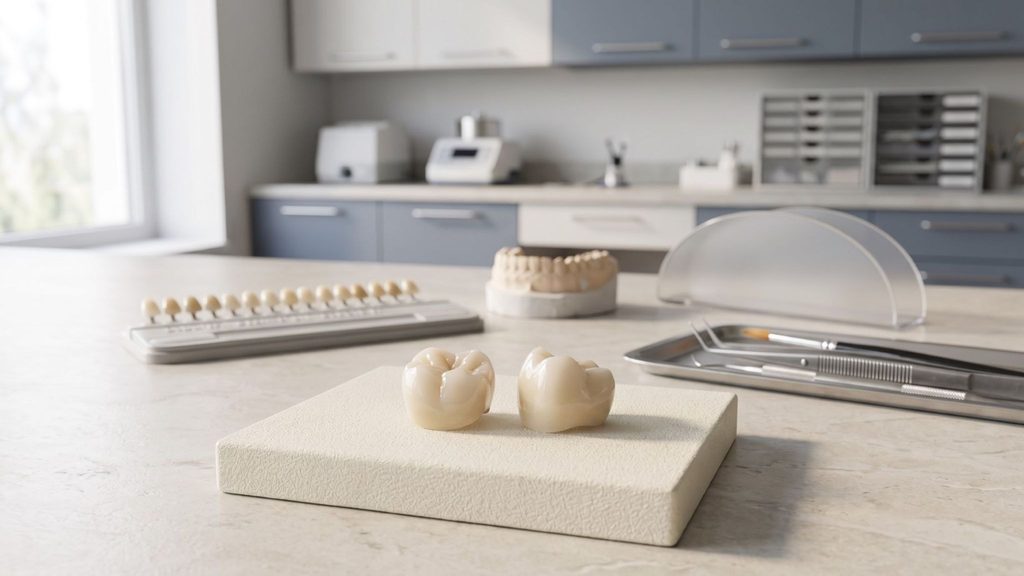
The main PFZ and PFM crown differences are esthetics, biocompatibility, thickness requirements, and imaging behavior. These factors shape treatment planning more than any single strength number does.
Many practices keep prescribing PFM out of habit because it has always worked. That is reasonable, but it can mean missing out on better esthetic and tissue outcomes in cases where a metal-free option would serve the patient well.
Understanding these differences helps you explain your choice clearly to patients. It also helps you work with your lab to specify the right core material the first time.
Which Looks More Natural, PFZ or PFM?
PFZ looks more natural in most cases. A zirconia core is light colored and lets some light pass through, which gives the crown more depth and a more lifelike glow.
PFM crowns have an opaque metal core that blocks light. This can make the restoration look slightly flat, and it can leave a dark line at the gingival margin if the gum recedes.
The esthetic gap matters most in the anterior zone and for patients with thin or light colored gum tissue. In posterior teeth that are rarely visible, the difference is easier to accept.
Lighting also plays a role. A PFM crown can look acceptable under operatory light yet appear noticeably opaque in natural daylight, while a PFZ crown tends to keep its depth across different lighting conditions. Sharing a clear shade photo with your lab helps either crown reach its esthetic potential.
How Do Strength and Durability Compare?
Both restorations are strong, but they fail in different ways. PFM benefits from a metal framework that handles stress well and has decades of clinical evidence behind it.
Zirconia cores are very strong too, yet the porcelain layered on top can chip in either type. Some studies report higher veneer chipping with layered zirconia than with PFM, although modern sintering, cooling protocols, and anatomic core designs have improved results considerably.
When you weigh porcelain fused to zirconia vs. metal, the practical question is where the stress will fall. In heavy load areas, support the porcelain with a well-designed core and keep the veneer layer thin and even.
Repairability is another point worth noting. A small porcelain chip on either crown can often be smoothed or repaired intraorally, but a fractured zirconia core usually means a full remake. Discussing this honestly with patients sets realistic expectations before treatment starts.
Zirconia vs Porcelain Metal: Is It About Biocompatibility?
Partly, yes. Zirconia is metal-free, so it avoids the rare cases of metal allergy or sensitivity that can occur with some alloys.
Zirconia also tends to attract less plaque and supports a healthy gum response at the margin. Patients with a known metal sensitivity or a preference for metal-free dentistry often lean toward PFZ for this reason.
When you compare zirconia vs porcelain metal crowns on tissue health, PFZ usually has the advantage. For patients without sensitivity concerns, the benefit is smaller but still worth discussing.
How Do PFZ and PFM Crowns Compare Side by Side?
The table below summarizes the factors clinicians weigh most often.
| Factor | PFZ Crown | PFM Crown |
| Esthetics | Excellent, lifelike | Good, but can look flat |
| Core material | Zirconia, metal-free | Metal alloy |
| Gray line at gum margin | No | Possible |
| Biocompatibility | Very high | High, rare sensitivity |
| Veneer chipping risk | Present, needs good design | Present, lower in some studies |
| Imaging scatter | Minimal | Higher due to metal |
| Track record | Growing | Decades |
Treat this as a starting point. Adjust for each patient’s occlusion, esthetic demands, gum biotype, and medical history.
How Do Margins and Fit Compare?
Margin fit is critical for long-term gum health and caries resistance. With precise digital scanning, thoughtful design, and proper finishing, both options are capable of producing outstanding margins.
PFZ crowns have tooth-colored margins, so even if the gums recede, the edge stays far less visible. Digital workflows have raised the bar for zirconia. CAD design and precise milling help produce consistent, well-fitting cores that support the porcelain evenly.
Getting the scan right matters every bit as much as getting the design right. A clean, dry impression of the margin gives the lab the detail it needs, and clear communication about finish line placement helps avoid adjustments at delivery.
What Preparation Thickness Does Each Crown Need?
PFZ vs PFM crowns differ in more than looks, starting with the core material. Zirconia cores can often be made thinner than a metal core plus opaque layer. This preserves more natural tooth structure while allowing space for realistic porcelain esthetics.
PFM generally needs enough space for the metal and a masking opaque layer, which can mean more reduction. Always follow the manufacturer and lab guidelines for minimum thickness, since going below them raises the risk of failure.
How Does Cost Compare Between PFZ and PFM?
Cost varies with lab, alloy, and design. PFZ often costs more than a base metal PFM crown, while a noble alloy PFM can sit closer or even higher because of metal prices.
Look at what the whole case is worth instead of comparing cost per unit. A crown that avoids a remake or a visible gray margin often saves chair time and keeps the patient happier.
When Should You Choose PFZ or PFM?

A simple framework keeps the decision consistent. Begin by assessing esthetics, followed by bite forces, patient history, and preferences.
- Visible front teeth: PFZ is often preferred for its natural-looking esthetics.
- Metal sensitivity or metal-free request: Choose PFZ.
- Thin gum tissue or recession risk: PFZ avoids a visible metal margin.
- Heavy load posterior case with limited esthetic concern: PFM remains a dependable option.
- Patients needing frequent CBCT imaging: PFZ reduces metal scatter.
- Heavy teeth grinding: Comparing PFZ vs PFM dental crowns depends on the patient’s bite, function, and aesthetic needs.
When comparing PFZ vs PFM dental crowns, the patient’s bite, functional demands, and aesthetic expectations help guide the final decision.
How Does Zirconia Express Stand Out as a Crown Lab?
The best material still depends on lab quality. Fit, core design, shade work, and finishing decide whether a crown performs as intended.
At Zirconia Express, premium crowns and bridges are made with high-strength zirconia, offering lifelike esthetics and up to 5 years of warranty coverage. Consistent quality and reliable turnaround help you plan cases and schedule patients with confidence.
For practices using digital workflows, Zirconia Express also offers AI-powered digital dental cases with three digital design shapes and high precision. This supports modern digital dentistry and reduces guesswork at seating. If you want a lab partner that fits your workflow, contact Zirconia Express to discuss your next case.
Conclusion
The question of PFZ vs PFM Crowns does not have one winner for every patient. PFZ leads on esthetics and biocompatibility, and PFM leads on long-term evidence and proven strength in heavy load areas.
As your next step, sort your upcoming cases by tooth location, esthetic demand, and patient history, then choose the crown that fits each one. Keeping the PFZ vs PFM dental crowns trade-offs in mind will make that decision faster and easier to explain to patients.
FAQ’s
Is a PFZ crown better than a PFM crown?
PFZ is often better for esthetics and metal-free needs. PFM remains a strong choice for heavy load areas and cases where its long clinical record matters most.
Do PFZ Crowns Chip More Than PFM Crowns?
Some reports show more veneer chipping with layered zirconia, but results depend on core design, firing protocol, and occlusion. With a well-designed core and a careful workflow, PFZ crowns can perform very reliably.
Which Looks Better on Front Teeth, PFZ or PFM?
PFZ usually looks better on front teeth. Its tooth-colored core and margins let light pass more naturally and keep recession far less noticeable, while PFM can show a dark line at the gums.
Are PFZ crowns safe for patients with metal allergies?
Yes. Zirconia is metal-free, so PFZ is a good option for patients with metal sensitivity or a preference for metal-free restorations.
Which crown lasts longer, PFZ or PFM?
Both can last many years with proper design and care. PFM has a longer documented track record, while PFZ has strong and improving evidence.