

What Is the Best Full-Contour Zirconia? A Dentist’s Guide
Ask ten lab technicians to name the best full-contour zirconia, and you’ll hear ten different brands. Ask them what actually makes a zirconia restoration succeed, though, and the answers converge fast: a material matched to the bite forces it will face, milled to a tight margin, and finished by hands that know what enamel looks like under light.
In other words, the “best” zirconia isn’t a product on a shelf. This guide walks you through that decision the way an experienced lab would, covering material classes, strength numbers, aesthetic trade-offs, and the workflow details that quietly determine whether your full-contour zirconia crowns seat in five minutes or fifty.
What Is Full Contour Zirconia?
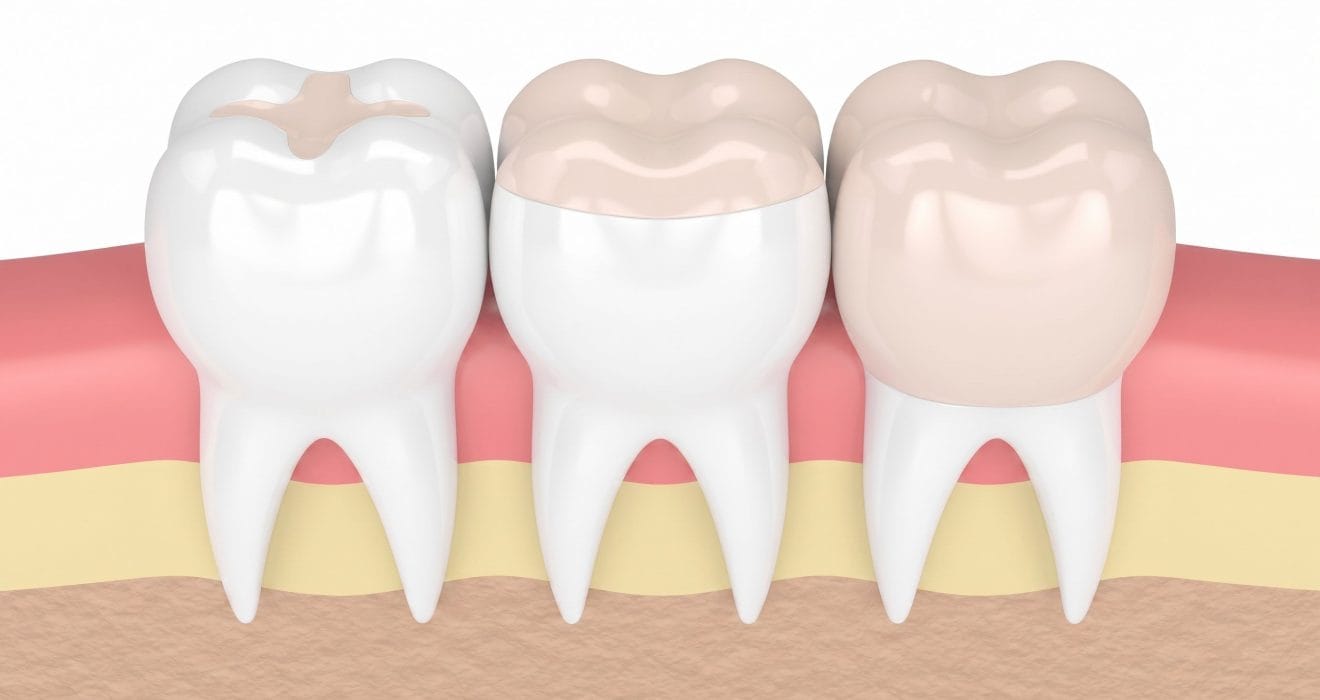
Picture a crown carved entirely from one piece of ceramic, no porcelain jacket, no layered veneer, nothing bonded on top. That’s full-contour zirconia, and it’s why the industry also calls it monolithic zirconia.
The single-material construction exists for a reason. Older layered restorations had a built-in weak point: the bond between the zirconia core and its porcelain overlay. Under years of chewing, that veneer could flake away even when the core underneath stayed perfectly intact. Going monolithic removed the failure point entirely.
Today’s monolithic zirconia crowns get their lifelike character after milling, when technicians apply stains and glazes to build depth and shade variation into the solid ceramic body.
What Makes the Best Full Contour Zirconia Stand Out?

When our team at Zirconia Express evaluates a zirconia disc before bringing it into production, we grade it against five benchmarks. The same checklist works for dentists evaluating restorations from any lab.
| Flexural Strength | 1,000+ MPa in the 3Y class | Fractures under heavy occlusion |
| Translucency | Light behavior close to enamel | Flat, chalky, “fake tooth” appearance |
| Marginal Fit | Gaps of 50 microns or tighter | Leakage, recurrent decay, debonding |
| Wear Behavior | Polished surface, kind to antagonists | Accelerated wear on opposing teeth |
| Sintering Control | Uniform density, no hidden flaws | Unexplained failures months later |
How strong should full-contour zirconia be?
Strength in zirconia comes down to one lab value: flexural strength, measured in megapascals. The toughest class 3Y-TZP tests in the neighbourhood of 1,100 to 1,200 MPa. To put that in perspective, lithium disilicate sits near 400 MPa, meaning high-strength zirconia crowns carry roughly triple the fracture resistance.
That headroom pays off in two ways. First, it protects molars in patients who clench or grind. Second, it lets you prep conservatively; many 3Y crowns perform reliably at just 0.8 to 1.0 mm of occlusal thickness.
Why Does Translucency Matter?
A crown can survive decades and still fail the mirror test. Natural enamel lets light travel through it, and any restoration in the smile zone has to imitate that behaviour. Formulations with higher yttria content (the 4Y and 5Y families) allow more light through, but the chemistry that improves optics also softens the material, pulling strength down into the 600–800 MPa range.
The smartest materials on the market handle this compromise by blending it into a single disc, which is why gradient multilayer zirconia has taken over aesthetic work.
How Important Is Marginal Fit?
Think of the margin as the crown’s seal. Research generally treats anything under 120 microns as clinically acceptable, yet a well-run digital workflow routinely closes that gap to 50 microns or less. Interestingly, the disc brand plays a minor role here; the lab’s scanner calibration, design software, and mill maintenance carry far more weight.
Does Zirconia Damage Opposing Teeth?
Here’s a fact that still surprises many clinicians: smooth, well-polished zirconia treats opposing enamel more gently than conventional glazed porcelain does. The catch is the word smooth. Adjust a zirconia crown chairside and skip the re-polish, and you’ve created a sandpaper surface. Finishing protocol matters as much as material chemistry.
Why Does Sintering Quality Matter?
Zirconia leaves the mill soft and oversized; the sintering furnace is where it shrinks, densifies, and earns its strength. A furnace running slightly off-temperature or a rushed cycle can plant invisible flaws inside the ceramic, defects no dentist can spot at try-in. It’s the reason serious labs treat furnace calibration like a religion.
Which Types of Zirconia Make the Strongest Crowns?
Every zirconia disc belongs to a family defined by its yttria percentage, and that number sets the strength-versus-beauty equation before the case even begins.
| 3Y-TZP | 1,100–1,200 MPa | Low | Molars, bruxers, long bridges, full-arch implants |
| 4Y-PSZ | 750–900 MPa | Moderate-high | Everyday single crowns, most posterior work |
| 5Y-PSZ | 600–750 MPa | High | Anterior singles, smile-zone cases |
| Gradient Multilayer | Blended by zone | Graduated | Versatile strength at the neck, translucency at the edge |
What Is 3Y Zirconia Best For?
3Y is the workhorse and still the strongest zirconia
you can mill a crown from. Reserve it for the punishing jobs: second molars, patients with worn dentition, connectors on multi-unit bridges, and implant-supported arches. Its one shortcoming is visual density under natural light; it reads opaque, so keep it out of the anterior unless heavily characterised.
What Is 4Y Zirconia Best For?
If a practice could stock only one material, 4Y would be the sensible pick. It holds enough strength for nearly all single-unit posterior work while looking dramatically better than 3Y. Plenty of labs now treat it as the default for routine best full-contour zirconia crowns.
What Is 5Y Zirconia Best For?
5Y trades muscle for beauty, bringing translucency within reach of glass-ceramics. Anterior single units are its home turf. Keep it away from bridge connectors and grinding patients; the strength numbers simply don’t support those loads.
Which Is Better: Single-Shade or Multilayer Zirconia?
The newest multilayer discs don’t just fade shade from neck to edge; premium versions shift the yttria chemistry too. The result mirrors nature: a tougher, warmer cervical zone flowing into a translucent incisal third. In most cases, walking through a modern lab, multilayer wins on both efficiency and realism.
When Should You Choose High Strength Over High Translucency?
Here’s the decision matrix we apply in the lab every day:
| Molar crowns on grinders | 3Y, polished occlusal | Nothing else has the safety margin |
| Routine posterior singles | 4Y or gradient multilayer | Strength plus acceptable optics |
| Anterior single units | 5Y or aesthetic multilayer | Optics take priority |
| Bridges of 3+ units | 3Y or 4Y only | Connectors cannot tolerate 5Y |
| Full-arch implant cases | 3Y with pink characterization | Decades of load-bearing ahead |
| Tight clearance (under 1 mm) | 3Y | Performs at thin cross-sections |
One rule ties it all together: let the mechanics choose the material class, then chase aesthetics inside that boundary never the reverse.
How Does Digital Design Improve Full Contour Zirconia Crowns?
A great disc can only take a restoration as far as its design allows. This is where digital workflows have quietly reshaped outcomes.
Modern AI design engines read the prep, the neighbours, and the opposing arch, then generate anatomy tuned to that specific mouth. At Zirconia Express, every digital case runs through an AI-driven design system that produces three anatomical shape options, so the dentist picks the morphology that genuinely belongs beside the patient’s existing teeth instead of settling for a stock library form.
The clinical payoff shows up at the chair: crowns that drop into occlusion with minimal adjustment, less grinding on polished surfaces, and shorter seat appointments. Pair that with intraoral scanning, which eliminates impression distortion, the classic remake culprit, and the whole workflow tightens up.
What Should Dentists Look for in a Zirconia Lab Partner?
Even the best full-contour zirconia can’t rescue a sloppy production process. Before committing cases to any lab, put these questions on the table:
| Which zirconia classes do you run? | Several chosen per indication, not one disc for everything |
| What’s your remake percentage? | A real number, tracked and shared without hesitation |
| Is there a warranty? | Multi-year coverage, in writing |
| How do digital files flow? | Direct scanner integration, no file wrangling |
| Who’s designing my cases? | Skilled technicians working alongside AI tools |
Don’t overlook delivery reliability either. A lab that hits its dates lets you book seat appointments with confidence and that discipline flows straight into your chair utilisation.
Why Do Dental Practices Partner with Zirconia Express?
Every remake carries a hidden invoice: lost chair time, a rescheduled patient, a small dent in trust. Over a year, those costs dwarf whatever price gap exists between labs, which is why the real question isn’t “who’s cheapest” but “who’s most predictable.”
Zirconia Express, a B2B dental laboratory operating out of North Carolina, built its entire process around that predictability. The lab fabricates premium zirconia crowns and bridges from high-strength zirconia selected per indication and stands behind the work with up to a 5-year warranty.
Digital practices get a particularly clean workflow: submit an intraoral scan, and the AI-powered design platform returns three anatomical shape options with high precision so what arrives in the box already matches your patient’s natural tooth form—fewer adjustments, dependable margins, consistent shading, and a fast turnaround that respects your schedule.
General dentists, prosthodontists, implant specialists, and even partner laboratories all benefit from the same thing: a lab built for modern digital dentistry that removes variables instead of adding them.
Curious how your cases would turn out? Send one test case to Zirconia Express and judge the difference on your own bench.
Conclusion:
There’s no universal winner, and that’s the honest answer. The best full-contour zirconia is the formulation your specific case demands: 3Y where forces are brutal, 5Y where the smile is on display, and 4Y or gradient multilayer for the wide territory in between. Combine that material logic with a lab that treats design, milling, and sintering as precision disciplines, and monolithic zirconia crowns reward you with restorations that seat cleanly, hold their polish, and stay out of your remake pile.
FAQ’s
How long do full-contour zirconia crowns last?
Given sound preparation and occlusal management, full-contour zirconia crowns routinely serve 10–15 years and beyond. Published clinical data places five-year survival for monolithic zirconia above the 95% mark.
Are full-contour zirconia crowns better than PFM crowns?
For the vast majority of indications, yes. Monolithic construction removes porcelain chipping from the equation, spares more tooth structure, contains zero metal, and outlasts PFMs mechanically. Metal-ceramic work survives mainly in legacy and niche situations.
What is the strongest zirconia for crowns?
The 3Y-TZP class tops the strength charts at 1,100 MPa and up, making it the material behind the strongest zirconia crowns, the go-to for bruxers, molars, and multi-unit bridgework.
Can full-contour zirconia be used for front teeth?
Absolutely. High-translucency 5Y discs and aesthetic multilayer blanks handle anterior cases beautifully, provided a capable technician handles the staining and characterisation.
Does zirconia wear down opposing teeth?
A properly polished zirconia surface is gentler on opposing enamel than most glazed porcelains. The danger zone is an adjusted-but-unpolished surface, which turns abrasive and always re-polish after chairside adjustments.
How much tooth reduction does full-contour zirconia require?
High-strength zirconia works at roughly 0.8–1.0 mm occlusally and about 0.5 mm at the margin among the most conservative prep requirements of any full-coverage material.


1 Comment