
Bruxzir vs Layered Zirconia: Key Differences Explained
When a case lands on your bench, one of the first decisions you make is the crown material. Bruxzir vs Layered Zirconia is one of the most common comparisons dentists and lab technicians face, especially for posterior restorations and full-arch cases.
Both materials fall under the zirconia family, but they behave very differently in the mouth. One is built for raw strength. The other is built for esthetics that mimic natural enamel. Understanding the difference helps you match the right material to the right patient, instead of forcing one product to do a job it wasn’t designed for.
This guide breaks down the composition, strength, esthetics, indications, and cost of each option, so you can make a confident, case-specific decision. The comparison matters more today than it did a decade ago. Zirconia has largely replaced porcelain-fused-to-metal in many practices, but “zirconia” isn’t a single product. It’s a category spanning several formulations, each with different mechanical and optical properties.
What Is Bruxzir Zirconia?
Bruxzir is a monolithic (solid) zirconia crown material, meaning the entire restoration is milled from a single block of zirconia with no porcelain layering. It was one of the first monolithic zirconia products to enter the U.S. dental market and became known for its exceptional durability.
A Bruxzir zirconia crown is prized for withstanding heavy occlusal forces without chipping or fracturing. Because there’s no veneering porcelain, there’s nothing to delaminate or crack off the surface over time.
Key characteristics of Bruxzir crowns include:
- Shaped from a single, uniform piece of zirconia.
- Flexural strength typically in the range of 800 to 1,200 MPa depending on the generation
- Minimal chipping risk since there’s no layered porcelain
- Available in translucent and high-strength formulations
- Well-suited for patients with parafunctional habits like bruxism
BruxZir has gone through several material generations since its introduction. Newer formulations use finer grain structures and multi-layered shading built into the milling block itself, narrowing the esthetic gap without sacrificing fracture resistance.
What Is Layered Zirconia?
Layered zirconia crowns use a zirconia core or framework as the structural base, with porcelain hand-layered or pressed over the surface to create a more lifelike, translucent appearance. The zirconia provides strength, while the porcelain provides depth, texture, and light reflection similar to natural teeth.
This approach gives lab technicians more control over shade characterization, incisal translucency, and subtle color gradients. It’s the reason layered restorations are often chosen for cases where esthetics are the top priority, particularly in the anterior region.
Key characteristics of layered zirconia crowns include:
- A zirconia core framework covered with a porcelain outer coating
- Superior esthetic blending, especially at the incisal edge
- Flexural strength lower than monolithic zirconia, generally 400 to 600 MPa
- Some risk of porcelain chipping or delamination over time
- Best suited for visible anterior teeth and esthetic-driven cases
Producing a layered zirconia crown is closer to an art form than a purely digital process. A skilled ceramist applies porcelain in thin increments, firing the restoration multiple times to build up the right internal color and texture before final glazing.
How Do Strength and Durability Compare?
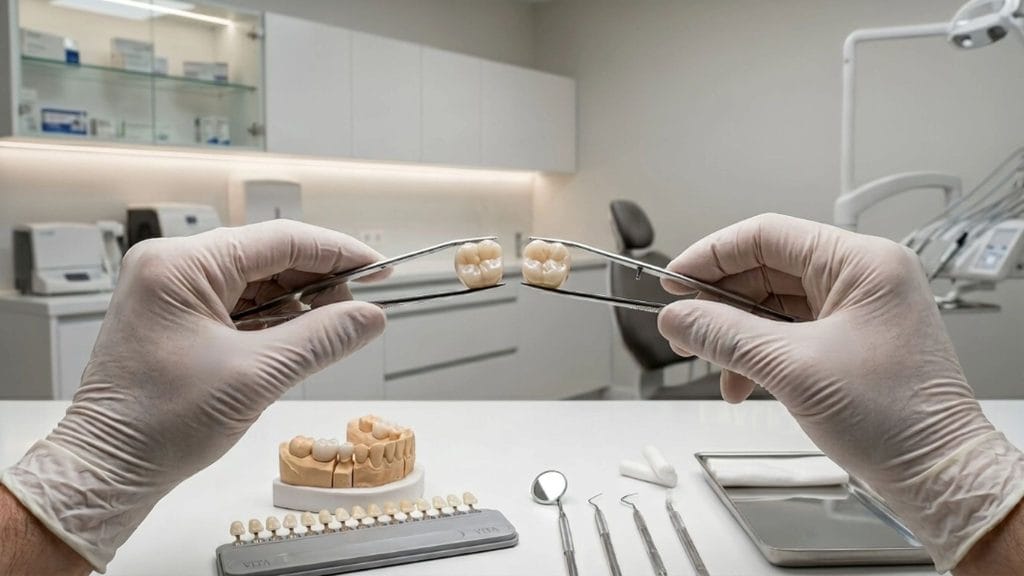
Strength is where the two materials diverge the most. Monolithic Bruxzir zirconia crown restorations resist fracture far better than layered options because there’s no separate porcelain layer to chip away from the zirconia core.
Layered zirconia, by contrast, carries a known risk: porcelain veneering material can crack or delaminate under heavy occlusal load, particularly in patients who clench or grind. This doesn’t mean layered zirconia is fragile. It simply performs best in lower-stress areas of the mouth, like anterior teeth, where esthetics matter more than bite force resistance.
For posterior molars, bridges, and patients with a history of cracked or fractured crowns, monolithic zirconia is generally the safer long-term choice.
Wear on opposing natural dentition is another factor worth weighing. A properly polished Bruxzir surface behaves gently against opposing enamel, but it needs a skilled lab to achieve that finish. A rough or improperly glazed surface can accelerate wear, regardless of the zirconia type used.
Which Option Offers Better Esthetics?
This is where layered zirconia typically wins. The porcelain layering technique allows technicians to build in natural-looking translucency, subtle color variation, and lifelike depth that’s harder to achieve with a solid block of zirconia.
Modern high-translucency monolithic zirconia has closed much of this esthetic gap in recent years. Newer generations of Bruxzir and similar monolithic materials offer improved light transmission and shade matching, making them viable even for some anterior cases. Still, for the most demanding esthetic zones, like a single central incisor next to natural teeth, layered zirconia often remains the preferred choice.
Lighting conditions also play a role in how each material performs clinically. Layered porcelain tends to reflect light in a way that closely mimics enamel across different lighting environments. Monolithic zirconia, even in high-translucency formulations, can sometimes appear slightly more uniform under certain angles, which is worth discussing with patients who have specific esthetic expectations.
When Should You Choose Bruxzir Over Layered Zirconia?
Choosing between a Bruxzir vs layered dental crown comes down to where the restoration sits and what forces it needs to withstand. Consider monolithic zirconia when:
- Placement occurs on a rear molar or premolar in the mouth
- The patient has a documented history of bruxism or clenching
- You’re restoring an implant case with high occlusal demand
- Minimal tooth reduction is available for the restoration
- The patient has a history of chipped or fractured PFM or layered crowns
Consider layered zirconia when:
- The case involves a highly visible anterior tooth
- Shade matching against natural adjacent teeth is critical
- The patient has low to normal bite force
- Esthetic outcome is prioritized over maximum fracture resistance
How Does Cost Compare Between the Two?
Layered zirconia crowns generally cost more to produce than monolithic options. The extra labor involved in hand-layering porcelain, along with the additional firing cycles and characterization work, adds both time and cost to the lab workflow.
Monolithic zirconia, including Bruxzir-style restorations, is typically more efficient to mill and finish, which often translates into a faster turnaround and lower cost per unit. For high-volume posterior cases, this efficiency matters both clinically and financially.
There’s also a downstream cost many practices overlook: remake rates. A layered crown that chips six months after cementation means another scan, another lab cycle, and another chairside appointment, even if the remake is covered under warranty. Factoring in the likelihood of a remake gives a more accurate picture of the true cost difference between the two materials.
What Does Clinical Research Say?

Long-term clinical data consistently show that monolithic zirconia restorations have lower complication rates of chipping and fracture than layered zirconia restorations. Studies tracking layered zirconia over several years have documented porcelain chipping as one of the most frequently reported technical complications, while monolithic zirconia crowns report significantly fewer material-related failures.
This doesn’t make layered zirconia an inferior material. It means the two products are engineered for different clinical goals, and complication rates track directly with where and how each material is used.
Why Partner With Zirconia Express for Your Zirconia Cases?
Picking the right zirconia material is only half the equation. The other half is working with a lab that delivers consistent, precise results case after case, regardless of which material a restoration calls for.
Zirconia Express, a dental laboratory based in North Carolina, supports dentists, prosthodontists, implant specialists, and dental practices with zirconia crowns and bridges built for both strength and esthetics. Every restoration is backed by up to a 5-year warranty, giving you and your patients added confidence in the longevity of the final product.
For practices running a digital workflow, Zirconia Express also offers digital dental cases powered by an AI-driven design system. This includes three anatomical shape options, allowing you to match tooth morphology to each patient’s natural dentition with a level of precision that’s difficult to achieve manually. The system integrates smoothly with modern digital scanning and design workflows, so cases move from scan to final restoration without unnecessary back-and-forth.
What sets a dependable lab partner apart isn’t just material selection. It’s consistent quality control, predictable turnaround times, and responsive support when a case needs adjustment. If you’re looking for a laboratory that understands the clinical reasoning behind material choice and delivers accordingly, reach out to Zirconia Express to discuss your next case.
Conclusion
Deciding between Bruxzir vs Layered Zirconia isn’t about picking a “better” material overall. It’s about matching the material’s strengths to the specific demands of each case, whether that’s a molar under heavy occlusal load or a central incisor that needs to blend seamlessly with natural teeth.
Monolithic options built for durability tend to hold up best in posterior and high-stress situations, while layered zirconia crowns still lead when esthetic nuance is the priority. Working with an experienced dental laboratory that can guide this decision and execute it precisely makes the difference between a restoration that simply fits and one that performs well for years to come.
FAQ’s
Is Bruxzir the same as monolithic zirconia?
Yes. Bruxzir is a brand of monolithic zirconia, meaning the crown is milled entirely from a solid block of zirconia rather than layered with porcelain
Does layered zirconia chip more than Bruxzir?
Yes. Layered zirconia carries a higher risk of porcelain chipping or delamination because the veneering porcelain sits over the zirconia core, unlike monolithic zirconia, which has no separate layer to fracture.
Which is better for posterior teeth, Bruxzir or layered zirconia?
Bruxzir and other monolithic zirconia crowns are generally better for posterior teeth because they withstand higher occlusal forces without chipping, making them well-suited for molars and bruxism patients.
Can layered zirconia be used on molars?
It can, but it’s not typically recommended for patients with heavy bite forces or bruxism, since the porcelain layer is more prone to chipping under high occlusal stress in that region.
Is Bruxzir more affordable than layered zirconia crowns?
Yes, in most cases. Monolithic zirconia crowns like Bruxzir require less hands-on labor to produce than layered zirconia, which often results in a lower cost and faster turnaround time.