
Full Contour Zirconia vs E.max Crowns: Strength & Aesthetics
Choosing the right monolithic crown material isn’t just a lab preference question; it changes how a restoration performs for years. Dentists ask about full contour zirconia vs E.max almost every week, and the honest answer is: it depends on the tooth, the bite, and the patient’s aesthetic expectations. This guide breaks down the real differences in strength, translucency, indications, and cost, so you can make that call with confidence.
Every restorative decision carries weight beyond the chairside moment. A crown isn’t just a shape milled to fit; it’s something the patient will bite, speak, and smile with for years. Material selection quietly shapes patient satisfaction, long-term comfort, and even how often a practice fields callback complaints. Getting this choice right the first time saves chair time, lab costs, and awkward conversations down the road.
Both materials have earned a permanent place in modern restorative dentistry. But they solve different problems. Understanding where each one excels prevents remakes, fractures, and awkward chairside conversations about why a crown chipped or looked too opaque.
What Is Full Contour Zirconia?
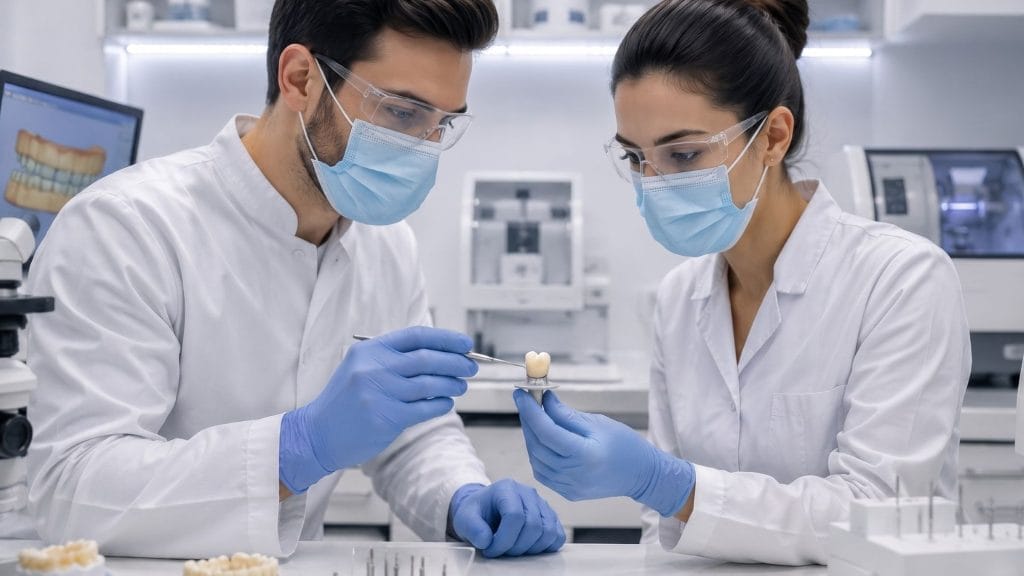
Full contour zirconia is a monolithic crown milled entirely from a single block of zirconium dioxide, with no porcelain layering on top. This is different from older zirconia crowns, which used a zirconia core covered in layered porcelain for aesthetics.
Because it’s milled as one solid piece, full contour zirconia crowns eliminate the porcelain-chipping problem that plagued layered restorations for years. The material is then stained and glazed on the surface to mimic natural enamel.
Modern multi-layer zirconia pucks (like the ones used in high-translucency 3Y-TZP and 4Y-TZP zirconia) have closed much of the aesthetic gap that used to exist. Today’s full contour zirconia can look remarkably lifelike, especially in posterior regions where shade-matching demands are lower.
What Is E.max?
E.max is a lithium disilicate glass-ceramic, known for its exceptional translucency and light-handling properties. It’s pressed or milled, then often layered or stained to achieve a natural, tooth-like appearance. This glass-ceramic structure allows light to pass through and reflect the way it does in real enamel, which is why so many clinicians reach for it in high-visibility cases. It’s also more conservative on tooth structure, since it can be pressed thin without losing strength in low-stress areas.
Unlike zirconia, E.max is not a polycrystalline material. It has a glassy microstructure that behaves more like natural enamel does under light. That’s why it remains the go-to choice for many dentists restoring anterior teeth where esthetics are non-negotiable.
E.max crowns are typically bonded rather than simply cemented, which adds retention strength but also adds a technique-sensitive bonding step to the workflow.
How Do Zirconia and E.max Compare in Strength?
This is where the two materials diverge the most, and it’s the core of the zirconia vs E.max strength conversation.
- Full contour zirconia has a flexural strength of roughly 900 to 1,200 MPa, depending on the specific zirconia generation used.
- E.max (lithium disilicate) has a flexural strength of around 360 to 400 MPa.
- Zirconia is significantly more fracture-resistant under heavy occlusal load, particularly in molars and bruxism cases.
- E.max is more brittle by comparison but still strong enough for most single-unit anterior and premolar restorations.
- Zirconia’s crystalline structure resists crack propagation better, which matters most in patients who grind or clench.
In plain terms: if a patient breaks crowns regularly, or clenches at night, zirconia is the safer bet. If the restoration is in a low-stress zone and aesthetics matter more than raw strength, E.max often wins.
Which Material Looks More Natural?
Aesthetics used to be zirconia’s weak point, but that gap has narrowed considerably. Still, there are real differences worth explaining to patients.
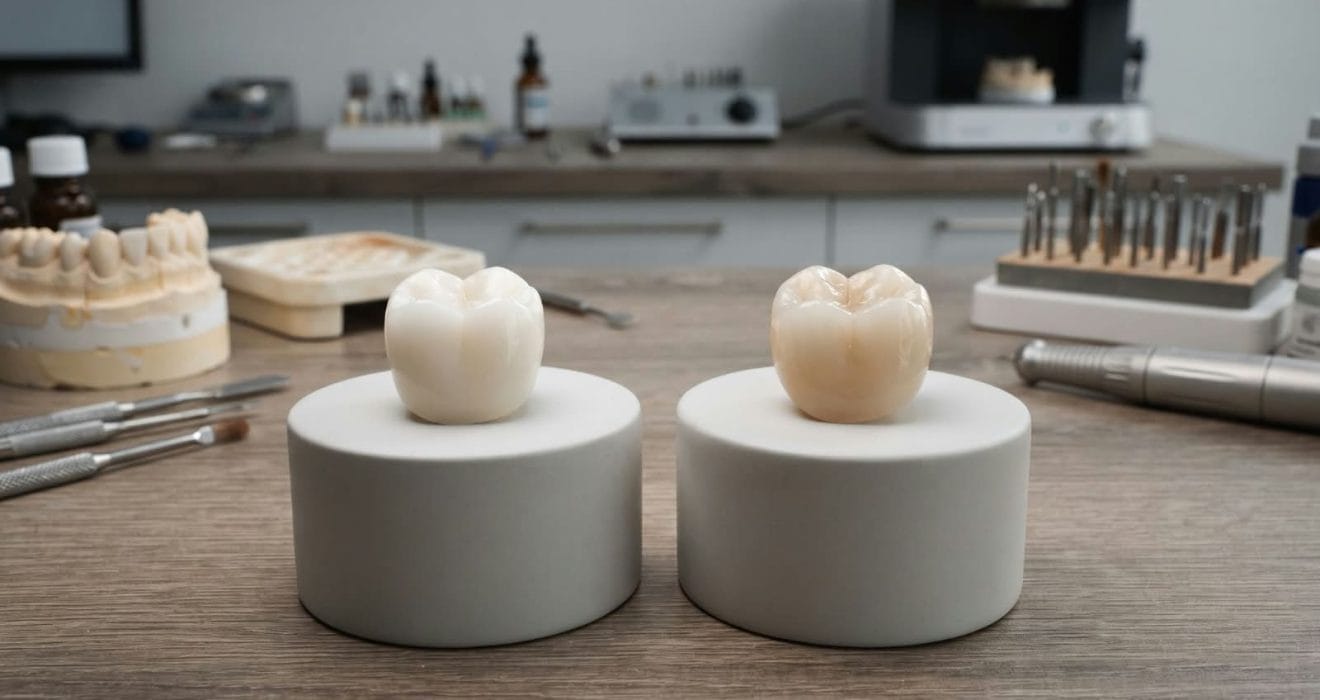
E.max has superior light transmission because of its glass-based composition. It mimics the internal glow and translucency of natural dentin and enamel almost effortlessly, which is why prosthodontists still lean on it for single central incisors and smile-zone cases.
Full contour zirconia, especially in its newer ultra-translucent formulations, has improved dramatically. However, it still tends to look slightly more opaque or “flat” compared to E.max under certain lighting conditions, particularly in thin, highly visible anterior restorations.
For posterior teeth, this distinction barely matters to patients. For a single front tooth next to natural dentition, comparing full contour zirconia vs E.max crowns side by side makes the difference the deciding factor
Which Is Better for Different Clinical Situations?
There’s no universal winner. The right material depends entirely on the case in front of you. Here’s a practical breakdown dentists commonly use:
- Molars and heavy occlusal load: full contour zirconia is generally preferred due to superior fracture resistance.
- Bruxism or clenching patients: zirconia’s strength reduces the risk of chipping or catastrophic fracture.
- Anterior single units and smile-zone cases: E.max often wins on light transmission and shade blending.
- Implant-supported crowns: zirconia is frequently chosen for its strength and compatibility with screw-retained designs.
- Thin preparations with limited space: E.max can be pressed thinner while maintaining strength, which helps in minimally invasive preps.
- Patients with metal allergies or sensitivities: both materials are biocompatible and metal-free, making them safe alternatives.
Many clinicians now use a hybrid approach: zirconia in the posterior for durability and E.max in the anterior for esthetics, all within the same treatment plan.
When Should You Choose Full Contour Zirconia?
Full contour zirconia makes sense when strength and longevity are the priority. It’s especially suited to patients who need a crown that can withstand years of chewing force without babying it.
Consider zirconia when the case involves a molar, a bruxer, a long-span bridge, or an implant restoration. It’s also a strong option when turnaround time matters, since full contour zirconia crowns typically require fewer clinical steps than layered restorations.
This is where most lab requests for full contour zirconia land in day-to-day practice. Dentists sending cases for posterior crowns and bridges consistently choose full contour zirconia because it holds up under real-world function without sacrificing a natural appearance.
When Should You Choose E.max?
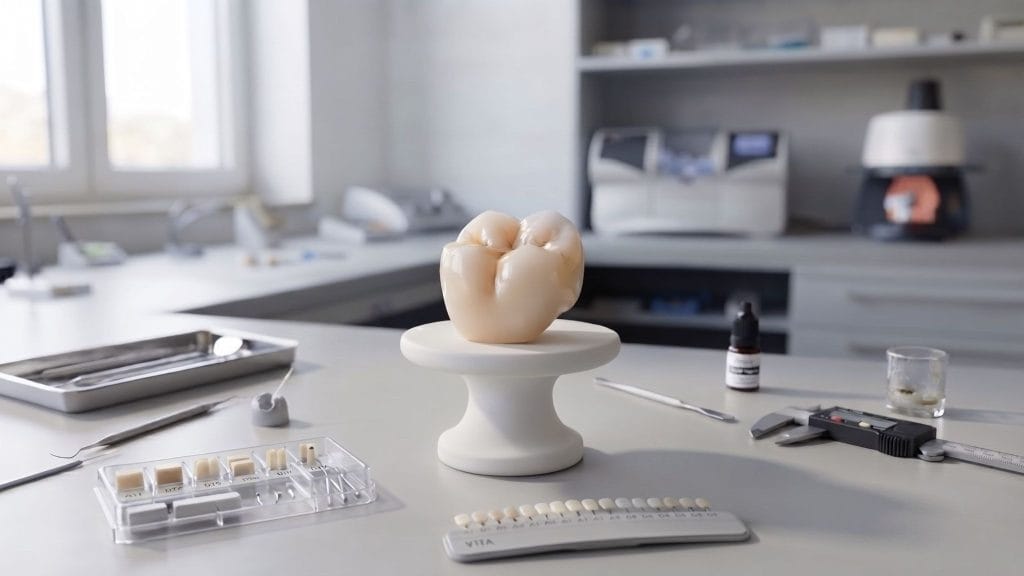
E.max is the better call when the restoration sits in the smile zone and needs to disappear next to natural teeth. Single anterior crowns, veneers, and inlays or onlays where minimal prep and maximum translucency matter are classic E.max territory.
It also performs well for patients with thinner biotypes or high aesthetic demands, where even a slightly opaque restoration would be noticeable. The trade-off is a more technique-sensitive bonding protocol and a lower tolerance for heavy occlusal forces.
How Do Cost and Turnaround Compare?
Cost varies by lab and region, but a few general patterns hold across most dental markets. Full contour zirconia crowns are often slightly more economical to produce at scale, partly because the milling and finishing process involves fewer manual layering steps. E.max, particularly when pressed and hand-layered for anterior esthetics, tends to involve more technician time, which can add to lab fees.
Turnaround time follows a similar pattern. Full contour zirconia workflows are typically faster since there’s no porcelain layering to build and fire. This is one reason many practices lean toward zirconia for cases where the patient wants a same-week or short-turnaround solution.
Why Partner With Zirconia Express for Your Crown Cases?
Picking the right material is only half the equation. The lab executing it matters just as much. Fit, shade accuracy, and consistency are what actually determine whether a crown performs the way the material’s specs promise.
Zirconia Express, based in North Carolina, works exclusively with dentists, prosthodontists, implant specialists, and dental laboratories who need dependable, high-strength restorations without unpredictable turnaround times. Every zirconia crown and bridge case is backed by up to a five-year warranty, so practices can stand behind the work with confidence.
For digital workflows, Zirconia Express offers AI-driven digital dental cases with three distinct anatomical shape options, giving dentists more control over occlusal anatomy and emergence profile before a crown ever reaches the mouth. This system is built for practices already running intraoral scanners and digital impressions, keeping the entire workflow paperless and precise.
What sets a lab apart isn’t just the material list. It’s consistency case after case, clear communication, and turnaround times that respect a practice’s schedule. If your lab relationship has been inconsistent, or you’re evaluating a new zirconia and digital case partner, reach out to Zirconia Express to discuss your next case.
Conclusion
Deciding between full contour zirconia vs E.max ultimately comes down to matching the material to the clinical demand. Zirconia brings unmatched strength for posterior and high-load situations, while E.max delivers a level of translucency that’s hard to beat in the smile zone.
Neither material is universally better. They’re built for different jobs. Understanding the real-world performance of full contour zirconia crowns at this level lets you set patient expectations accurately and choose a lab partner who can execute the material correctly the first time. The right choice ultimately protects your chair time and your patient’s trust, not just the restoration itself. A well-informed material decision today prevents avoidable remakes tomorrow.
FAQ’s
Is full contour zirconia stronger than E.max?
Yes. Full contour zirconia has a flexural strength of roughly 900 to 1,200 MPa, compared to about 360 to 400 MPa for E.max. This makes zirconia the stronger option for molars, bruxers, and high-load restorations.
Does E.max look more natural than zirconia?
In most cases, yes, particularly for single anterior teeth. E.max’s glass-based structure transmits light more like natural enamel, though modern high-translucency zirconia has narrowed this gap significantly for posterior and multi-unit cases.
Can zirconia crowns chip like porcelain-layered crowns?
Full contour zirconia crowns rarely chip because they’re milled from a single solid block with no layered porcelain. Chipping was mainly a problem with older layered zirconia restorations, not with monolithic full contour designs.
Which material is better for a bruxism patient?
Full contour zirconia is generally the safer choice for patients who grind or clench, since its higher flexural strength better resists fracture under repeated heavy occlusal forces.
Is E.max or zirconia more expensive?
Costs vary by lab, but E.max often costs more due to additional layering and finishing time, while full contour zirconia tends to be more efficient to produce and typically has a faster turnaround.