
What Is a PFZ Dental Crown? Strength & Beauty Explained
A PFZ Dental Crown (Porcelain Fused to Zirconia) is a restoration built on a solid zirconia core and finished with a layer of hand-applied porcelain. This combination gives dentists a crown that carries the structural strength of zirconia while achieving the light handling and translucency patients expect from natural teeth. For clinicians restoring molars, premolars, or full arch cases, this hybrid design solves a problem that pure metal and pure ceramic crowns have struggled with for decades: how to be strong enough for heavy bite forces without looking artificial.
Dentists evaluating crown materials often face a tough tradeoff between durability and a natural look. Patients want restorations that blend in seamlessly with their smile, yet they also expect them to hold up for years without chipping or fracturing. Choosing the right material for each case can shape how confident both the clinician and the patient feel about the outcome.
This guide breaks down exactly what a PFZ Zirconia Crown is made of, how it performs clinically, and when it makes more sense than a monolithic or all porcelain alternative.
What Is a PFZ Dental Crown Made Of?
A PFZ Dental Crown is built in two distinct parts that are fused during fabrication.
- A milled zirconia substructure that forms the internal core and provides the load-bearing strength
- A layer of feldspathic or fluorapatite porcelain applied over the zirconia to recreate enamel-like translucency, texture, and shade
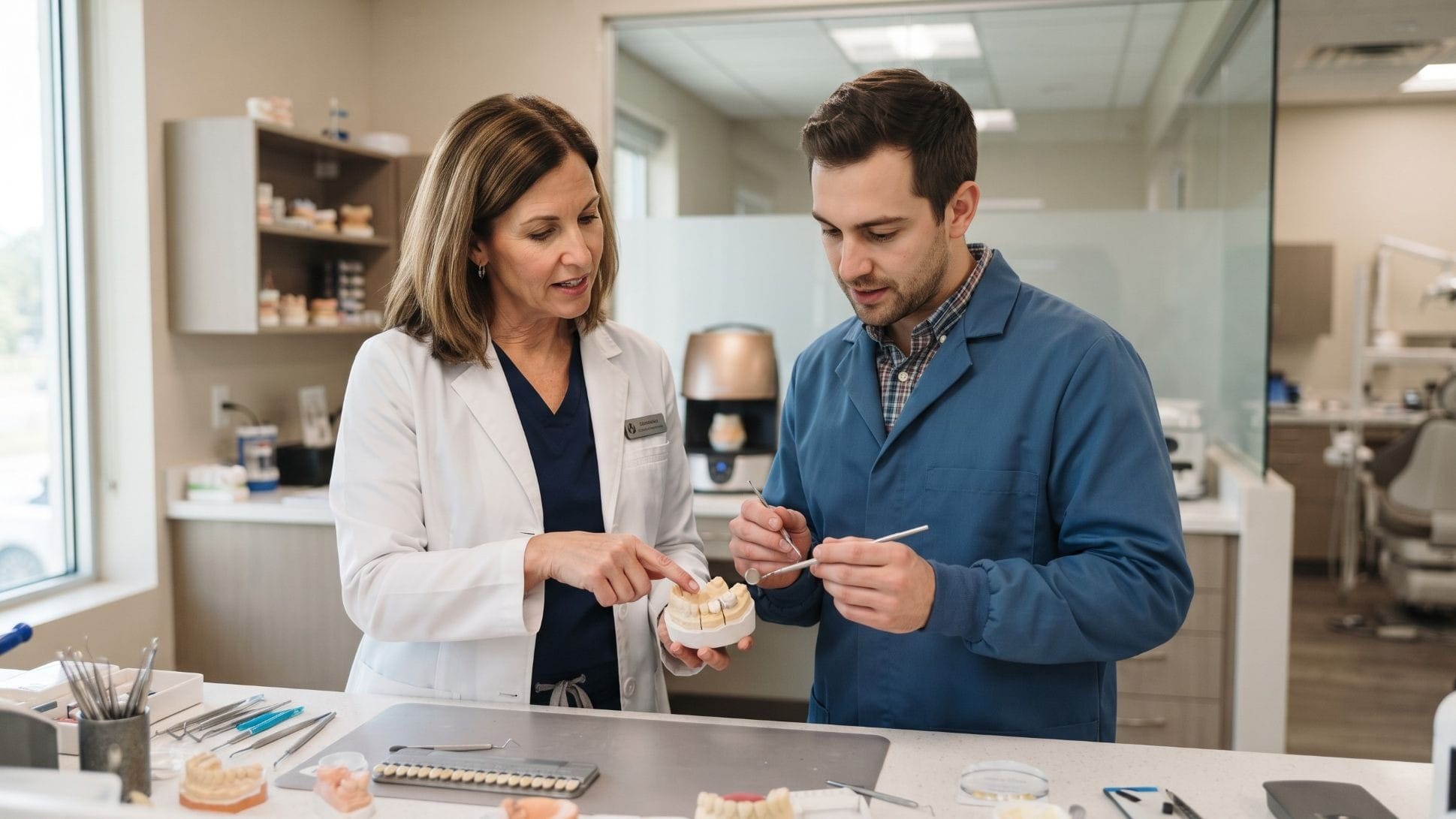
The zirconia coping is designed using digital scanning and CAD software, then milled from a solid zirconia block. Once the shape is confirmed, a ceramist hand-layers porcelain over the coping in thin increments, firing it in a kiln between layers to build up depth and natural color gradation. This is why the restoration is often called a Porcelain-Fused Zirconia Crown: the porcelain is not painted on; it is fused through controlled heat cycles that bond the two materials at a molecular level.
How Does a PFZ Layered Zirconia Crown Work Clinically?
The zirconia core absorbs and distributes occlusal forces across the tooth, reducing the risk of the fracture patterns seen in older porcelain-fused-to-metal crowns. Zirconia has a flexural strength that typically ranges between 900 and 1,200 megapascals depending on the generation used, which is significantly higher than lithium disilicate or feldspathic porcelain alone.
The porcelain layer sits on top and does the aesthetic work. It scatters light the way natural enamel does, which is something monolithic zirconia, even in its most translucent forms, still cannot fully replicate. A PFZ Layered Zirconia Crown essentially separates the job of strength and the job of beauty between two purpose-built materials instead of asking one material to do both.
What Are the Main PFZ Crown Benefits?
Dentists choose this restoration type for a specific set of clinical and patient-facing advantages.
- High fracture resistance thanks to the zirconia core, which holds up well under molar and premolar bite forces
- Superior shade matching and translucency compared to monolithic zirconia, especially in the anterior zone
- Biocompatibility, since zirconia is well tolerated by soft tissue and does not trigger the metal sensitivity reactions seen with older PFM crowns
- No dark metal margin visible at the gumline, which was a common complaint with porcelain-fused-to-metal restorations
- Customizable layering that allows ceramists to match adjacent teeth precisely, including internal characterization like craze lines and translucent incisal edges
These PFZ Crown Benefits make the restoration a practical middle ground. It is not as brittle as traditional all ceramic crowns, and it is not as monochromatic as full contour zirconia.
Why Is a PFZ Zirconia Crown Different From a Monolithic Zirconia Crown?
A monolithic zirconia crown is milled entirely from a single block, with no porcelain layer added. It is extremely strong and fast to produce. Still, it can look flat or opaque in high visibility areas because zirconia alone does not scatter light the same way natural enamel does.
A PFZ Zirconia Crown trades a small amount of milling simplicity for a meaningful gain in aesthetics. The layered porcelain gives the ceramist control over subtle shade transitions, translucency at the incisal edge, and surface texture, which matters most on anterior teeth and premolars visible in a smile.
When Should a Dentist Choose a PFZ Crown Over Other Options?
The right restoration depends on tooth location, the patient’s bite forces, and the case’s aesthetic demands.
- Choose PFZ for anterior teeth or premolars where shade matching against natural dentition is critical
- Choose PFZ for patients with moderate to heavy occlusal forces who still need strong aesthetics, such as bruxism cases needing a night guard alongside the restoration
- Choose full contour monolithic zirconia for posterior molars where chewing force is the priority and visibility is minimal
- Choose lithium disilicate for single-unit anterior restorations with lower load demands and thinner preparation space
A prosthodontist or implant dentist planning a full arch case will often specify a PFZ Dental Crown for the visible anterior segment while using monolithic zirconia further back, combining both materials strategically across one treatment plan.
This kind of material planning also depends on how much tooth structure remains after preparation. A patient with thinner remaining enamel may need the added support of a zirconia core rather than a purely ceramic option, since zirconia distributes stress more evenly across the underlying tooth. Discussing these factors with the patient upfront, including expected longevity and maintenance, helps set realistic expectations before the case moves to the lab.
How Strong Is a Porcelain-Fused Zirconia Crown Compared to Traditional Options?
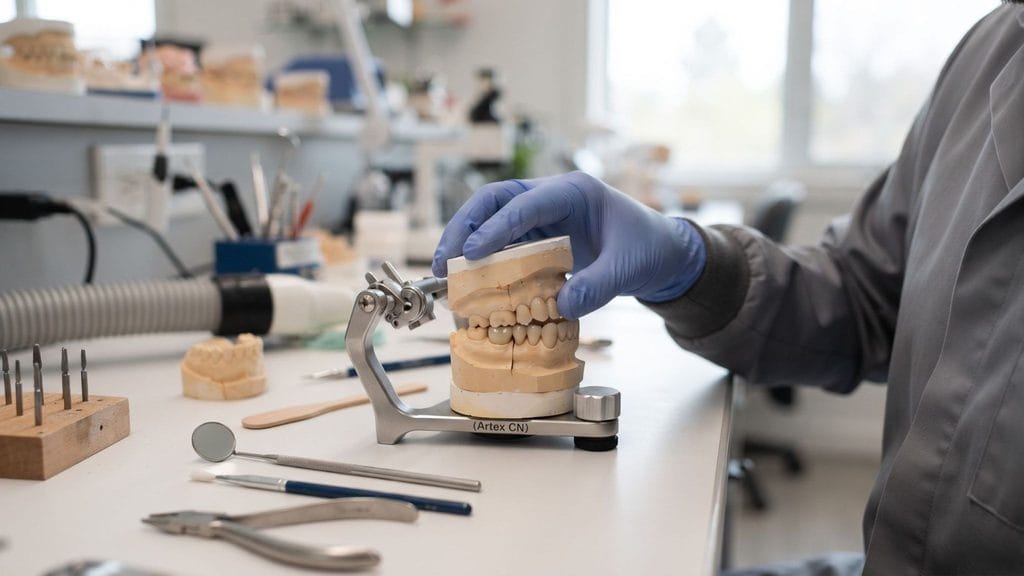
Traditional porcelain fused to metal crowns rely on a metal substructure, usually a nickel-chromium or noble alloy, layered with porcelain. That metal core is strong, but it can show a gray line at the gumline as tissue recedes, and some patients react to the alloy content.
A Porcelain-Fused Zirconia Crown removes the metal entirely. The zirconia core matches or exceeds the strength of most metal alloys used in dentistry while remaining tooth colored all the way through, so there is no dark substructure to show through thin gum tissue over time. This makes PFZ a preferred upgrade path for practices moving away from PFM restorations without sacrificing durability.
Long-term wear studies on zirconia based restorations also show favorable results against opposing natural dentition when properly polished, meaning the crown is less likely to cause excessive wear on the teeth it bites against. This is a common concern with harder ceramic materials, and it is one reason many labs place strong emphasis on a smooth, well-glazed surface finish before a case ships back to the practice.
Why Dentists Partner With Zirconia Express for PFZ Crowns
Producing a consistent PFZ Dental Crown takes more than good zirconia. It takes precise digital scanning, disciplined layering technique, and a lab that treats every case with the same attention regardless of order size. This is where Zirconia Express fits into a dentist’s workflow.
Zirconia Express is a B2B dental laboratory based in North Carolina, built specifically to support dentists, dental clinics, prosthodontists, implant dentists, and partner laboratories that need dependable restorative work. Every crown and bridge is backed by up to a five-year warranty, giving referring dentists confidence in long-term case outcomes without added chairside risk.
Beyond traditional layered work, Zirconia Express also offers Digital Dental Cases powered by an AI-driven design system, with three anatomical shape options to match different patient profiles and clinical goals. This digital workflow compatibility means cases move faster from scan to final restoration, without cutting corners on precision or fit. High-strength zirconia, natural aesthetics, and a reliable turnaround time are built into every case that leaves the lab.
For practices looking to standardize their crown and bridge work with a lab that understands both the material science and the digital workflow side of modern dentistry, reaching out to Zirconia Express is a straightforward next step.
Conclusion
A PFZ Dental Crown gives clinicians a restoration that does not force a tradeoff between strength and appearance. By pairing a milled zirconia core with hand-layered porcelain, it holds up under real-world bite forces while still matching the translucency of natural enamel, particularly in cases where the smile zone is on display.
Understanding when to specify a PFZ Zirconia Crown versus a monolithic or metal-based alternative comes down to tooth position, occlusal load, and how visible the restoration will be. Partnering with a laboratory that has mastered the layering process, like Zirconia Express, helps ensure that every case delivered back to the practice meets both the strength requirements and the aesthetic standard patients expect.
FAQ’s
What does PFZ stand for in dentistry?
PFZ stands for Porcelain Fused to Zirconia. It refers to a dental crown made with a milled zirconia core covered by a layer of hand-applied porcelain for a natural, tooth-like appearance.
Is a PFZ crown stronger than a porcelain-fused-to-metal crown?
Yes, in most cases. Zirconia typically offers flexural strength comparable to or higher than common dental alloys, while eliminating the metal margin and biocompatibility concerns tied to traditional PFM crowns.
How long does a PFZ dental crown typically last?
With proper fit and patient care, a PFZ crown can last ten years or longer. Many dental laboratories, including Zirconia Express, back their zirconia crowns and bridges with warranties of up to five years.
Can a PFZ crown chip like porcelain-fused-to-metal crowns do?
The porcelain layer can chip under extreme force, similar to PFM crowns. However, the risk is generally lower because zirconia bonds strongly with the layering porcelain and supports it more evenly than a metal framework does.
Is a PFZ crown a good choice for front teeth?
Yes. Front teeth benefit from the layered porcelain’s translucency and shade customization, making a PFZ crown one of the more natural-looking options for anterior restorations compared to full contour zirconia.