


Translucent Zirconia for Anterior Teeth: Complete 2026 Guide
Translucent Zirconia for Anterior Teeth has become the material of choice for dentists who need restorations that look natural without sacrificing strength. Front teeth are the hardest area to restore convincingly. Light passes through natural enamel in complex ways, and older zirconia formulas simply couldn’t replicate that effect.
Modern milling technology and improved zirconia chemistry changed that. Today’s high translucency materials blend the durability dentists expect from zirconia with the light handling properties patients expect from their own teeth. This guide breaks down what translucent zirconia actually is, how it compares to other options, and how dental labs process it for predictable results.
Patients notice the difference immediately, and so do dentists reviewing a case under clinical lighting. A crown that looks slightly opaque or flat next to natural dentition often leads to remakes, chairside adjustments, and lost time. Understanding the science behind translucent zirconia helps dental teams avoid that outcome and set clearer expectations before the case even reaches the lab.
What Is Translucent Zirconia for Anterior Teeth?

Translucent zirconia is a refined form of zirconium dioxide engineered with a smaller grain structure and reduced alumina content. This change lets more light pass through the material instead of bouncing off its surface. The result is a restoration that mimics how natural enamel diffuses light rather than reflecting it flatly.
Standard zirconia, often called 3Y-TZP, was originally developed for posterior crowns and frameworks where strength mattered more than appearance. High Translucent Zirconia, typically 4Y-TZP or 5Y-TZP, trades a small amount of flexural strength for a significant gain in optical performance. For anterior cases, that trade is usually worth it.
In practical terms, this means a dentist can now place a full contour zirconia crown on a central incisor and have it blend naturally with the surrounding teeth, something that was nearly impossible with early generation zirconia. The material has shifted from a strength-focused workhorse to a true aesthetic option for the smile zone.
Why Is Translucent Zirconia for Anterior Teeth Different From Traditional Zirconia?
The difference comes down to yttria content and crystal phase. Traditional 3Y-TZP zirconia contains around 3 mol% yttria, which stabilizes a dense, opaque crystal structure. That density is excellent for molars but looks lifeless on a front tooth.
Translucent Zirconia Crowns use higher yttria percentages, usually between 4 and 5.5 mol%. This shifts more of the material into a cubic crystal phase, which scatters light less aggressively. Dentists get a restoration that reads as “tooth” instead of “ceramic” under normal lighting.
How Does High Translucent Zirconia Achieve a Natural Appearance?
Several factors work together to create the lifelike look patients and dentists want. Understanding each one helps labs and clinicians choose the right zirconia grade for a specific case.
- Cubic phase content: Higher cubic phase percentages allow more light transmission through the restoration.
- Layered shading: Multi-layer discs blend gradient shades from the cervical to the incisal edge, matching natural tooth anatomy.
- Reduced grain size: Finer grain structures scatter less light at the boundaries, improving clarity.
- Polishing and glazing technique: Surface finish affects how light reflects off the restoration in the mouth.
- Thickness of the restoration: Thinner anterior crowns transmit more light, so material selection must account for prep depth.
Each of these variables affects the final result, which is why consistent lab processing matters as much as the raw material itself.
Which Is Better for Anterior Restorations: Translucent Zirconia Crowns or Lithium Disilicate?
This question comes up in nearly every anterior case discussion. Lithium disilicate has long been the aesthetic standard, prized for its glass-like translucency. But modern Translucent Anterior Crowns made from 5Y-TZP zirconia now come close in appearance while offering meaningfully higher fracture toughness.
Lithium disilicate typically tests around 360 to 400 MPa in flexural strength. High translucent zirconia in the 5Y range still delivers 550 to 800 MPa depending on the manufacturer, which gives dentists a safety margin for bruxism patients or thin preparations. For single anterior units with heavy aesthetic demands and minimal occlusal stress, lithium disilicate remains a strong option. For anterior bridges, implant cases, or patients with parafunctional habits, translucent zirconia is generally the more predictable choice.
When Should Dentists Choose Translucent Anterior Crowns?
Material selection should match the clinical situation rather than a blanket preference. Translucent zirconia fits particularly well in these scenarios:
- Anterior bridges where connector strength matters as much as appearance
- Implant-supported restorations in the aesthetic zone
- Patients with bruxism or clenching habits
- Cases requiring thin preparation depth due to limited tooth reduction
- Full mouth rehabilitation where material consistency simplifies shade matching
Dentists working with prosthodontists on complex anterior cases often specify Anterior Translucent Zirconia specifically because it holds up under long-term functional load without compromising the smile line.
What Are the Clinical Benefits of Anterior Translucent Zirconia?
Beyond aesthetics, translucent zirconia offers practical advantages that affect chairside efficiency and long-term outcomes. These benefits explain why adoption has grown steadily among general dentists and specialists alike.
- Higher fracture resistance compared to glass ceramics
- Better marginal fit through consistent digital milling
- Reduced chipping risk since many designs use monolithic zirconia rather than layered porcelain
- Biocompatibility that supports healthy gingival tissue response
- Long-term color stability with minimal staining over years of function
These factors combine to reduce remake rates, which saves both chair time and lab costs over the life of a restoration.
How Long Do Translucent Zirconia Crowns Last?
Longevity is one of the main reasons dentists move toward zirconia for anterior work in the first place. Clinical studies tracking monolithic zirconia restorations report survival rates above 95 percent at the five-year mark, with fracture as the least common failure type compared to other ceramic systems.
That durability comes with a few practical considerations dentists should share with patients:
- Zirconia will not wear down the way natural enamel or composite does, so opposing dentition should be evaluated during treatment planning.
- Proper cementation protocol matters more for zirconia than for metal-based restorations, since bond strength depends heavily on surface treatment.
- Routine dental checkups still matter, since marginal integrity and gingival health affect long-term success as much as the material itself.
With correct case selection and lab processing, a translucent zirconia anterior crown can realistically serve a patient for well over a decade.
How Should Dental Labs Process High Translucent Zirconia for Best Results?
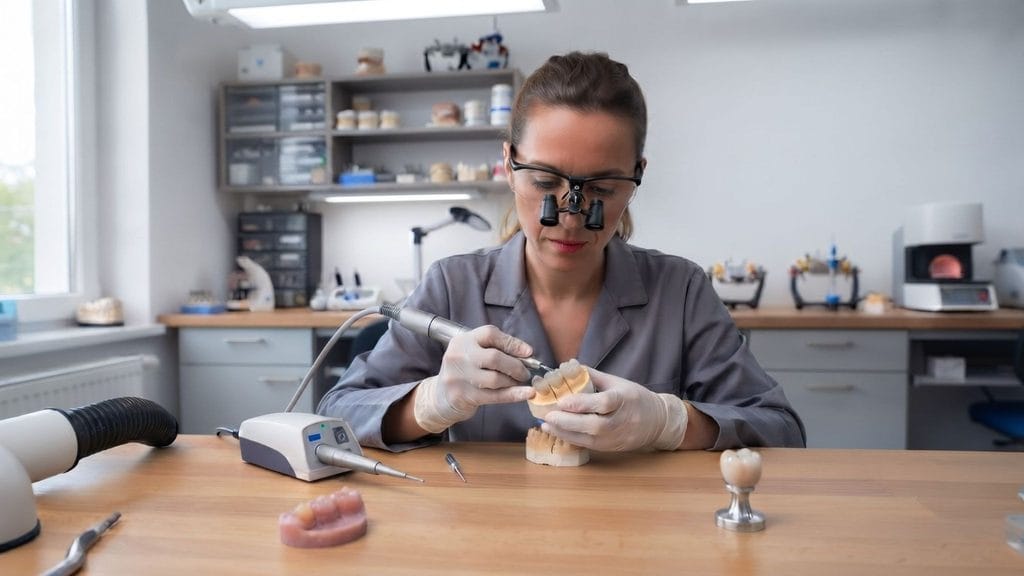
Material quality only matters if lab processing supports it. Sintering temperature, cooling rate, and milling precision all influence the final optical and mechanical properties of a translucent zirconia restoration.
Labs need calibrated furnaces that follow manufacturer-specific sintering curves, since even small temperature deviations can affect both strength and translucency. Digital design also plays a major role. AI-assisted design tools now help technicians select anatomically accurate shapes before milling, which reduces the need for manual adjustment and shortens turnaround time.
Shade matching adds another layer of complexity. Skilled technicians layer internal characterization and select the correct multi-layer disc position to match adjacent teeth, especially in single unit anterior cases where a slight mismatch is immediately visible.
Communication between the clinician and the lab also plays a bigger role than many dentists realize. Photos taken under natural light, accurate shade tab references, and clear notes on adjacent tooth characteristics all help technicians make better material and layering decisions before milling even begins.
Why Should Dentists Partner With Zirconia Express for Anterior Zirconia Cases?
Choosing the right lab partner matters just as much as choosing the right material. Zirconia Express, a B2B dental laboratory based in North Carolina, works exclusively with dentists, dental clinics, prosthodontists, implant dentists, and other labs that need dependable anterior restorations.
Every case is milled from premium zirconia crowns and bridges backed by up to a five-year warranty, giving dental teams confidence in long-term durability. The lab’s digital dental cases use an AI-driven design system with three anatomical shape options, which helps technicians match natural tooth contours more accurately from the first design pass.
Consistency is where many labs fall short, especially on anterior cases where shade and translucency have to be right the first time. Zirconia Express maintains tight process control across every case, supports full digital workflow integration, and delivers reliable turnaround so practices can keep their schedules on track. For dentists building out modern digital dentistry workflows, that combination of quality and speed makes a measurable difference.
If your practice is evaluating a new lab partner for anterior cases, reaching out to the Zirconia Express team is a straightforward way to see how their process compares.
Conclusion
Translucent Zirconia for Anterior Teeth has closed much of the gap between strength and aesthetics that once forced dentists to choose one over the other. With higher yttria formulations, better milling precision, and smarter digital design tools, front tooth restorations can now hold up structurally while still looking convincingly natural.
For practices weighing material options on an upcoming case, Translucent Zirconia Crowns offer a dependable middle ground between glass ceramics and traditional zirconia. Working with a lab that understands shade layering, sintering protocols, and digital workflow integration makes the difference between an average result and a restoration that blends in seamlessly.
FAQ’s
What is translucent zirconia used for in anterior teeth?
Translucent zirconia is used for anterior crowns, bridges, and implant restorations where both natural light transmission and structural strength are required, particularly in cases involving bruxism or multi-unit spans.
Is translucent zirconia stronger than lithium disilicate?
Yes. High translucent zirconia typically ranges from 550 to 800 MPa in flexural strength, compared to roughly 360 to 400 MPa for lithium disilicate, making zirconia the more durable option for higher stress cases.
How thin can translucent zirconia crowns be prepared?
Many high translucency zirconia products allow preparation thicknesses as low as 0.5 mm, though actual minimums vary by manufacturer and should follow the specific material’s technical guidelines.
Does translucent zirconia stain over time?
No. Zirconia is highly resistant to staining and color change, which allows anterior restorations to maintain their original shade for years under normal function.
Can translucent zirconia match natural tooth shade accurately?
Yes. Multi-layer shaded discs combined with skilled lab characterization allow translucent zirconia restorations to closely match adjacent natural teeth, including subtle gradient shading from the gum line to the incisal edge.