
Zirconia Crown Dental Lab: A 2026 Dentist’s Guide
Choosing the right Zirconia Crown Dental Lab is one of the most consequential decisions a dental practice makes, and most dentists don’t think about it until a case comes back with a poor margin fit or an off-shade. This guide breaks down what actually matters when evaluating a lab, from material science to turnaround time, so you can make that decision with confidence rather than guesswork.
Dental labs today aren’t just production vendors; they’ve become an extension of the clinical team, directly influencing how well a restoration performs in the mouth. As more practices shift toward fully digital workflows, the gap between an average lab and a specialized one becomes clear in seat time, remake rates, and patient satisfaction. Dentists who treat lab selection as a strategic decision, not just a vendor choice, consistently report smoother case outcomes. This is especially true with zirconia, where small variations in milling or sintering noticeably affect fit and shade.
Zirconia has become the default restorative material for posterior and increasingly anterior crowns, and the lab you partner with directly determines whether that material performs the way the literature says it should. The wrong lab turns a strong material into a mediocre restoration. The right one turns it into a predictable, long-term solution for your patients.
What Is a Zirconia Crown Dental Lab?
A Zirconia Crown Dental Laboratory is a dental laboratory that specializes in designing, milling, and finishing crowns and bridges made from zirconium dioxide ceramic. Unlike general labs that handle all materials under one roof, a zirconia-focused lab invests specifically in the milling equipment, sintering furnaces, and staining protocols required for zirconia restorations.
This specialization matters more than most dentists realize. Zirconia behaves differently than PFM or lithium disilicate at nearly every stage of production, from how it’s milled in its “green state” to how it shrinks during sintering (roughly 20-25%, depending on the block). A lab that treats zirconia like just another material tends to produce crowns with inconsistent fit and flat, lifeless aesthetics.
Why Is Zirconia the Preferred Material for Crowns in 2026?
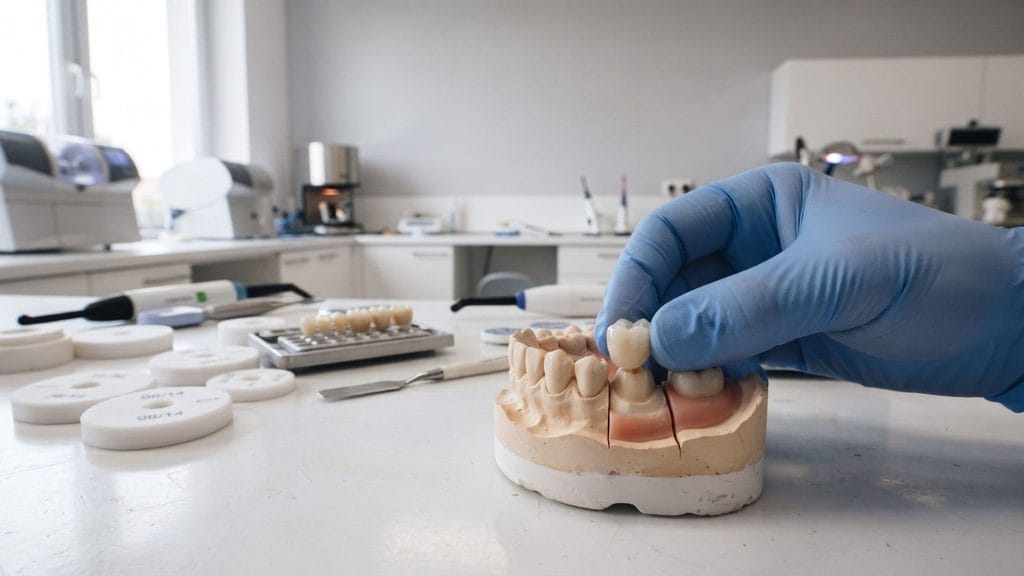
Zirconia has moved from a niche posterior option to the primary restorative material for most crown and bridge cases, largely because manufacturing advances have solved its earlier aesthetic limitations.
Key reasons dentists have shifted toward zirconia:
- Strength: flexural strength typically ranges from 800 to over 1,200 MPa, depending on the generation of zirconia used, far exceeding lithium disilicate.
- Biocompatibility: zirconia is well tolerated by soft tissue, with minimal plaque affinity compared to metal margins.
- Aesthetics: multilayered and translucent zirconia blocks now closely mimic natural enamel, closing the gap that once existed with all-ceramic alternatives.
- Durability: zirconia crowns resist chipping and fracture better than porcelain-fused-to-metal restorations in high-occlusal-load areas.
- Reduced tooth reduction: because zirconia is stronger, some cases allow for more conservative preparation than metal-based restorations required.
For dentists managing high case volume, these properties translate into fewer remakes and fewer post-cementation adjustments which is ultimately what determines whether a lab relationship is worth keeping.
How Do You Choose the Right Dental Lab for Zirconia Crowns?
Not every lab that offers zirconia produces consistent results. When evaluating Dental Lab Zirconia Crowns, dentists should look past marketing claims and assess the actual production process.
Questions worth asking before sending your first case:
- Does the lab use a fully digital workflow, or does it still rely on manual layering for shade matching?
- What generation of zirconia do they mill with, and does it match the anterior or posterior requirements of your case?
- What’s their average turnaround time, and does that hold up during high-volume periods?
- Do they offer a material and workmanship warranty, and what does it actually cover?
- Can they accommodate digital scan file formats from your intraoral scanner without added conversion delays?
A lab that answers these clearly, without vague reassurances, is usually one that has invested in the infrastructure to back up its claims. This is also where working with a specialized Zirconia Crown Dental Laboratory rather than a general-purpose lab tends to pay off, since the entire production line is built around this one material category.
What Should Dentists Know About Digital Workflows and AI-Driven Design?
Digital dentistry has changed how crowns are planned and produced, and zirconia has been a major beneficiary of that shift. Intraoral scanning eliminates the inaccuracies of traditional impressions, and AI-assisted design software now helps technicians propose anatomically accurate crown shapes faster than manual CAD alone.
For dentists, this shows up in three practical ways:
- Faster case turnaround, since AI-driven design tools reduce the manual modeling time technicians need per unit.
- More predictable occlusion, because digital bite registration and virtual articulation catch contact issues before milling begins.
- Consistent anatomical form, since AI systems are trained on large libraries of tooth morphology rather than a single technician’s interpretation.
This is one area where Zirconia Crowns for Dentists have genuinely improved over the past few years. A digital case submitted today can move from scan to milled restoration in a fraction of the time it took with analog impressions, without sacrificing fit accuracy.
Which Is Better: In-House Milling or Outsourcing to a Specialized Lab?
This is a common question among practices that already own a chairside mill. The honest answer depends on case volume and complexity.
In-house milling works well for single-unit posterior crowns where same-day delivery matters more than layered aesthetics. But for multi-unit bridges, anterior cases requiring nuanced shading, or high-volume practices, outsourcing to a specialized Zirconia Dental Lab typically produces better long-term results.
Specialized labs justify the added step and turnaround time with:
- Access to a broader range of zirconia blocks and shade libraries than most in-office mills stock.
- Dedicated quality control staff who inspect margins and contacts before shipping.
- Warranty coverage that in-house milling can’t offer, since the practice absorbs 100% of the remake cost internally.
- Higher-precision sintering furnaces calibrated specifically for consistent shrinkage control.
Many practices land on a hybrid model: chairside milling for simple, urgent cases, and lab-fabricated zirconia for anything requiring superior aesthetics or structural complexity.
What Turnaround Time Should Dentists Expect From a Zirconia Lab?
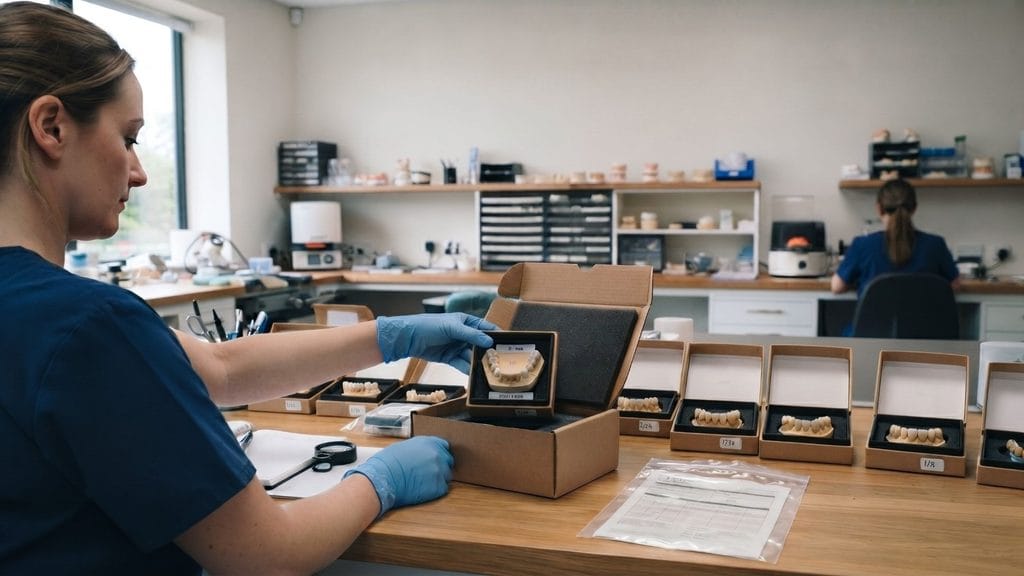
Turnaround time is often the deciding factor when dentists compare labs, but it shouldn’t be evaluated in isolation from quality. A standard single-unit zirconia crown typically takes 3 to 5 business days from digital scan receipt to shipment, while multi-unit bridges or full-arch cases can take longer depending on complexity.
Rush cases are increasingly common as digital workflows shorten production timelines, but a lab that consistently promises next-day turnaround on complex cases is worth questioning. Speed that compromises sintering time or quality control checks tends to show up later as fit issues or shade mismatches at seat appointments.
Partner With Zirconia Express for Predictable, High-Quality Zirconia Restorations
If you’re evaluating labs based on the criteria above, it’s worth understanding what Zirconia Express brings to the table as a Zirconia Crown Dental Lab built specifically around modern digital dentistry.
Zirconia Express produces premium zirconia crowns and bridges backed by up to a 5-year warranty, giving practices a level of assurance that’s difficult to find with general-purpose labs. Every restoration is milled from high-strength zirconia and finished with natural-looking layering, so cases seat with minimal chairside adjustment.
On the digital side, Zirconia Express uses an AI-driven design system that offers three anatomical shape options, giving dentists more control over how a final restoration fits a patient’s existing dentition. Combined with a fully digital workflow, this means faster turnaround without cutting corners on precision or aesthetics.
For practices based in North Carolina or working with labs remotely, Zirconia Express focuses on consistency the same quality on case ten as case one hundred. That reliability is what allows dentists to plan schedules around predictable delivery windows instead of building in buffer time for remakes.
If your current lab relationship leaves you second-guessing fit or shade regularly, it may be worth a conversation with the Zirconia Express team about how a specialized zirconia workflow could fit into your practice.
Conclusion
Choosing a Zirconia Crown Dental Lab isn’t just a logistics decision it’s a clinical one that affects remake rates, chair time, and patient satisfaction with every case you send out. The labs that perform best in 2026 are the ones that combine strong material science with genuinely digital, AI-assisted workflows rather than treating zirconia as an afterthought.
Whether you’re comparing a Zirconia Dental Laboratory for the first time or reevaluating a lab you’ve used for years, the questions in this guide give you a practical framework: ask about warranty coverage, digital compatibility, and real-world turnaround before committing case volume. A lab that answers those questions confidently is one worth building a long-term relationship with.
FAQ’s
What is the average lifespan of a zirconia crown?
Zirconia crowns typically last 10 to 15 years or longer with proper oral hygiene and regular dental checkups, making them one of the more durable restorative options available today.
Is zirconia better than porcelain-fused-to-metal (PFM) crowns?
Zirconia generally outperforms PFM crowns in strength, biocompatibility, and aesthetics, while also eliminating the dark metal margin line that can appear at the gumline over time with PFM restorations.
How long does it take a dental lab to make a zirconia crown?
Most labs deliver a single-unit zirconia crown within 3 to 5 business days of receiving a digital scan, though multi-unit cases and rush requests can affect that timeline.
Can zirconia crowns be used for front teeth?
Yes. Modern multilayered, high-translucency zirconia blocks are specifically designed for anterior use, offering aesthetics comparable to lithium disilicate while maintaining superior strength.
What should I look for in a zirconia crown warranty?
Look for coverage on both material defects and workmanship, along with clear terms on what qualifies for a remake, since warranty length alone doesn’t guarantee case-by-case reliability.