
What Makes BruxZir Crown Material So Strong and Durable?
Dentists choose BruxZir crown material for one simple reason: it survives real-world chewing forces without cracking, chipping, or wearing down opposing teeth. Unlike layered porcelain restorations that depend on a fragile outer coating for their looks, BruxZir crowns are milled from a single solid block of zirconia. That single detail changes everything about how the crown performs over time.
This guide breaks down the science behind BruxZir’s strength, how its composition differs from other crown materials, and why so many clinicians rely on it for posterior restorations and full-arch cases. Whether you’re a dentist evaluating lab options or a patient researching your treatment plan, you’ll get a clear, accurate picture of what makes this material stand out.
What Is BruxZir Crown Material?
BruxZir is a brand of monolithic zirconia used to fabricate dental crowns, bridges, and other fixed restorations. “Monolithic” means the entire crown, not just a core or substructure, is milled from one piece of zirconia ceramic.
This is different from traditional porcelain fused to zirconia (PFZ) crowns, where a zirconia core is layered with porcelain to improve appearance. That layered porcelain is often the weak point of the restoration since it can chip or fracture under pressure. BruxZir solid zirconia crowns remove that risk almost entirely because there’s no separate porcelain layer to fail.
Dental laboratories mill BruxZir crowns using CAD/CAM technology, then sinter the zirconia at extremely high temperatures. This sintering process transforms the soft, chalky pre-sintered block into a dense, tooth-colored ceramic capable of withstanding significant bite force.
What Is the BruxZir Crown Composition That Makes It So Strong?
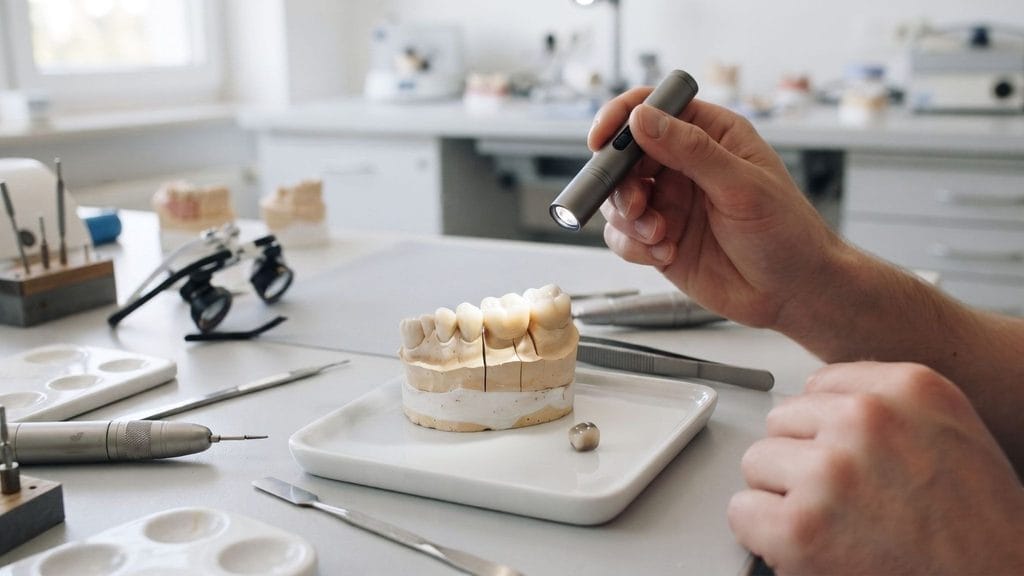
BruxZir crown composition centers on yttria-stabilized zirconia, a ceramic material reinforced with yttrium oxide. This addition stabilizes the zirconia’s crystal structure and gives the material its signature strength and resistance to cracking.
At a microscopic level, zirconia crystals exist in different phases. Under stress, the material can shift from a tetragonal phase to a monoclinic phase, expanding slightly at the site of a developing crack. That expansion squeezes the crack shut before it can spread, a property called transformation toughening.
This self-reinforcing mechanism is one of the biggest reasons zirconia outperforms other ceramics used in dentistry. Lithium disilicate, for example, is strong and highly esthetic, but it doesn’t have this same crack-halting behavior built into its composition.
Modern BruxZir formulations also balance strength with translucency by adjusting the zirconia particle size and yttria content. Older, high-strength zirconia tended to look opaque, while newer generations achieve a more natural, tooth-like appearance without giving up structural integrity.
How Strong is BruxZir Crown Material Strength Compared to Other Options?
BruxZir crown material strength is typically measured using flexural strength, expressed in megapascals (MPa). This tells you how much force the material can withstand before it bends or breaks.
Traditional BruxZir zirconia generally tests in the range of 1,000 to over 1,200 MPa, depending on the specific formulation. For comparison, lithium disilicate crowns usually fall between 360 and 500 MPa, and porcelain fused to metal restorations depend heavily on their metal substructure for strength since the porcelain layer itself is far weaker.
Natural tooth enamel, by contrast, has a flexural strength far lower than zirconia, which is part of why zirconia crowns can sometimes wear opposing natural teeth if not properly polished and adjusted. A skilled lab technician accounts for this by finishing the occlusal surface carefully.
In practical terms, this strength advantage matters most in the posterior region of the mouth, where molars absorb the heaviest bite forces during chewing. It’s also valuable for patients who grind or clench their teeth, since BruxZir crowns can handle repeated stress that would fracture a layered porcelain restoration.
Why Are BruxZir Solid Zirconia Crowns So Durable?
Strength and durability aren’t quite the same thing, and this distinction matters clinically. Strength describes how much force a material resists before breaking. Durability describes how well it holds up over years of use, including resistance to wear, staining, and microfracture. BruxZir solid zirconia crowns score well on both counts for several reasons.
No weak porcelain layer: Since the entire crown is one solid piece, there’s nothing to delaminate or chip away over time, which is one of the most common failure points in layered restorations.
Resistance to hydrothermal aging: Zirconia holds up well in the wet, temperature-fluctuating environment of the mouth, unlike some ceramics that degrade faster when repeatedly exposed to moisture and heat cycles.
Low wear on opposing dentition: Properly polished BruxZir surfaces are smoother than many people expect, reducing the abrasive effect on the teeth they bite against.
Stain resistance: The dense, low-porosity surface of zirconia resists picking up stains from coffee, tea, and other common dietary sources far better than composite materials.
Together, these properties explain why many clinicians report BruxZir crowns performing reliably for a decade or longer with proper care, though individual results vary based on bite forces, oral hygiene, and maintenance.
How Long Do BruxZir Crowns Typically Last?
Most dental professionals expect BruxZir crowns to last between 10 and 15 years, and many continue functioning well beyond that with good oral hygiene and regular checkups. This lifespan compares favorably to porcelain-fused-to-metal crowns, which often need replacement sooner due to porcelain fracture or margin issues.
Longevity depends on several factors beyond the material itself. Bite alignment, night grinding habits, and how well the crown was seated and cemented all play a role in long-term success. Working with an experienced dental laboratory that understands proper zirconia milling and finishing protocols also makes a measurable difference in outcomes.
This is one reason many practices choose to partner with a lab that offers a warranty on its zirconia restorations. A warranty reflects confidence in both the material and the fabrication process behind each crown.
Which Is Better, BruxZir Crowns or Porcelain Fused to Metal Crowns?
For posterior teeth facing heavy bite forces, BruxZir crown material generally outperforms porcelain fused to metal (PFM) in strength, esthetics, and biocompatibility. PFM restorations rely on a metal substructure, which can create a visible dark line at the gum margin as tissue recedes over time.
BruxZir crowns avoid this issue entirely since there’s no metal involved. They also tend to be lighter and require less tooth reduction in certain cases compared to PFM, which needs enough thickness for both the metal coping and the porcelain layer on top.
That said, PFM still has a role in specific clinical situations, particularly where a dentist wants a proven, long-standing option with metal’s ductility under complex load-bearing conditions. The right choice ultimately depends on the individual case, the patient’s bite, and the clinician’s preference.
How Should Dentists Choose a Zirconia Crown for Their Patients?
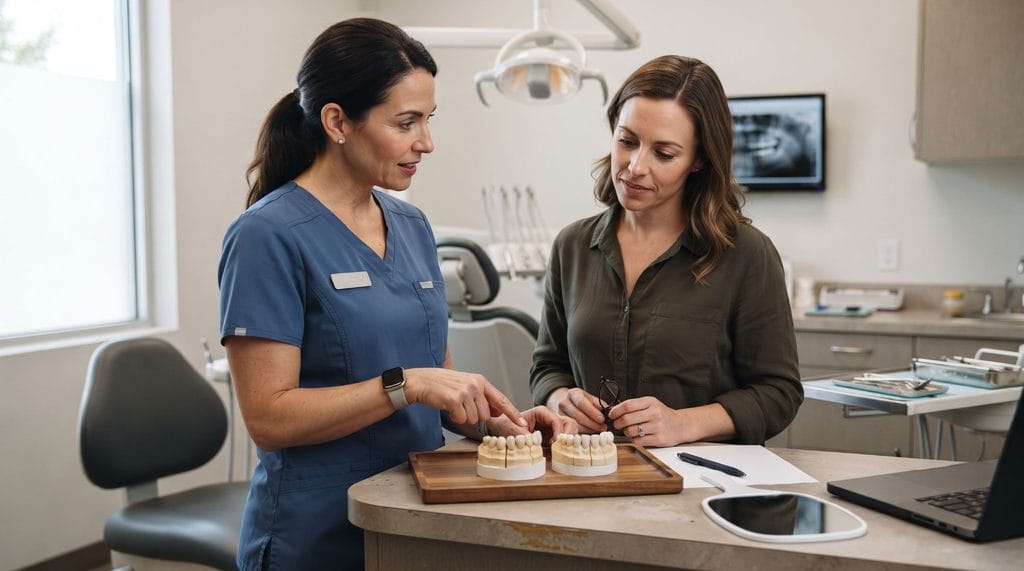
Choosing the right zirconia crown starts with understanding the case. Posterior molars under heavy occlusal load benefit most from higher strength, more opaque zirconia formulations. Anterior teeth, where esthetics matter more, often call for a more translucent zirconia blend that still retains solid mechanical properties.
A dentist should also consider the patient’s parafunctional habits, such as clenching or grinding, along with their opposing dentition. Natural teeth opposing a zirconia crown need a well-polished occlusal surface to minimize wear.
Finally, the quality of the dental laboratory matters enormously. Milling precision, sintering protocols, and finishing techniques all affect how a zirconia crown performs in the mouth, regardless of which zirconia brand or generation is used.
Why Partner With Zirconia Express for Zirconia Crowns and Bridges?
Choosing the right dental laboratory partner is just as important as choosing the right material. Zirconia Express, a B2B dental laboratory based in North Carolina, works with dentists, prosthodontists, implant specialists, and dental practices who need consistent, high-quality zirconia restorations delivered on schedule.
Zirconia Express fabricates premium zirconia crowns and bridges backed by up to a 5-year warranty, giving practices confidence in every case that leaves the lab. Each restoration is built using high-strength zirconia designed to hold up under real-world bite forces while still delivering natural, lifelike esthetics that patients appreciate.
For practices working digitally, Zirconia Express also offers digital dental cases powered by an AI-driven design system. This includes three anatomical shape options, giving dentists flexibility to match each patient’s natural tooth morphology while maintaining high precision and full compatibility with modern digital workflows.
What sets a lab apart isn’t just the material it uses; it’s the consistency behind every single case. Zirconia Express focuses on reliable turnaround times and dependable quality control, so practices can plan their schedules with confidence instead of waiting on unpredictable lab timelines.
If your practice is looking for a dependable zirconia lab partner that supports both traditional and digital dentistry, reach out to Zirconia Express to discuss your next case.
Conclusion
BruxZir crown material has earned its reputation through proven ceramic science and real-world clinical performance. Its monolithic design, high flexural strength, and resistance to chipping make it one of the most reliable options available for posterior and full arch restorations today.
For dentists comparing options, understanding BruxZir crown composition helps clarify why this material continues to perform well over years of function, rather than relying on marketing claims alone. Pairing that material knowledge with an experienced dental laboratory partner is what ultimately determines how well a crown performs for the patient sitting in the chair.
FAQ’s
What is BruxZir crown material made of?
BruxZir crown material is made of yttria-stabilized zirconia, a dense ceramic milled as a single solid block rather than layered with porcelain.
Is BruxZir stronger than porcelain?
Yes. BruxZir zirconia has significantly higher flexural strength than traditional porcelain, which is why it resists chipping and fracture much better in high bite-force areas.
How long do BruxZir crowns usually last?
BruxZir crowns typically last 10 to 15 years, with many lasting longer when patients maintain good oral hygiene and regular dental checkups.
Can BruxZir crowns be used on front teeth?
Yes, modern BruxZir formulations offer improved translucency, making them suitable for anterior teeth while still maintaining strong mechanical properties.