

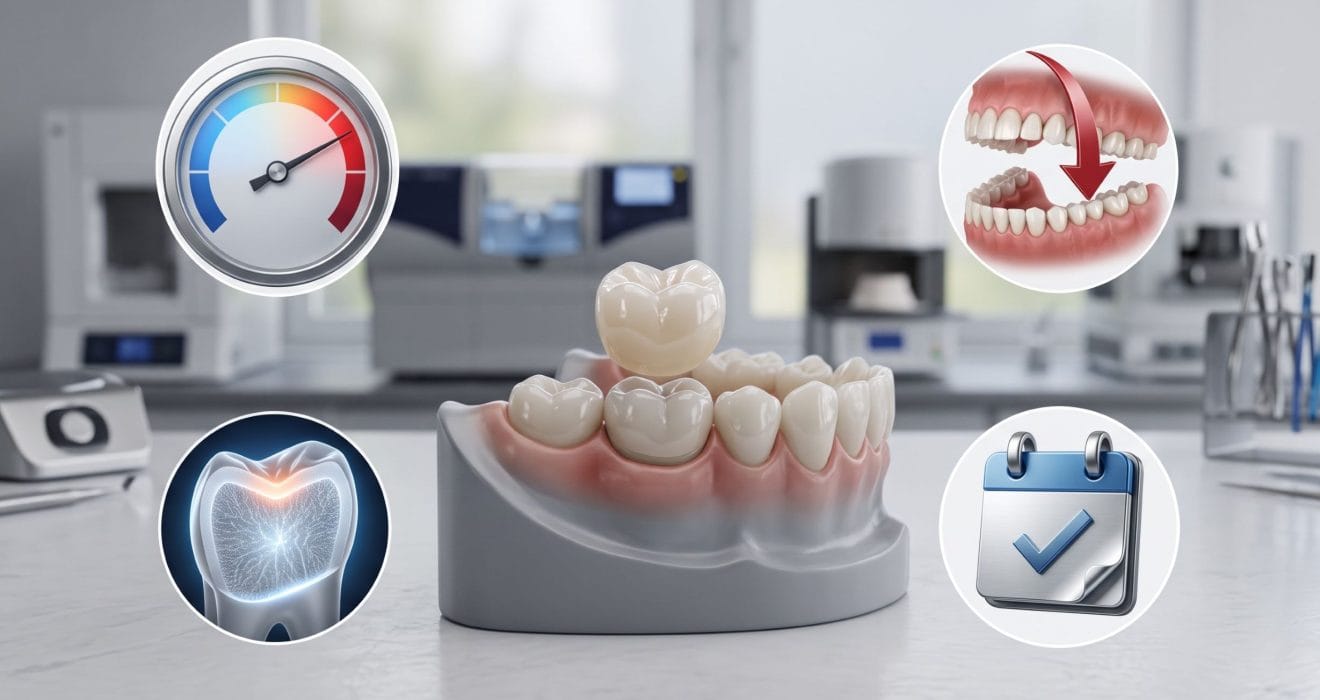
BruxZir Crown Strength: MPa, Bite Force, and Clinical Durability
Dental professionals constantly balance two competing priorities when selecting restorative materials: aesthetic integration and structural longevity. For patients presenting with severe bruxism, heavy occlusal forces, or minimal preparation space, traditional ceramics frequently fall short, leading to catastrophic material failure. The introduction of monolithic zirconia transformed this clinical landscape, establishing a new benchmark for durable restorations.
When evaluating these materials, clinicians frequently ask: what is BruxZir crown strength and how does it translate to real-world performance? BruxZir solid zirconia is a monolithic restorative material engineered from premium yttria-stabilized tetragonal zirconia polycrystal (Y-TZP). By eliminating the fragile porcelain veneer layer characteristic of porcelain-fused-to-metal (PFM) restorations, it prevents the common issue of delamination.
For modern practices leveraging digital workflows, partnering with an advanced B2B laboratory like Zirconia Express ensures these material properties are fully optimized. Precision milling and advanced sintering protocols allow clinicians to deliver restorations that withstand intense masticatory forces while maintaining highly precise marginal integrity.
What Is BruxZir Crown Strength in Quantitative Terms?
Quantifying material performance requires looking directly at flexural metrics. BruxZir strength in MPa typically ranges from 1000 MPa to over 1200 MPa, depending on the specific product formulation used. BruxZir Full-Strength, the traditional formulation engineered for posterior applications, achieves a flexural strength of 1150 MPa to 1200 MPa. This value represents the material’s capacity to resist structural deformation under bending loads before fracturing occurs.
To put this structural capacity into clinical perspective, consider how it compares to the physiological limits of the human masticatory system:
- Average Human Bite Force: In a healthy adult, molars generate an average biting force between 300 N and 700 N (roughly equivalent to 40 to 90 PSI of pressure).
- Bruxism and Parafunctional Loading: Patients exhibiting severe nocturnal bruxism or clenching habits can exert forces exceeding 900 N to 1200 N.
- Material Headroom: Because BruxZir boasts a structural threshold that far outpaces these maximum physiological forces, it provides an exceptional margin of safety against functional failures.
The core mechanism behind this remarkable resilience is a physical phenomenon known as transformation toughening. When a micro-crack begins to form under stress, the crystalline structure around the crack tip transforms from a tetragonal phase to a more voluminous monoclinic phase. This localized expansion acts like a structural brake, compressing the crack tip closed and preventing the flaw from propagating through the body of the crown.
How Strong Is BruxZir Compared to Other Restorative Materials?
To understand how strong BruxZir is, it must be benchmarked against alternative options across the modern restorative spectrum. The dental industry relies on a variety of materials, ranging from traditional glass-ceramics to advanced multi-layered oxides.
| Restorative Material Type | Typical Flexural Strength (MPa) | Primary Indication | Clinical Trade-off |
| BruxZir Full-Strength Zirconia | 1150 to 1200 MPa | Posterior crowns, long-span bridges, bruxers | High opacity; requires minimal tooth reduction (0.5 mm) |
| Lithium Disilicate (e.max) | 360 to 500 MPa | Anterior crowns, veneers, inlays/onlays | Exceptional aesthetics; requires greater tooth reduction |
| Leucite-Reinforced Glass Ceramic | 120 to 160 MPa | Anterior single-unit inlays and veneers | Limited to low-stress areas; prone to bulk fracture |
| Feldspathic Porcelain (Veneer Layer) | 60 to 90 MPa | Layering over PFM or zirconia frameworks | High fracture risk; prone to chipping and delamination |
Is BruxZir stronger than e.max?
Yes, BruxZir is stronger than e.max, and the mechanical data shows a substantial difference. While lithium disilicate (IPS e.max) provides unmatched translucency and lifelike aesthetics for the anterior zone, its flexural strength tops out near 500 MPa. BruxZir delivers more than double the structural resistance of lithium disilicate. This makes it the superior choice for high-stress applications like posterior areas, long-span fixed partial dentures, and patients with active parafunctional habits.
Is BruxZir stronger than porcelain?
When evaluating whether BruxZir is stronger than porcelain, the comparison is even more stark. Traditional feldspathic porcelain exhibits a very low flexural strength, usually falling between 60 MPa and 90 MPa. In a standard PFM crown, this brittle veneer layer bears the brunt of functional forces, frequently resulting in localized chipping or complete structural delamination. By utilizing a completely monolithic design, BruxZir eliminates the weak ceramic interface, providing a restoration that is more than ten times stronger than standalone dental porcelain.
Why Is BruxZir So Strong?
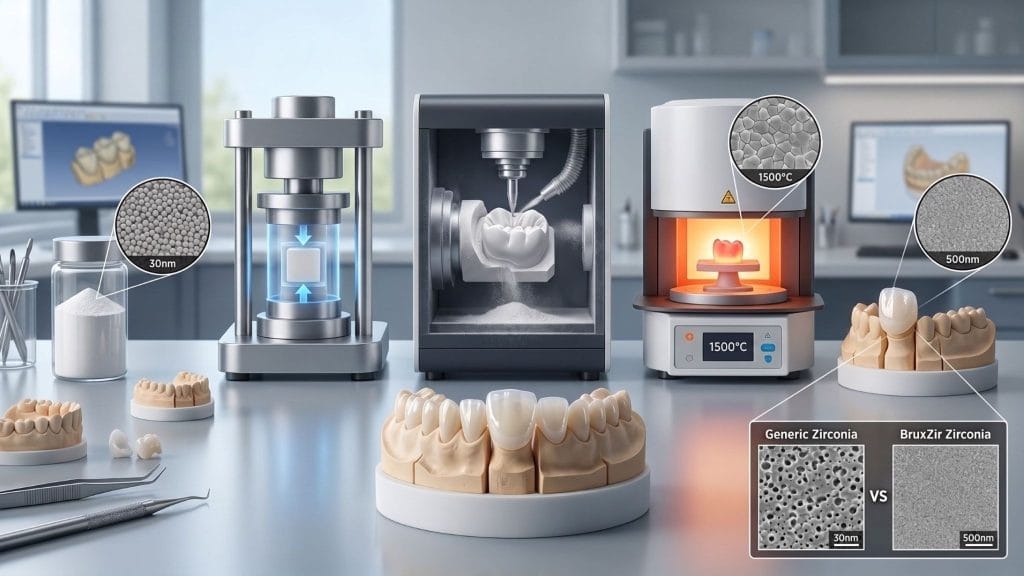
The exceptional durability of this material comes from its specialized manufacturing process and unique microstructural properties. Understanding why BruxZir is so strong requires looking closely at how its raw components are handled before the restoration ever reaches the patient.
- Step 1: Raw Y-TZP Nanopowder formulation.
- Step 2: Colloidal Isostatic Pressing to eliminate internal micro-voids.
- Step 3: Precision CAD/CAM Milling tailored to exact patient anatomy.
- Step 4: High-Temperature Industrial Sintering to mature the crystalline structure.
- Step 5: Final Transformation-Toughened Monolithic Crown ready for functional load.
Unlike generic zirconia blanks that can suffer from internal density variations, authentic BruxZir blocks are created using a specialized colloidal processing method. This technique yields a highly uniform, ultra-fine grain distribution throughout the material.
The structural integrity of the final crown depends heavily on three core factors:
- Isostatic Pressing Protocols: The raw powder is compressed equally from all directions, eliminating internal voids or structural micro-defects that could lead to premature failure under stress.
- Optimized Thermal Sintering: Precise temperature control during sintering allows the crystals to mature perfectly into their high-strength tetragonal configuration.
- Monolithic Structural Architecture: Fabricating the entire crown from a single solid block ensures uniform stress distribution, preventing the internal shear stresses common in layered restorations.
Practices working with Zirconia Express benefit directly from this optimized internal chemistry. Utilizing advanced digital workflows, the lab translates these exact material properties into highly accurate clinical realities, matching precise design parameters with predictable sintering results.
Can a BruxZir Crown Break Under Clinical Conditions?
Despite its impressive mechanical characteristics, clinicians must still consider a vital practical question: can a BruxZir crown break inside the mouth? The short answer is yes, but it is an exceedingly rare event that almost always points to specific clinical or technical challenges rather than a failure of the material itself.
In typical clinical environments, true bulk fractures in monolithic zirconia occur in fewer than 1 percent of documented cases. When a structural failure does take place, it can usually be traced back to one of three common causes:
1. Inadequate Occlusal Reduction
While full-strength zirconia can technically be prepared with an occlusal reduction as thin as 0.5 mm, targeting a conservative 1.0 mm provides a much safer structural foundation. If a preparation leaves the material thinner than 0.5 mm in areas of intense occlusal contact, the crown loses its structural integrity. Over time, concentrated functional loads can cause the material to flex beyond its physical limits, ultimately leading to a fracture.
2. Aggressive Post-Sintering Adjustments
Altering a zirconia crown with a standard diamond bur without adequate water cooling introduces intense localized heat and micro-fractures into the crystalline structure. These thermal stresses trigger premature phase transformations, destabilizing the surrounding area. Over months of functional loading, these tiny internal flaws can grow, eventually causing a clean split across the body of the restoration.
3. Sharp Angles in the Preparation Design
Zirconia requires smooth, rounded internal lines to properly distribute structural loads. Incorporating sharp line angles or distinct step-features into the tooth preparation creates internal stress concentration points. When the patient bites down, functional forces focus directly on these sharp transitions, significantly increasing the likelihood of a structural fracture.
How Does BruxZir Perform in Long-Term Clinical Studies?
Long-term clinical trials consistently validate the exceptional durability of monolithic zirconia restorations. Independent research groups, including The Dental Advisor, have monitored thousands of BruxZir restorations over evaluation periods extending past ten years.
The collective data from these long-term studies highlights several impressive clinical performance trends:
- Exceptional Survival Rates: Full-contour monolithic zirconia crowns maintain a verified survival rate exceeding 98 percent over a decade of active functional service.
- Zero Delamination Issues: Because these restorations lack a separate ceramic veneer layer, structural failures caused by porcelain chipping are eliminated.
- Low Antagonist Wear: Early clinical concerns suggested that ultra-hard zirconia would accelerate wear on opposing natural dentition. However, clinical tracking reveals that polished monolithic zirconia is remarkably kind to antagonist enamel, often causing less wear than traditional layered porcelain, which features a much more abrasive surface texture.
To achieve these optimal clinical outcomes, keeping the material perfectly smooth is paramount. A highly polished zirconia surface presents a low-friction interface to opposing teeth. If adjustments are made chairside, the clinician must meticulously polish the altered areas using a dedicated zirconia polishing kit to prevent accelerated wear on the patient’s natural teeth.
How Can Dentists Optimize Zirconia Outcomes with Zirconia Express?
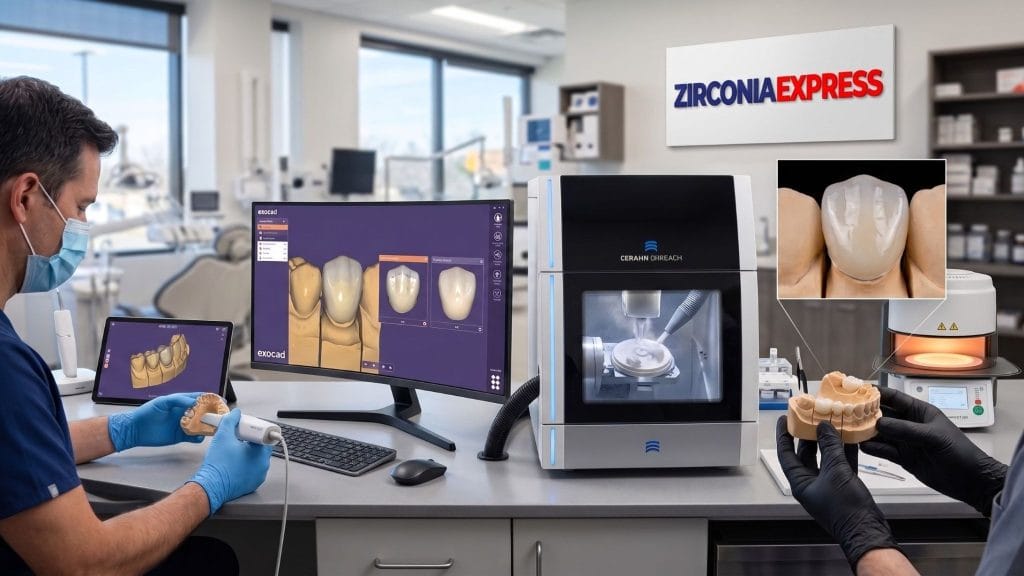
Delivering consistent, high-strength restorations requires a seamless integration of precise clinical preparation and advanced laboratory fabrication. For modern dental practices looking to streamline this process, partnering with a specialized digital laboratory yields significant clinical advantages. Zirconia Express provides high-strength zirconia restorations engineered specifically to meet the rigorous demands of modern clinical environments.
Operating from North Carolina, USA, Zirconia Express supports dental practices by integrating advanced AI-driven design systems into the digital workflow. This technology ensures that every restoration features optimal anatomical contours, precise marginal adaptation, and ideal occlusal clearance. Clinicians can choose from three distinct anatomical shape options to best match the patient’s existing dentition, ensuring a natural blend without sacrificing structural durability.
By combining premium monolithic materials with a predictable digital workflow, the lab offers restorations backed by up to a 5-year warranty. This structural guarantee gives dental practices peace of mind when prescribing restorations for severe bruxers or high-load posterior cases. With a focus on fast, reliable turnaround times, Zirconia Express helps clinicians deliver exceptionally durable restorations efficiently, minimizing chair time and maximizing patient satisfaction.
Are you ready to elevate your restorative outcomes and experience the precision of an AI-driven digital workflow? Contact Zirconia Express today to submit your digital cases and partner with a reliable laboratory dedicated to outstanding quality.
Conclusion:
Understanding the mechanics of BruxZir crown strength allows dental professionals to make evidence-based material selections that directly improve patient outcomes. With an impressive flexural strength exceeding 1000 MPa, these monolithic restorations provide a robust clinical solution for patients with severe bruxism and intense parafunctional habits. By eliminating the risk of porcelain chipping and requiring conservative preparation, full-contour zirconia has earned its place as a reliable cornerstone of modern restorative dentistry.
Achieving long-term clinical success relies on combining proper chairside preparation techniques with precise, high-end laboratory fabrication. Partnering with an expert laboratory ensures that advanced software configurations and strict sintering protocols protect the material’s structural integrity. By understanding the underlying physics of transformation-toughened zirconia, clinicians can confidently prescribe restorations that stand up to the most demanding oral environments for years to come.
FAQ’s
What is BruxZir crown strength in daily clinical use?
In daily clinical work, BruxZir crown strength ranges smoothly between 1150 MPa and 1200 MPa. This provides an exceptional mechanical safety buffer that easily handles heavy masticatory loading and severe chronic nocturnal bruxism without cracking.
Can a BruxZir crown break if a patient chews hard ice?
Yes, a BruxZir crown break can happen if occlusal preparation is under 0.5 mm or internal line angles are left too sharp. When proper reduction depths are systematically met, true clinical bulk fractures occur in less than 1 percent of active cases.
Why is BruxZir so strong compared to PFM options?
The secret behind why BruxZir is so strong lies in its solid, monolithic yttria-stabilized structural design. By eliminating the fragile veneered porcelain interface completely, it activates transformation toughening to compress spreading micro-cracks under load.
Is BruxZir stronger than e.max for dental restorations?
Yes, BruxZir is stronger than e.max by a wide margin, delivering double the total flexural strength of lithium disilicate. While e.max remains an ideal option for anterior translucent aesthetics, zirconia is preferred for heavy posterior functional forces.
Is BruxZir stronger than porcelain overlay options?
When evaluating whether BruxZir is stronger than porcelain, monolithic zirconia outperforms traditional porcelain by more than ten times. It completely removes the vulnerable structural layers that cause structural chipping, marginal flaking, and total delamination over time.
How strong is BruxZir against standard human bite forces?
To see how strong BruxZir is, compare its 1200 MPa limit to natural molar forces, which average 300 N to 700 N. The material provides a massive structural safety margin that easily withstands severe bruxism forces exceeding 1200 N.
1 Comment