

Best Zirconia Crown Brands in USA: Clinical Buyer Guide
Every restorative dentist knows the frustration of an unpredictable crown delivery appointment. You remove the provisional, seat the final restoration, and immediately spend fifteen minutes adjusting high occlusion, tweaking weak interproximal contacts, or staring at a chalky, high-value crown that clashes with adjacent natural dentition. When patients expect lifelike esthetics alongside multi-year durability, choosing among the best zirconia crown brands in USA is no longer as simple as writing “monolithic zirconia” on a lab slip.
Over the past several years, ceramic material science has evolved from opaque, first-generation structural frameworks into sophisticated polychromatic pucks engineered with multi-phase crystal architectures. Yet even the highest-grade ceramic puck is only half of the clinical equation. How a digital dental laboratory nests your STL scan, calibrates its five-axis milling paths, and manages its sintering kinetics ultimately dictates whether that restoration drops effortlessly onto your preparation margin or ends up back in the mail.
What Defines the Best Zirconia Material for Dental Crowns?
Selecting the best zirconia material for dental crowns starts with understanding how yttrium oxide (yttria) stabilization governs the trade-off between mechanical fracture resistance and optical light transmission. Pure zirconium dioxide exists in three crystallographic phases depending on thermal conditions: monoclinic at room temperature, tetragonal at elevated temperatures, and cubic at peak sintering temperatures. By doping raw zirconia powder with specific molar percentages of yttria, typically 3 mol%, 4 mol%, or 5 mol%, manufacturers stabilize the tetragonal and cubic phases at room temperature.
As yttria concentration increases, the proportion of isotropic cubic crystals rises. Because cubic grains are larger and scatter less incident light at grain boundaries than tetragonal crystals, the ceramic becomes significantly more translucent. However, reducing the tetragonal phase also diminishes “transformation toughening”, the unique physical mechanism where stressed tetragonal crystals expand by roughly 4% as they shift into the monoclinic phase, effectively squeezing micro-cracks shut before they can propagate.
- 3Y-TZP (3 mol% Tetragonal Zirconia Polycrystal): Composed primarily of tetragonal grains, 3Y formulations deliver biaxial flexural strength ranging from 1,100 MPa to over 1,350 MPa. With baseline light transmission and maximum fracture toughness, 3Y-TZP remains the workhorse indication for second molars, heavy bruxers, implant-supported prostheses, and long-span posterior bridges.
- 4Y-PSZ (4 mol% Partially Stabilized Zirconia): Balancing tetragonal strength with cubic optics, 4Y zirconia provides 750 MPa to 1,100 MPa of flexural strength while boosting light transmission by 25% to 35% over traditional 3Y pucks. Clinicians rely on 4Y multilayer formulations for everyday single-unit posterior crowns, premolars in the smile frame, and short-span three-unit bridges.
- 5Y-PSZ (5 mol% Partially Stabilized Zirconia): Engineered with a predominantly cubic phase, 5Y ceramics offer 500-800 MPa flexural strength and 49-51% translucency. While unsuitable for long-span posterior bridges or severe parafunction, 5Y exceeds the roughly 377 MPa to 530 MPa flexural strength of lithium disilicate glass-ceramics while providing vital, enamel-like opalescence.
Evaluating the Best Zirconia Crown Brands in USA for Clinical Performance
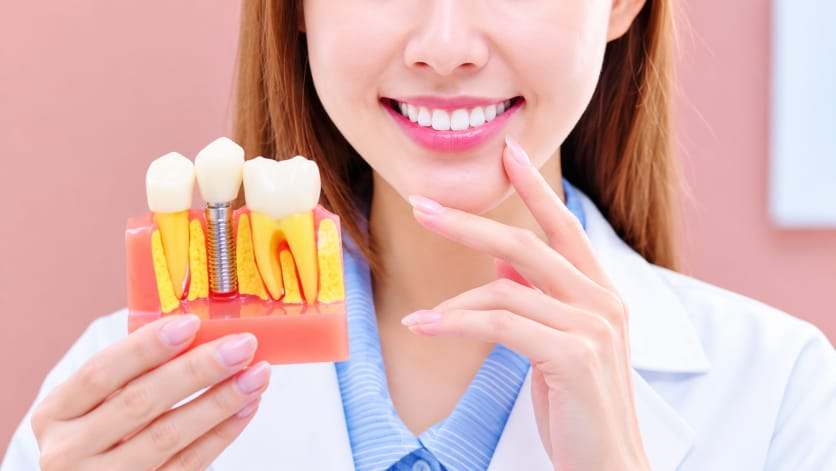
When auditing the best zirconia crown brands in USA, savvy clinic owners look past marketing buzzwords to examine powder purity, pressing uniformity, and independent survival data. The top dental zirconia manufacturers in USA and global restorative supply chains refine medical-grade zirconia powders using Cold Isostatic Pressing (CIP), which compacts the ceramic uniformly from every direction to eliminate internal micropores and ensure predictable sintering shrinkage.
Ivoclar IPS e.max ZirCAD Prime and Prime Esthetic
Ivoclar changed the restorative landscape by replacing step-layered pigment bands with proprietary Gradient Technology (GT). Instead of stacking a single yttria grade with different dyes, IPS e.max ZirCAD Prime blends high-strength 3Y-TZP in the dentin core (reaching 1,200 MPa biaxial flexural strength and fracture toughness exceeding 5 MPa·m½) with high-translucency 5Y-PSZ in the incisal zone (49% translucency). Because the powder kinetics of both yttria grades are conditioned to shrink at identical rates during sintering, clinicians get a seamless progression of chroma and translucency suitable for everything from single-unit anterior crowns to 14-unit bridges.
Kuraray Noritake KATANA Zirconia (HTML Plus, STML, and UTML)
Kuraray Noritake is one of the few ceramic pioneers that synthesizes its own raw zirconia powders and organic binders in-house rather than sourcing generic blends. Their KATANA line segments indications clearly by yttria architecture: HTML (High Translucent Multi-Layered) maintains a uniform 3Y-based strength profile around 1,150 MPa across all internal shade layers for multi-unit frameworks, while STML (4Y, roughly 748 MPa to 750 MPa, 49% translucency) and UTML (5Y, 557 MPa, 51% translucency) target premolar and anterior cosmetic restorations where natural light diffusion is paramount.
Glidewell BruxZir Full-Strength and BruxZir Esthetic
Few restorative materials carry the longitudinal clinical validation of BruxZir. Formulated from refined 3Y-TZP to reach 1,150 MPa or higher, BruxZir Full-Strength demonstrated a 100% survival rate over a 10-year independent study tracked by Gordon J. Christensen Clinicians Report. It allows feather-edge or conservative chamfer preparations with as little as 0.5 mm of occlusal reduction (1.0 mm ideal), making it a reliable rescue material for short clinical crowns and second molars with tight interarch clearance. For visible zones, BruxZir Esthetic reduces opacity while maintaining strength with a minimal 0.7 mm to 1.25 mm preparation requirement.
ArgenZ HT+ Multilayer and ArgenZ ST Esthetic
As one of the most prominent domestic suppliers among top dental zirconia manufacturers in USA, Argen provides laboratories across North America with highly consistent, American-finished zirconia discs. ArgenZ HT+ Multilayer delivers 1,250 MPa of flexural strength paired with 45% translucency, mirroring the natural transition from cervical dentin to incisal enamel without visible transition lines. For cosmetic cases, ArgenZ ST Esthetic offers 850 MPa strength at 50% translucency and incorporates built-in value-correction chemistry so restorations never drop in brightness after sintering.
Selecting High Translucency Zirconia Brands and Anterior Solutions
Prescribing in the aesthetic zone requires a careful balance between substrate masking and vitality. Early monolithic zirconia failed in the anterior segment because high-density tetragonal crystals reflected light right off the facial surface, creating a flat, lifeless appearance alongside natural central incisors or lithium disilicate veneers. Today, high-translucency zirconia brands solve this through hybrid multi-generation gradient engineering.
When selecting the best dental zirconia for anterior crowns, multi-layered 4Y-to-5Y or 3Y-to-5Y discs outperform single-composition blocks for three clinical reasons:
- Cervical Masking and Margin Integrity: A 3Y or 4Y cervical dentin base provides lower translucency (around 43% to 45%) to mask dark endodontically treated tooth structure or metal implant abutments while resisting tensile stresses at the gingival margin.
- Incisal Opalescence Without Porcelain Chipping: Traditional porcelain-fused-to-zirconia (PFZ) restorations carry a documented risk of veneering porcelain delamination under protrusive guidance. A monolithic 5Y incisal zone achieves lifelike halo effects and Mammelon depth while eliminating the weak veneer-to-core interface.
- Simplified Adhesive and Conventional Luting: Unlike glass-ceramics that require hydrofluoric acid etching and strict rubber-dam isolation, high-translucency zirconia crowns with retentive preparation geometry can be luted with resin-modified glass ionomer or bonded using a 50-micron aluminum oxide air-abrasion protocol at 1 bar pressure followed by an MDP-containing self-adhesive resin cement.
Why Milling Precision Matters for the Best Zirconia Blocks for Dental Crowns
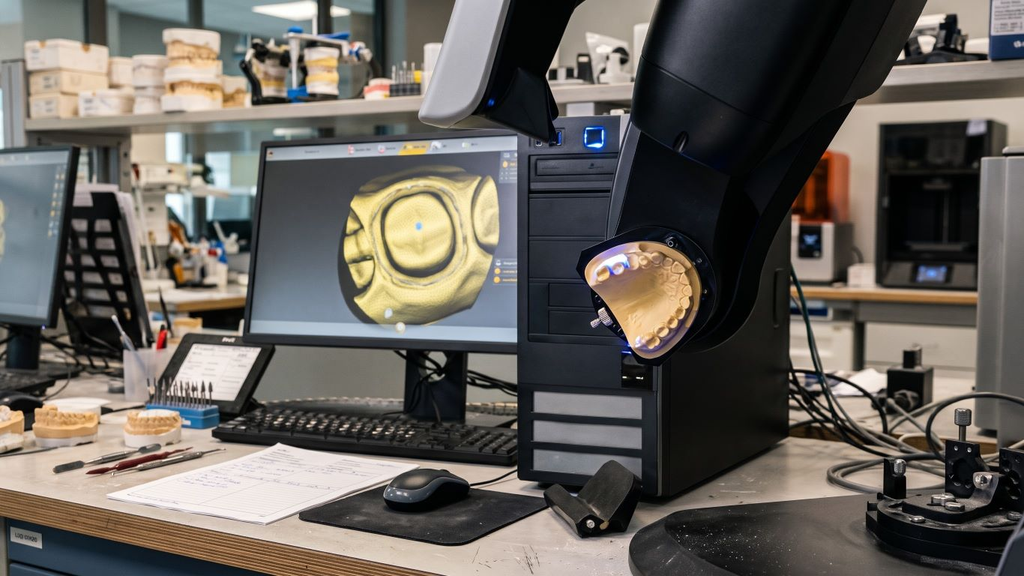
Here is an industry truth that rarely makes it into manufacturer brochures: buying the best zirconia blocks for dental crowns will not save a case if the laboratory’s digital and thermal workflows are outdated. Zirconia is milled in a chalk-like, pre-sintered “green state” roughly 20% to 25% larger than the final tooth to account for volumetric sintering shrinkage.
If a laboratory pushes dull carbide burs beyond their lifecycle, nests bridges improperly across the transition zone of a multilayer disc, or rushes a furnace cycle not calibrated for that specific puck’s yttria chemistry, two things happen. First, micro-fractures form along the marginal ridge during milling. Second, non-uniform thermal contraction warps the intaglio fit and shifts the final Vita shade.
Pairing premium ceramic pucks with AI-driven design systems and 3Shape technology eliminates these human variables. Advanced 3Shape CAD software, coupled with artificial intelligence, analyzes opposing-arch kinematics, automatically calculates ideal cusp-fossa angles, and designs uniform cement spacer profiles down to the micron. When your digital scan enters an AI-assisted 3Shape workflow, marginal lines are traced with sub-pixel accuracy and interproximal contacts are calibrated to your exact clinician preferences, meaning your crowns seat passively in minutes.
Elevate Your Restorative Workflow: Send Your Digital Cases to Zirconia Express
Knowing which zirconia formulation fits your patient’s bite is step one; partnering with a U.S. digital lab that executes every case with obsessive consistency is what protects your chair time and profitability. Located in Cary, North Carolina, Zirconia Express has served dentists nationwide since 2009 as a dedicated full-digital dental laboratory built around clinical predictability.
When you send your restorative work to Zirconia Express, your practice gains an immediate competitive edge:
- Warrantied Zirconia Crowns and Bridges: We fabricate full-contour monolithic zirconia, high-translucent anterior zirconia, 3D multi-layered gradient zirconia, and layered PFZ restorations all backed by up to a 5-year warranty and a 100% satisfaction guarantee.
- AI-Driven 3Shape Digital Precision: Our North Carolina digital department integrates 3Shape and Exocad technology with AI-driven CAD design systems to deliver dead-on margins, anatomical contours, and zero-headache occlusion. We accept direct cloud scans from all major intraoral scanners as well as open STL, PLY, DCM, and OBJ files.
- Risk-Free Onboarding and Fast Turnaround: New partner practices receive their First Case Free, year-round flat-rate predictability with no minimum monthly case volume, free nationwide shipping, a reliable 8-business-day standard turnaround, and a 3-day in-lab rush option for digital full-zirconia cases.
Ready to eliminate remakes and cut your chairside adjustment time to near zero? Connect your intraoral scanner to the Zirconia Express digital portal today and submit your first digital case for free.
Conclusion
Choosing among the Best dental zirconia for anterior crowns comes down to matching yttria chemistry to clinical load: high-toughness 3Y-TZP for posterior bruxers and long-span bridges, versatile 4Y-PSZ for daily single units, and multi-layered 3Y/5Y gradient discs for anterior esthetics. When those premier ceramics are engineered through Zirconia Express’s AI-driven 3Shape workflow in North Carolina and backed by up to a 5-year warranty, every crown delivery becomes a fast, predictable win for your practice.
FAQ’s
How does 3Y zirconia compare to 5Y zirconia for bruxism patients?
Monolithic 3Y zirconia offers over 1,100 MPa of flexural strength, making it ideal for heavy grinders. Higher-yttria 5Y zirconia trades strength for enamel-like translucency and should be avoided in bruxers.
Can multilayer zirconia pucks be used for three-unit posterior bridges?
Hybrid gradient pucks with a high-strength 3Y dentin core easily support three-unit posterior bridges. However, uniform 5Y ultra-translucent discs lack the connector toughness required for multi-unit posterior spans.
Which intraoral scanner files integrate with 3Shape digital dental lab workflows?
Our 3Shape portal accepts direct scans and opens STL, PLY, DCM, or OBJ files from any scanner. This digital transfer eliminates impression distortion and reduces chairside seating adjustments.
What is the recommended tooth preparation reduction for monolithic zirconia crowns?
High-strength 3Y posterior crowns require just 0.5 mm to 1.0 mm of occlusal clearance. Esthetic anterior zirconia performs best with 1.0 mm to 1.25 mm of reduction.
How does Zirconia Express get its crown and bridge restorations?
Every zirconia crown and bridge from our North Carolina lab includes up to a 5-year warranty. New partner clinics also get their first digital case free.