

Zirconia Crowns for Implants: A Dentist’s Guide
Table of Contents
Patients expect implant restorations that look natural, hold up under daily chewing, and last for years without complications. Zirconia Crowns for Implants have become one of the most reliable answers to that expectation, combining mechanical strength with an appearance that mimics natural enamel.
The choice of crown material directly affects how an implant restoration performs over time, both mechanically and esthetically. Dentists often weigh factors like occlusal load, available restorative space, and patient habits before settling on a final material. Getting this decision right at the planning stage saves chair time later and reduces the odds of a remake. It also builds the kind of long term trust patients rely on when they choose to keep coming back to your practice.
This guide breaks down what these restorations are, how they’re made, and when they make the most clinical sense, so you can make confident material choices for your implant cases.
What Are Zirconia Crowns for Implants?
Zirconia Crowns for Implants start as solid blocks of zirconium dioxide, a crystalline ceramic prized in dentistry for its strength and resistance to cracking. They attach to a dental implant through a screw retained or cement retained connection, replacing the visible portion of a missing tooth.
Porcelain fused to metal crowns rely on a metal base, but zirconia crowns skip that layer entirely. This gives it a translucent quality that reflects light closer to natural tooth enamel, which is why so many clinicians now favor it for anterior and posterior implant cases alike.
Why Do Dentists Choose Zirconia Crowns for Implants?
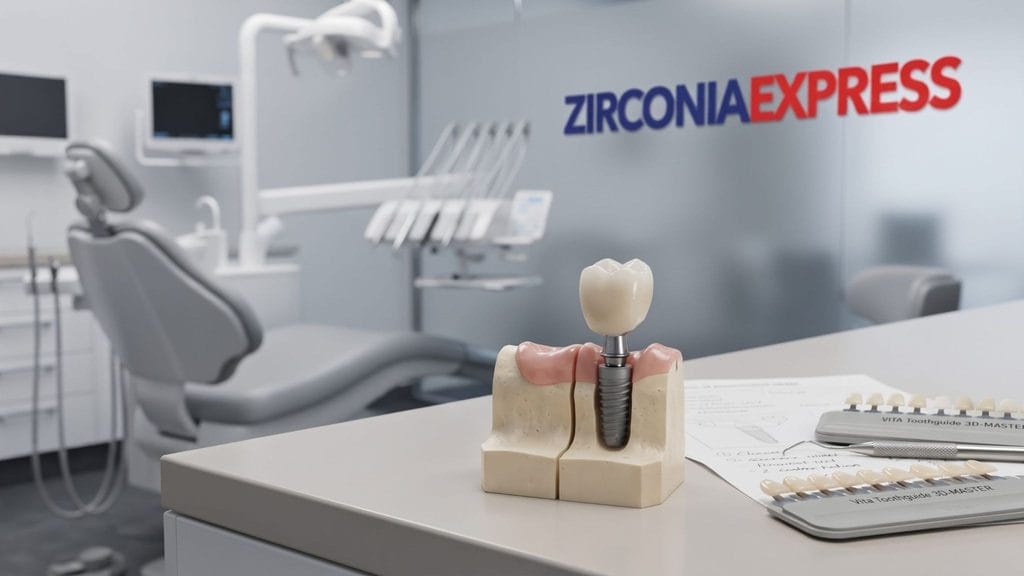
Zirconia Crowns for Implants solve a problem that has followed implant dentistry for decades: balancing strength with a natural appearance. Older materials often forced a tradeoff between the two.
Several clinical advantages explain their popularity:
- High flexural strength, often exceeding 1,000 MPa depending on the zirconia grade, which reduces the risk of chipping or fracture under bite force
- Biocompatibility, since zirconia is chemically inert and rarely triggers soft tissue irritation around the implant site
- Minimal plaque accumulation, thanks to a smooth, dense surface that resists bacterial adhesion compared to some other materials
- Color stability, meaning the crown won’t discolor or yellow the way some resin based materials can over time
- Compatibility with digital workflows, allowing precise milling from intraoral scans without traditional impressions
These qualities make zirconia a practical default for patients who grind their teeth, have limited restorative space, or need a restoration in the posterior region where occlusal forces are highest.
What Are the Different Zirconia Crowns for Implants Types?
Zirconia Implant Crown Types vary based on translucency, layering technique, and how the crown connects to the implant. Understanding these differences helps you match the restoration to the clinical situation.
Full Contour Zirconia: This type is milled entirely from a single block of zirconia with no porcelain layering. It offers maximum strength and is often the choice for posterior molars and patients with heavy occlusal load.
Layered Zirconia: Here, a porcelain layer is fused over a zirconia coping to enhance esthetics, particularly for anterior teeth where light transmission matters most. It sacrifices some strength for a more lifelike appearance.
Multilayer or Gradient Zirconia: Modern milling blocks include built-in shade gradients that mimic the natural transition from the darker gingival third to the more translucent incisal edge, reducing the need for manual staining.
Screw-Retained vs Cement-Retained Zirconia Crowns: Screw-retained crowns allow for easier retrieval and maintenance, while cement-retained crowns can offer slightly better esthetics by hiding the access hole. The choice often depends on implant angulation and restorative space.
Zirconia vs E.max Implant Crowns: Which Is Better?
Zirconia vs E.max Implant Crowns is one of the most common comparisons dentists face when planning single unit restorations. Both are excellent materials, but they perform differently depending on the clinical scenario.
E.max, a lithium disilicate ceramic, offers superior translucency and is often preferred for single anterior crowns where esthetics are the top priority. However, it has lower flexural strength, typically around 360 to 400 MPa, making it less ideal for bruxers or posterior implant crowns under heavy load.
Zirconia, by contrast, offers significantly higher strength and is generally the safer choice for implant-supported restorations, bridges, and patients with parafunctional habits. Modern translucent zirconia has narrowed the esthetic gap considerably, which is why many labs now recommend it as the more versatile option across both anterior and posterior implant sites.
In short, choose E.max when esthetics are the primary concern in a low-stress area, and choose zirconia when strength, durability, and implant compatibility take priority.
What Is the Process Behind Making Zirconia Crowns for Implants?
Zirconia Crowns for Dental Implants typically follow a digital workflow that improves accuracy compared to traditional impression-based methods. This shift has changed how labs and dentists collaborate on implant cases, cutting down on the guesswork that came with physical impressions.
Fewer manual steps also reduce the chance of distortion between the scan and the finished restoration. The result is a crown that fits closer to the implant margin on the first try, which matters just as much to the lab as it does to the chairside team. The process generally includes these steps:
- An intraoral scan captures the implant position and surrounding anatomy
- A digital design software creates the crown shape based on the scan and bite registration
- A solid zirconia block is shaped into the crown using computer-guided CAD/CAM milling.
- The restoration undergoes sintering, a high-heat process that hardens the zirconia to its final strength
- Staining, glazing, or porcelain layering is applied for the final esthetic finish
- The crown is fitted to the implant abutment and checked for margin accuracy and occlusion
This digital approach reduces remakes, shortens turnaround time, and gives dentists a level of precision that’s difficult to achieve with conventional lab methods.
When Should You Choose Zirconia Crowns for Implants Over Other Materials?
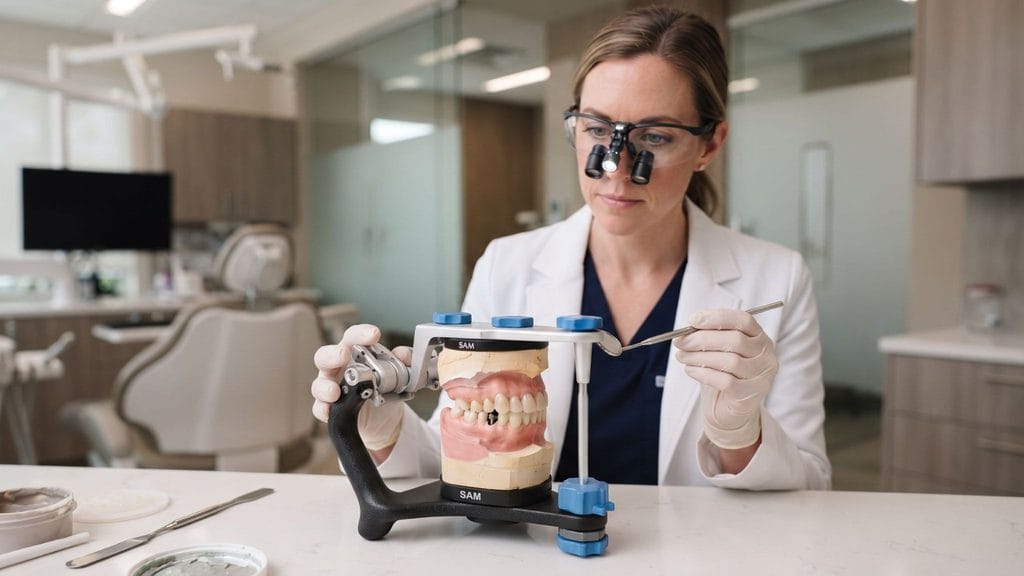
Zirconia Crowns for Implants isn’t automatically the right choice for every case, but certain clinical situations point clearly in its favor.
- The patient regularly grinds or clenches their teeth
- The restoration is placed in the posterior region under heavy occlusal load
- Interocclusal space is limited, requiring a thinner but still strong material
- The patient has a known sensitivity or allergy to metal
- Long-term durability matters more than maximum translucency
- The case involves an implant-supported bridge rather than a single crown
If the priority shifts toward maximum esthetics in a low load anterior site, a layered zirconia or E.max restoration may be the better fit.
Partner with Zirconia Express for Reliable Zirconia Crowns for Implants
Choosing the right material is only part of the equation. The lab producing your restoration plays just as large a role in how well it performs long term.
Zirconia Express, a dental laboratory based in North Carolina, works with dentists, prosthodontists, implant specialists, and clinics who need consistent, well-fitted zirconia restorations without unpredictable turnaround times. Every crown and bridge is produced using high-strength zirconia and backed by up to a five year warranty, giving you and your patients added confidence in the final result.
For practices moving toward fully digital workflows, Zirconia Express also offers digital dental cases built with an AI-driven design system, including three anatomical shape options that help streamline case planning and reduce chair time on delivery day.
What sets a lab apart isn’t just the material it uses, but the consistency behind every case. If you’re looking for a lab partner that understands the demands of modern implant dentistry, reach out to Zirconia Express to discuss your next case.
Conclusion
Zirconia Crowns for Implants offer a dependable combination of strength, biocompatibility, and natural-looking esthetics that fits the demands of modern implant dentistry. Whether you’re restoring a single posterior molar or planning a full arch case, understanding the different crown types and connection methods helps you set realistic expectations with your patients and your lab.
For dentists weighing their options for Zirconia Implant Crowns, the decision often comes down to matching material strength to the clinical demands of each site. A trusted lab partner, consistent milling standards, and a digital workflow all play a role in getting predictable, long lasting results for every implant case that comes through your practice.
FAQ’s
Are zirconia crowns good for dental implants?
Yes. Zirconia Crowns for Implants are considered one of the strongest and most biocompatible options for dental implants, particularly for patients who need durability in high load areas like the molars and premolars.
How long do Zirconia Crowns for Implants last?
With proper care, zirconia implant crowns commonly last 10 to 15 years or longer. Their resistance to chipping and staining contributes significantly to their long-term durability compared to some other crown materials.
Does zirconia outperform porcelain in strength for implant crowns?
Yes, zirconia has significantly higher flexural strength than traditional porcelain, making it more resistant to fracture under bite force. This is why full contour zirconia is often recommended for posterior implant restorations.
Do zirconia crowns give a natural look on front teeth?
Yes. Layered and multilayer zirconia options are specifically designed to replicate natural translucency and shade gradients, making them a strong option for anterior implant cases where esthetics matter most.
What is the difference between screw-retained and cement-retained zirconia crowns?
Screw-retained crowns can be removed for maintenance or repair without damaging the restoration, while cement-retained crowns often provide a slightly more seamless esthetic since there’s no visible access hole.