

Zirconia High Translucent Crown: Material Properties, Indications & Preparation Guide
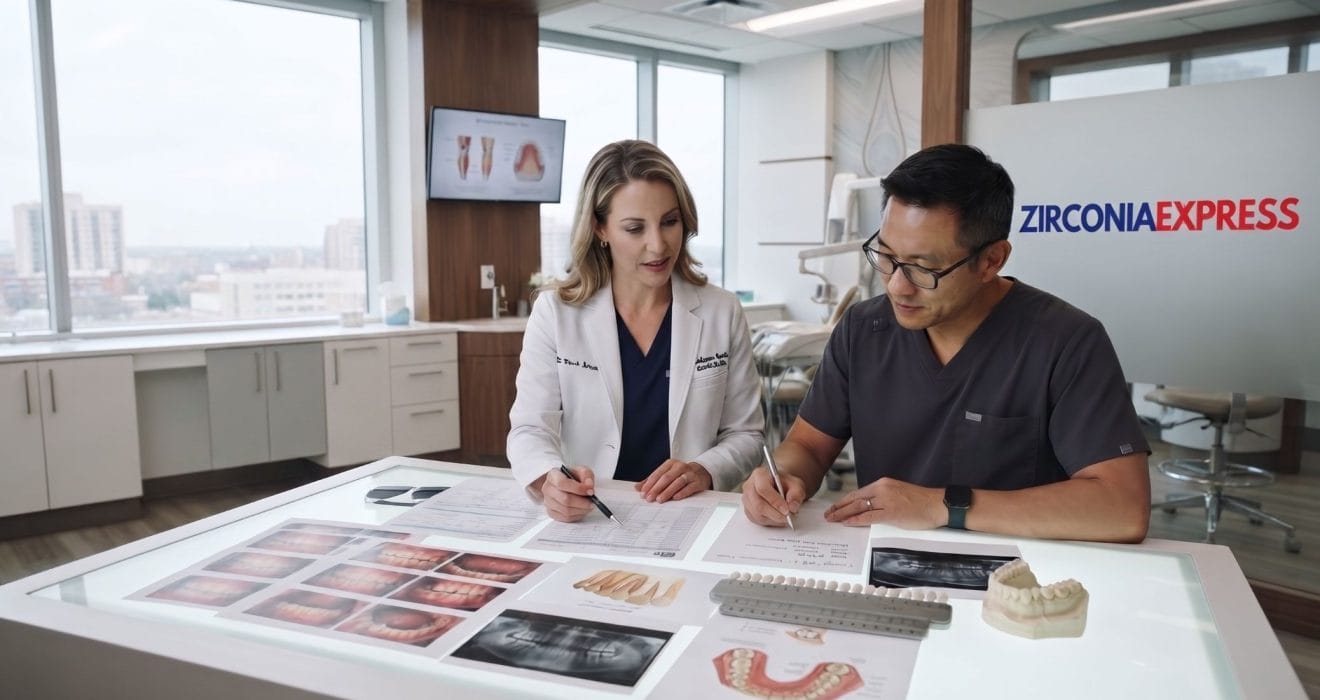
A Zirconia High Translucent Crown is one of the most requested restorations in modern dentistry, and for good reason. Patients want restorations that look like real teeth. Clinicians want restorations that survive occlusal forces without chipping or fracturing.
Patients today are more informed than ever, and many specifically ask about shade matching before agreeing to a crown. That shift in expectations has pushed clinicians to look past strength alone and weigh how light interacts with a restoration. Social media and smile-focused content have made people far more aware of what a natural-looking crown should actually look like, so a mismatched shade rarely goes unnoticed anymore.
This has turned material selection into a conversation clinicians now have with patients directly, rather than a decision made quietly behind the scenes. As a result, understanding how different zirconia formulations behave under light has become just as important as understanding their mechanical strength.
This guide breaks down the material science, clinical indications, and preparation protocol you need to place a Zirconia High Translucent Crown with confidence.
What Is a Zirconia High Translucent Crown?
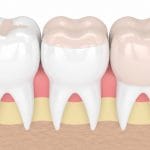
A Zirconia High Translucent Crown is a full-contour dental restoration milled from a zirconia block engineered with a higher cubic phase content than traditional zirconia. This structural shift allows more light to pass through the material rather than scatter, producing a softer, more natural appearance.
Unlike layered porcelain fused to zirconia crowns, a high translucent crown is monolithic. It’s milled as a single solid piece, then stained and glazed. This eliminates the porcelain chipping problem that has followed layered restorations for decades.
The trade-off between strength and translucency has always defined zirconia chemistry. High translucent formulations shift that balance toward esthetics while still delivering flexural strength well above natural enamel.
How Does Translucent Zirconia Differ From Standard Zirconia?
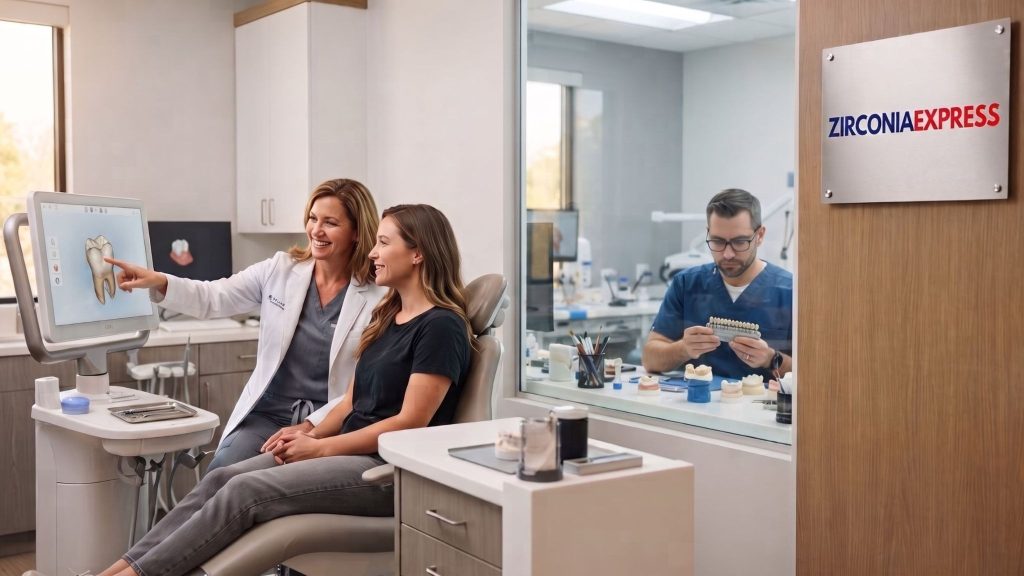
The difference comes down to crystal structure. Standard, first-generation zirconia (often called 3Y TZP) contains mostly tetragonal grains, which scatter light and produce an opaque, chalky look. This makes it ideal for posterior molars and bridge frameworks where strength matters more than shade matching.
Translucent zirconia vs zirconia crown comparisons usually come down to this tetragonal-to-cubic ratio. Newer materials, often labeled 4Y PSZ and 5Y PSZ, contain a higher percentage of cubic zirconia grains, which are optically isotropic and allow light to pass through more evenly.
Here’s a simple way to think about it. More cubic content means more translucency but slightly lower flexural strength. Less cubic content means higher strength but a flatter, more opaque appearance. Manufacturers now offer a full spectrum between these two extremes, so lab teams can match material choice to the clinical demand of each tooth.
Flexural Strength by Zirconia Generation
Traditional 3Y zirconia typically tests between 1,000 and 1,200 MPa in flexural strength. Mid-range 4Y materials fall between 700 and 900 MPa. High translucent 5Y zirconia generally ranges from 500 to 650 MPa, which is still several times stronger than lithium disilicate and more than sufficient for single crown restorations under normal occlusal load.
Why Do Dentists Choose Ultra Translucent Zirconia for Anterior Cases?
Anterior restorations sit under constant scrutiny. Patients look at their front teeth every day, and shade mismatch is one of the fastest ways to lose a patient’s trust in a restoration.
Ultra translucent zirconia solves this by allowing the crown to interact with light the way natural enamel does. Instead of blocking light and creating a flat, opaque tooth, it lets light diffuse through the restoration and reflect off the underlying prep and cement layer, similar to how light passes through real dentin and enamel.
This is why so many prosthodontists now default to high translucent options for single central incisors, where matching an adjacent natural tooth is the entire goal of the case. The material also blends well in smile makeover cases involving multiple translucent dental crowns across the anterior arch, since the shade behavior stays consistent from tooth to tooth.
When Should You Choose High Translucent Zirconia Over Other Materials?
Material selection should always follow the clinical picture, not personal preference alone. A few factors consistently point toward high translucent zirconia as the right call.
- The tooth is in the esthetic zone, and shade matching is a priority for the patient.
- The patient has a history of bruxism, which rules out more brittle all-ceramic options like feldspathic porcelain.
- The case involves a single tooth or short span bridge where monolithic strength and appearance both matter.
- The opposing dentition is natural enamel, since zirconia’s smooth glazed surface is gentler on opposing teeth than rough ceramic.
- The patient wants a metal-free restoration with long-term color stability.
For posterior molars under heavy occlusal load, many labs still recommend standard 3Y zirconia or a mid translucency blend, since strength takes priority over light transmission in that region of the mouth.
What Are the Clinical Indications for Zirconia High Translucent Crowns?
High translucent zirconia fits a wide range of clinical scenarios beyond single anterior crowns. Understanding where it performs best helps you set accurate expectations with patients before treatment begins.
Single tooth restorations in the anterior and premolar regions benefit most, since these areas need both a natural shade and dependable strength. Translucent zirconia crowns are also a strong fit for implant-supported crowns, particularly on anterior implants where soft tissue translucency needs to be matched closely.
Short span bridges, typically three units or fewer, also perform well with mid to high translucent zirconia, especially when the pontic sits in a visible area. For patients transitioning from PFM or all-ceramic crowns that have discolored or chipped, a high translucent zirconia replacement often restores both function and confidence in a single-visit workflow.
How Should You Prepare a Tooth for a Zirconia High Translucent Crown?
Preparation design directly affects how the final restoration looks and how long it lasts. Zirconia is forgiving compared to glass ceramics, but the preparation still needs to follow specific guidelines to get the best optical and mechanical results.
Preparation Depth and Margin Design
Occlusal reduction should measure 1.0 to 1.5 millimeters for full-contour zirconia, with 1.5 millimeters preferred for ultra translucent zirconia to allow adequate light transmission and shade depth. Axial reduction of 1.0 to 1.2 millimeters gives the lab enough room to build a proper contour without over-contouring the final crown.
A chamfer or light shoulder margin around 0.5 millimeters wide works best. Avoid feather-edge margins, since they don’t give the milling software enough material to produce a strong, well-fitting margin.
Common Preparation Mistakes to Avoid
Under-reduction is the most frequent issue labs see, and it forces technicians to either over-contour the crown or thin the material beyond the manufacturer’s recommended minimum thickness. Sharp internal line angles also create stress points, so all internal angles should be rounded.
Finally, avoid finishing margins in areas that are difficult to capture with a digital scanner or a physical impression, such as deep subgingival zones without adequate tissue retraction. A clean, well-captured margin is the single biggest factor in a well-fitting final crown.
Which Is Better: High Translucent Zirconia or Lithium Disilicate?
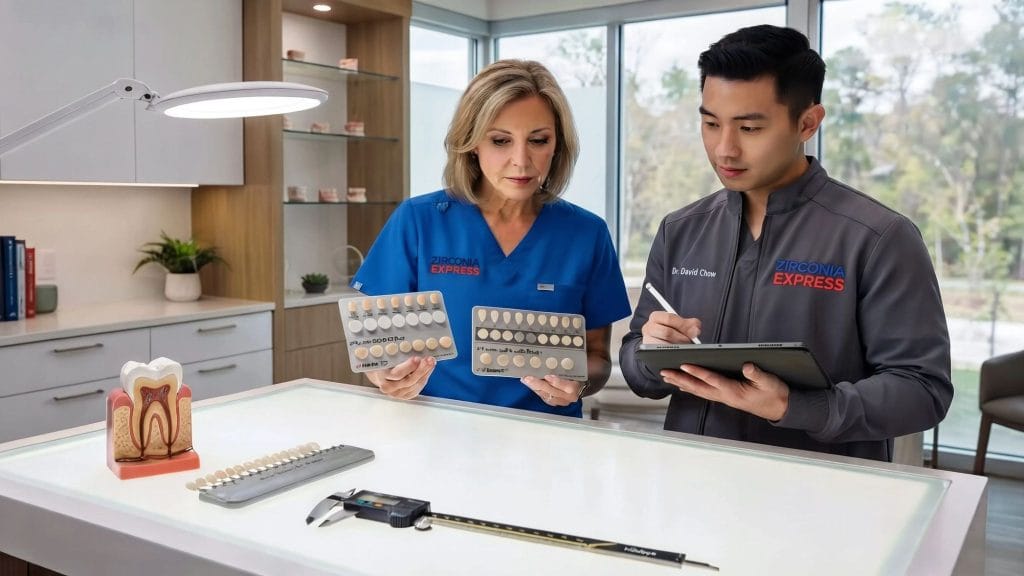
This comparison comes up in nearly every prosthodontic consult. Lithium disilicate has a long track record for single anterior crowns and veneers, and its translucency remains excellent. However, its flexural strength, typically around 360 to 400 MPa, is notably lower than that of even high translucent zirconia.
High translucent zirconia now closes much of the esthetic gap while maintaining a strength advantage of well over 500 MPa in most cases. For patients with parafunctional habits, thin biotypes, or a need for a metal-free bridge, zirconia is usually the safer long-term choice. For single veneers or extremely thin restorations where minimal reduction is required, lithium disilicate still holds an edge in some cases.
Why Partner With Zirconia Express for Your Zirconia Crown Cases?
The right material choice is only the first step. The lab producing your Zirconia High Translucent Crown determines whether that material choice actually translates into a well-fitting, well-shaded restoration that seats correctly on the first try.
Zirconia Express, based in North Carolina, works exclusively with dental practices, prosthodontists, implant dentists, and laboratories that need dependable, high-quality zirconia restorations. Every crown and bridge case is backed by up to a five-year warranty so that you can offer your patients real confidence in the longevity of their restorations.
The lab’s digital dental case workflow uses an AI-driven design system with three anatomical shape options, giving your team flexibility to match tooth morphology to each patient’s natural dentition. Practices that partner with Zirconia Express also get the same reliable shade matching and fit case after case, which reduces remakes and keeps chair time predictable. If your practice is ready for a dental lab partner built for modern digital dentistry, reach out to Zirconia Express to discuss your next case.
Conclusion
Choosing the right translucent dental crowns comes down to matching material science with the clinical picture in front of you. A precise preparation protocol, a clear understanding of when higher translucency is worth the trade-off in strength, and a dependable lab partner are what separate a mediocre outcome from a restoration that lasts for years.
A Zirconia High Translucent Crown gives clinicians a rare combination: strength that holds up to real-world occlusal forces and an appearance that genuinely resembles natural enamel. As this technology continues to improve, staying current on material selection and lab partnership will remain central to predictable, esthetic results.
FAQ’s
Is a Zirconia High Translucent Crown as strong as a regular zirconia crown?
It’s slightly less strong than traditional 3Y zirconia but still far stronger than lithium disilicate or layered porcelain. High translucent zirconia typically tests between 500 and 650 MPa, which comfortably handles normal biting forces on anterior and premolar teeth.
How long does a zirconia high translucent crown typically last?
With proper preparation, fit, and occlusal adjustment, these crowns commonly last ten to fifteen years or longer. Longevity depends heavily on oral hygiene, bruxism management, and the quality of the milling and cementation process.
Can high translucent zirconia be used on molars?
Yes, though many clinicians reserve the highest translucency levels for anterior teeth and choose a mid translucency zirconia for molars where occlusal load is greatest. The right choice depends on the patient’s bite force and grinding habits.
What is the difference between translucent zirconia crowns and monolithic zirconia?
Translucent zirconia crowns are a specific category of monolithic zirconia formulated with a higher cubic phase for better light transmission. All translucent zirconia is monolithic, but not all monolithic zirconia is highly translucent, since strength-focused formulas remain more opaque.
Does a translucent zirconia crown require more tooth reduction than a standard crown?
Slightly more axial and occlusal reduction is recommended, generally around 1.0 to 1.5 millimeters, to allow enough material thickness for proper shade depth and light diffusion. Underpreparing the tooth can compromise both strength and esthetics.
Is ultra translucent zirconia a good option for patients who grind their teeth?
It can be, since it still offers strength well above natural enamel and far above glass ceramics. For severe bruxism cases, many labs recommend a mid-translucency zirconia blend to add an extra margin of mechanical safety.
3 Comments