
BruxZir Posterior Crown: Strength, Prep & Longevity
A BruxZir Posterior Crown is one of the most trusted restorative options for back teeth that face constant chewing pressure. Dentists reach for it when a patient needs a crown that can survive years of grinding, clenching, and heavy occlusal load without chipping or fracturing. This guide breaks down what the material is, how it’s prepared, and why it holds up so well over time.
Understanding the science behind BruxZir dental crown technology helps clinicians set realistic expectations with patients and choose the right restoration for the right clinical situation. Not every crown material belongs on a molar, and not every zirconia product performs the same way in the mouth. Let’s look at what actually makes this restoration a workhorse in posterior dentistry.
What Is a BruxZir Posterior Crown?
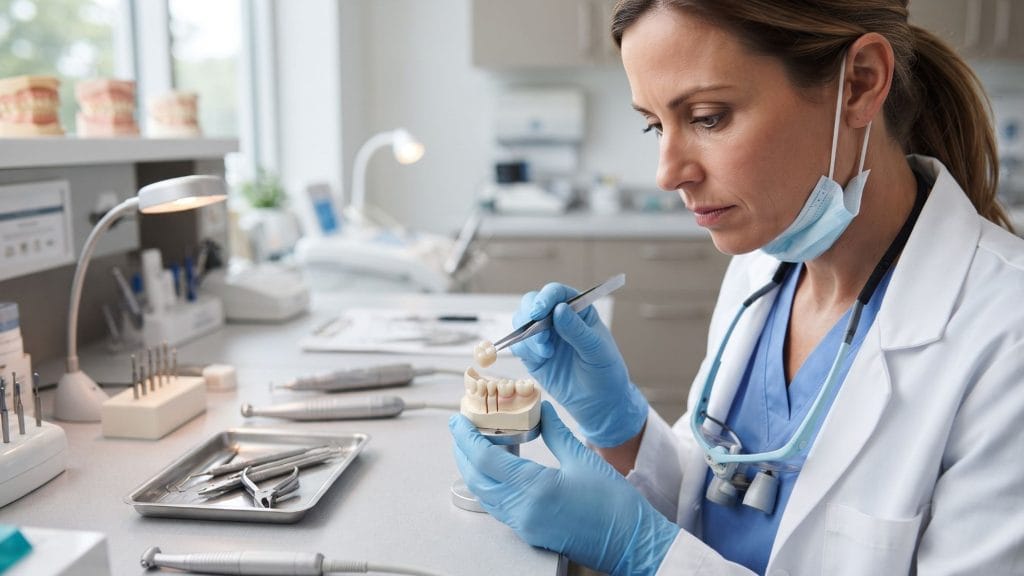
A BruxZir Posterior Crown is a monolithic (solid, single-layer) zirconia restoration engineered specifically for the biting and grinding forces found in the back of the mouth. Unlike layered zirconia crowns that stack porcelain over a zirconia core, monolithic BruxZir crowns are milled from a single solid block of zirconia. This eliminates the weak point where porcelain veneering typically chips or delaminates.
The material was originally developed by Glidewell Laboratories, and “BruxZir” has become something of a category name for high-strength monolithic zirconia, similar to how “Kleenex” is used generically for tissues. Many dental laboratories now produce comparable monolithic zirconia restorations using similar high-translucency zirconia formulations.
For posterior teeth specifically, this construction matters because molars and premolars absorb the bulk of chewing force. A restoration without a fracture-prone porcelain layer is inherently better suited to that job.
Why Is BruxZir Posterior Strength Different From Other Crown Materials?
BruxZir posterior strength comes down to flexural strength and fracture toughness, two properties that traditional porcelain-fused-to-metal (PFM) and lithium disilicate crowns can’t fully match in high-stress areas.
Here’s how the numbers generally compare:
- Monolithic zirconia (BruxZir): Flexural strength typically ranges from 800 to over 1,200 MPa, depending on the specific zirconia formulation used.
- Lithium disilicate (e.g., e.max): Flexural strength averages around 360 to 400 MPa.
- Porcelain-fused-to-metal: The porcelain layer itself is far weaker than zirconia, even though the metal substructure adds rigidity.
This strength differential explains why BruxZir crowns are frequently the material of choice for patients who grind their teeth, have a history of crown fractures, or need a restoration on a molar with limited remaining tooth structure. The solid zirconia body resists chipping because there’s no separate porcelain layer to shear off under load.
It’s worth noting that strength isn’t the only factor in restoration failure. Proper occlusal adjustment, adequate reduction during prep, and correct cementation protocol all play a role in long-term success, regardless of which material is chosen.
How Should a Tooth Be Prepared for a BruxZir Posterior Crown?
Preparation requirements for a BruxZir posterior restoration are more forgiving than layered restorations, but precision still matters for a predictable outcome.
Key preparation guidelines dentists typically follow:
- Aim for a minimum occlusal reduction of 1.0 to 1.5 millimeters to allow adequate material thickness.
- Use a 0.5 to 1.0 millimeter chamfer or light shoulder margin, since monolithic zirconia doesn’t require the deeper reduction that layered crowns need for porcelain buildup.
- Round internal line angles to reduce stress concentration points in both the tooth and the crown.
- Avoid sharp margins or undercuts, since zirconia crowns are milled and require a clean, scannable preparation for accurate digital impressions.
- Maintain adequate axial wall taper (roughly 4 to 6 degrees per wall) for retention, especially on shorter clinical crowns.
Because BruxZir posterior crowns require less occlusal reduction than layered ceramic options, they’re often a practical choice when preserving tooth structure is a priority, such as in cases involving short clinical crowns or patients with existing enamel wear from bruxism.
Digital workflows have made this preparation-to-delivery process considerably more predictable. An intraoral scan sent to a laboratory equipped with a digital design system allows for tighter margins and a more accurate fit than older analog impression methods, which reduces chairside adjustment time.
What Are the Main BruxZir Posterior Crown Benefits?
The BruxZir posterior crown benefits dentists and patients care about most tend to fall into a few core categories.
- Fracture resistance: The monolithic design removes the porcelain chipping risk that affects layered restorations.
- Reduced tooth reduction: Less material thickness is needed compared to PFM or layered zirconia, helping preserve natural tooth structure.
- Biocompatibility: Zirconia is well tolerated by soft tissue and doesn’t trigger the metal sensitivity reactions occasionally seen with PFM crowns.
- Wear compatibility: Modern high-translucency monolithic zirconia formulations are polished to a smooth surface finish, which helps minimize excessive wear on opposing natural dentition when properly adjusted and polished.
- Predictable digital fabrication: Because the crown is milled rather than layered by hand, there’s less variability introduced during fabrication.
- Cost efficiency over time: Fewer remakes due to chipping generally translate into lower long-term cost per restoration for the practice and patient.
These advantages are why monolithic zirconia has become a default option for posterior single-unit restorations in many practices, particularly for molars in patients with heavy occlusal function.
How Long Does a BruxZir Posterior Restoration Typically Last?
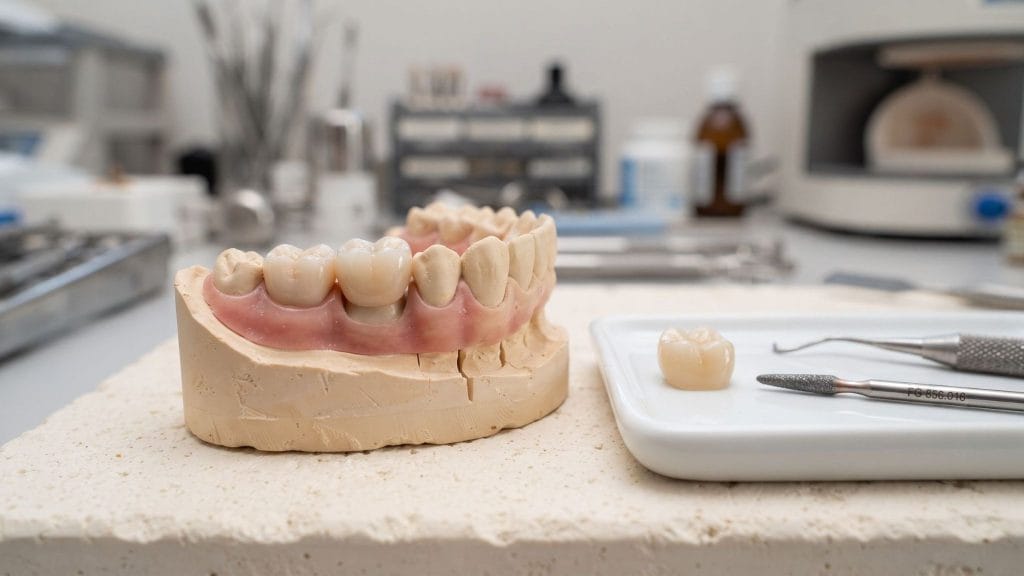
A well-placed BruxZir posterior restoration commonly lasts 10 to 15 years or longer, though individual results depend on factors outside the material itself.
Longevity is influenced by:
- Patient oral hygiene and home care habits
- Presence and severity of bruxism, and whether a night guard is used
- Quality of the bonding or cementation protocol at placement
- Accuracy of occlusal adjustment at seat appointment
- Overall periodontal health supporting the tooth
Clinical data and long-term case tracking on monolithic zirconia restorations have generally shown low rates of bulk fracture compared to layered ceramic systems, since there’s no porcelain veneer to chip away over time. The main long-term risks tend to be marginal issues, secondary decay, or cement failure rather than fracture of the crown itself.
Routine dental checkups remain important even with a high-strength material like this. Regular monitoring catches marginal leakage or early decay before they compromise the supporting tooth structure beneath the restoration.
Which Is Better: BruxZir Posterior Crowns or Layered Zirconia Crowns?
The right choice depends on the clinical priority: raw strength or maximum aesthetics.
- Choose monolithic BruxZir when the restoration is for a molar or premolar, the patient has a history of bruxism, or fracture resistance is the top priority.
- Choose layered zirconia when the restoration is more visible (such as a first premolar or a case where translucency and shade blending matter more), and the patient doesn’t have significant parafunctional habits.
Many practices use a hybrid approach: monolithic zirconia for molars where forces are highest and strength matters most, and layered restorations further forward where esthetics carry more weight. This case-by-case decision-making tends to produce the best balance of function and appearance across a full arch.
Partnering With a Laboratory That Understands Posterior Zirconia Restorations
Choosing the right crown material is only part of the equation. The laboratory behind the fabrication plays just as large a role as the restoration itself in how it performs in the mouth.
Zirconia Express, a dental laboratory based in North Carolina, works with dentists, prosthodontists, implant specialists, and dental practices across the country on high-strength zirconia crowns and bridges. Every restoration is backed by up to a five-year warranty, giving practices added confidence when placing zirconia crowns in demanding posterior cases.
What sets a modern laboratory apart is the digital workflow behind the scenes. Zirconia Express uses an AI-driven design system paired with three anatomical shape options, allowing clinicians to match restorations to a patient’s natural occlusal anatomy rather than relying on a one-size-fits-all mill pattern. This level of digital precision supports tighter margins, more accurate contacts, and fewer chairside adjustments at seat.
Consistency matters just as much as any single feature. Practices that send cases regularly need to know each crown will fit and perform the same way as the last one, and that turnaround times won’t hold up a patient’s treatment plan. That combination of dependable quality, digital precision, and dependable scheduling is what dental teams look for in a laboratory partner for posterior zirconia restorations.
Dentists interested in high-strength zirconia crowns and bridges, or in exploring digital case submission with AI-assisted design, are welcome to reach out to Zirconia Express to discuss case requirements and turnaround options.
Conclusion
A BruxZir Posterior Crown remains one of the most reliable options available for molars and premolars that face heavy daily wear. Its monolithic construction, strong flexural properties, and conservative prep requirements make it a practical choice for patients dealing with bruxism or a history of fractured restorations.
For practices weighing material choices for their next case, the strongest outcomes usually come from pairing the right material, like a high-strength BruxZir dental crown, with a precise digital workflow and a laboratory that stands behind its work with a solid warranty and consistent quality.
FAQ’s
Is a BruxZir Posterior Crown good for patients who grind their teeth?
Yes. Monolithic zirconia’s high flexural strength makes it one of the more fracture-resistant options for patients with bruxism, though a night guard is still recommended to protect the crown and opposing dentition long term.
How much tooth reduction is needed for a BruxZir Posterior Crown?
Typically around 1.0 to 1.5 millimeters of occlusal reduction and a 0.5 to 1.0 millimeter chamfer margin, which is generally less reduction than layered ceramic crowns require.
Does a BruxZir Posterior Crown wear down opposing natural teeth?
Properly polished monolithic zirconia is generally well tolerated by opposing dentition. Rough or unpolished surfaces can cause excessive wear, so correct finishing and occlusal adjustment at delivery are important.
How long does a BruxZir Posterior Crown usually last?
Most last 10 to 15 years or longer with good oral hygiene, proper occlusal adjustment, and routine dental checkups, though individual results vary based on patient habits and bite forces.
What’s the difference between BruxZir and regular zirconia crowns?
BruxZir refers to monolithic, full-contour zirconia milled from a single block, while some other zirconia crowns are layered with porcelain for aesthetics. Monolithic zirconia trades some translucency for significantly higher fracture resistance.