

Multi Layer Zirconia: Complete Guide, Benefits & Dental Applications
Multi layer zirconia has changed how dental professionals approach both strength and aesthetics in restorative work. Instead of choosing between a material that looks natural and one that withstands bite force, dentists now have a single disc that does both.
Dental materials rarely stay still for long. As soon as one option solves a clinical problem, it tends to introduce a new limitation that pushes manufacturers to refine it further. Zirconia’s journey followed this same pattern, moving through several stages before it reached the form most labs use today.
Zirconia itself isn’t new to dentistry, but the way it’s manufactured has evolved quickly over the past decade. Early zirconia discs were monolithic and single-shaded, which limited their use mostly to back teeth where looks mattered less. Manufacturers eventually found ways to grade shade and translucency within a single disc, and that shift is what gave rise to the material dentists rely on today.
This guide breaks down what the material is, how it’s made, and where it fits into modern dentistry.
What Is Multi Layer Zirconia?
Multi layer zirconia is a type of zirconia dental ceramic manufactured in a single disc with gradual shifts in shade, translucency, and strength from the gum line to the biting edge. Rather than layering porcelain by hand, the disc itself contains built-in variation, so a milled restoration already carries a lifelike gradient before any staining is applied.
This answers a common search question directly: what is multi layer zirconia? It’s a pre-engineered zirconia blank designed to mimic the natural transition seen in real teeth, where the cervical area is more opaque and the incisal edge is more translucent.
Traditional monolithic zirconia, by contrast, is uniform in shade and opacity throughout the disc. Multi layer zirconia solves the flat, chalky look that early full zirconia restorations were known for.
How Is Multi Layer Zirconia Made?
Manufacturers press zirconia powder into a disc using a graded process, so each layer of the blank has a slightly different composition. The cervical layer is formulated for higher opacity to mask the underlying tooth structure or abutment. The incisal layer is formulated with a finer grain structure for increased light transmission.
Once pressed, the disc is milled using CAD/CAM technology to the exact shape of the crown, bridge, or veneer. The restoration is then sintered at high temperatures, which hardens the zirconia and locks in its final strength and color characteristics.
Digital workflows have made this process far more predictable than older hand-layered porcelain techniques. A well-calibrated mill and a properly maintained sintering oven can produce consistent results case after case.
Why Is Multi Layer Zirconia Better for Aesthetics?
The biggest advantage of multi layer zirconia is its ability to replicate natural tooth anatomy without extensive manual staining. Because translucency increases toward the incisal edge, light behaves the way it does in real enamel, scattering and passing through rather than reflecting flatly.
This matters most for anterior restorations, where patients and dentists both notice shade mismatches immediately. A multi layer zirconia crown on a front tooth can blend into the surrounding dentition far more convincingly than older monolithic or metal-ceramic options.
Lab technicians still apply surface characterization and glaze, but they’re refining an already lifelike base rather than building color from scratch. That saves chair time and reduces the number of adjustment visits.
How Strong Is Multi Layer Zirconia Compared to Other Materials?
Strength depends on the specific zirconia formulation used in each layer, but most multi layer discs are engineered so the strongest, least translucent layer sits where the restoration needs to withstand the most force. Flexural strength of zirconia materials typically ranges from 800 MPa to over 1200 MPa, depending on yttria content and layer.
This is significantly higher than lithium disilicate, which typically falls between 360 and 500 MPa. That strength margin is why zirconia remains the preferred choice for posterior crowns, bridges, and implant-supported restorations that face heavier occlusal loads.
Multi layer zirconia manages to hold onto most of that strength while gaining the aesthetic benefits that used to require a weaker, more translucent material. It’s a practical middle ground rather than a compromise.
What Are the Main Dental Applications of Multi Layer Zirconia?
Multi layer zirconia is used across a wide range of restorative and prosthodontic cases. Understanding where it performs best helps clinicians choose the right indication for each patient.
Multilayer zirconia bridges are the most common application, used for both anterior and posterior single-unit restorations where a natural shade gradient is important. Zirconia crowns extend this same benefit across multiple units, which is especially useful when matching a long span of natural teeth.
Implant-supported restorations also benefit from multi layer zirconia, since the material’s strength holds up well under the concentrated forces implants can transmit. Full-arch and hybrid prosthetics increasingly use multi layer discs as well, giving patients a more natural appearance across an entire restoration.
Veneers and inlays are less common but growing applications, particularly for cases where strength requirements are lower but color matching still matters.
What Should Dentists Look for in the Best Multi Layer Zirconia?
Finding the best multi layer zirconia for a given case comes down to a few measurable factors rather than marketing claims. Flexural strength data, shade accuracy across the layer transitions, and consistency from batch to batch are the details that actually affect clinical outcomes.
Milling compatibility matters too. A disc that isn’t well calibrated for a lab’s specific mill can lead to fit issues or increased chair time for adjustments. Sintering shrinkage rates should also be consistent, since inconsistent shrinkage is one of the more common causes of marginal fit problems.
Dentists working with an outside laboratory should ask what specific zirconia brands and layer formulations are being used for each case type. A lab that can explain its material choices, rather than defaulting to one disc for every situation, is generally a better long-term partner.
When Should Multi Layer Zirconia Be Chosen Over Other Materials?
Multi layer zirconia makes sense when a case needs both strength and a natural shade gradient, which covers most single-unit and multi-unit restorations in visible areas of the mouth. It’s a strong default choice for molars and premolars where bite force is high, as well as for anterior teeth where a flat, monolithic shade would look unnatural.
Lithium disilicate may still be preferred for cases where maximum translucency is the priority and occlusal forces are lower, such as certain veneer cases. Full metal-ceramic restorations have largely fallen out of favor for new cases, primarily due to aesthetic concerns and the risk of a visible metal margin over time.
The decision ultimately depends on the specific tooth position, occlusal load, and the patient’s aesthetic expectations. A good lab partner will help walk through these factors case by case rather than applying a one-size-fits-all material choice.
Why Partner With Zirconia Express for Multi-Layer Zirconia Cases?
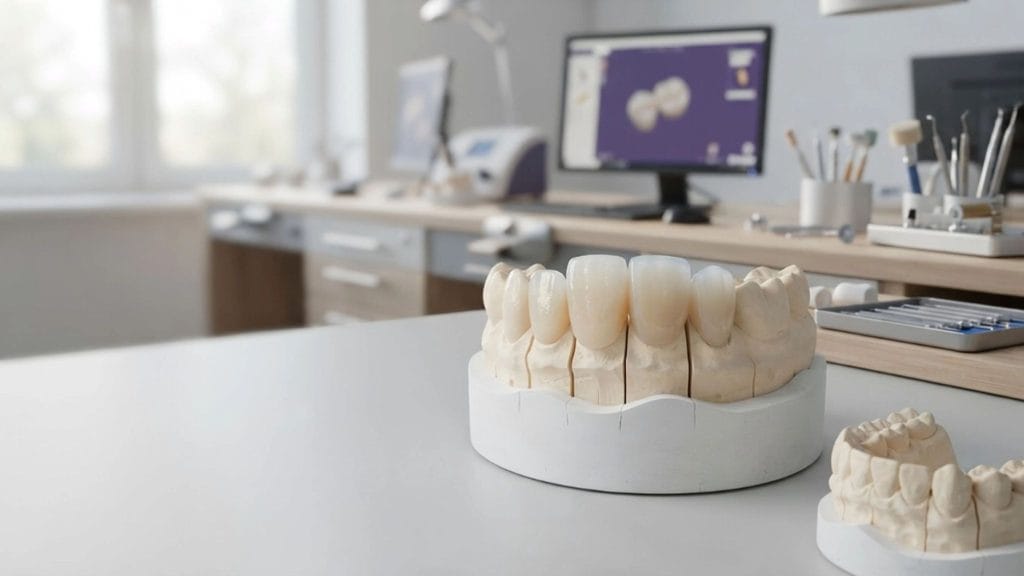
Material selection represents just one part of the complete picture. The lab producing the restoration plays just as large a role as the case’s outcome.
Zirconia Express, based in North Carolina, works with dentists, prosthodontists, implant specialists, and dental practices across the country to produce zirconia crowns and bridges built from premium multi layer zirconia. A warranty of up to five years supports each restoration, demonstrating trust in the zirconia material quality and the precision of the manufacturing techniques used.
For practices moving toward fully digital workflows, Zirconia Express also offers digital dental cases powered by an AI-driven design system, including three distinct anatomical shape options to match a wider range of patient anatomy and clinical preferences. This gives dentists more control over the final restoration without adding extra steps to the intake process.
Consistent quality and dependable turnaround times matter just as much as the material itself, since delays and remakes cost practices real time and trust with patients. Dentists and labs looking for a reliable partner for multi-layer zirconia restorations are welcome to reach out to Zirconia Express to discuss case requirements and turnaround options.
Conclusion
Choosing the right restorative material comes down to balancing strength, aesthetics, and long-term reliability, and multi layered zirconia checks all three boxes for most modern cases. Whether it’s a single crown, a full bridge, or an implant-supported restoration, the best multi layer zirconia continues to prove why it’s become a go-to option for dentists and labs alike.
As digital workflows keep advancing, this material is likely to stay a standard choice for years to come. Labs that keep up with new formulations and milling techniques are better equipped to deliver consistent, dependable results for every patient.
FAQ’s
What is multi layer zirconia?
Multi-layer zirconia is a zirconia dental ceramic manufactured in a single disc with graduated shade, translucency, and strength, designed to mimic the natural gradient seen in real teeth.
How long do multi layer zirconia crowns last?
With proper care, multi layer zirconia crowns commonly last ten to fifteen years or longer, depending on oral hygiene, bite forces, and how well the restoration was fitted.
Is multi layer zirconia stronger than lithium disilicate?
Yes. Multi layer zirconia generally offers higher flexural strength than lithium disilicate, making it a preferred choice for posterior teeth and higher-load restorations.
Can multi layer zirconia be used for front teeth?
Yes. The graduated translucency in multi layer zirconia makes it well suited for anterior restorations, where a natural shade transition is especially important.
What is the difference between monolithic and multi-layer zirconia?
Monolithic zirconia has a uniform shade and opacity throughout the disc, while multi layer zirconia includes a gradient of shade and translucency built into the material itself.
How do dentists choose the best multi layer zirconia for a case?
Dentists typically evaluate flexural strength, shade accuracy, batch consistency, and milling compatibility, and often rely on their dental laboratory’s expertise to match the right formulation to each case.

2 Comments