


Full Contour Zirconia Dental Crown: Benefits, Procedure & Cost
A dental crown becomes necessary when a tooth suffers damage that goes beyond what a standard filling can restore. While materials like gold, porcelain-fused-to-metal, and pressed ceramics have served patients well over the decades, the full contour zirconia dental crown has emerged as the definitive choice in contemporary restorative dentistry. Combining metal-like toughness with a tooth-colored appearance, it has quietly overtaken every competing material to become the restoration most frequently recommended by clinicians across the United States.
So what sets a full contour zirconia dental crown apart, why has it earned the trust of both practitioners and patients, and what should you consider when it comes to cost? This article walks you through the material science, clinical advantages, step-by-step treatment process, and financial considerations, including the key differences between full-contour zirconia vs layered zirconia, so you can step into your next dental visit feeling informed and assured.
What Exactly Is a Full Contour Zirconia Dental Crown?
At its core, a full contour zirconia dental crown is a single-piece restoration carved from a solid block of zirconium dioxide, a ceramic oxide that occurs naturally and is prized in engineering and medicine for its remarkable hardness and compatibility with living tissue. After the block is shaped using precision milling equipment, it undergoes a high-temperature sintering cycle that dramatically increases its density and mechanical toughness, transforming it into one of the most resilient materials ever used inside the human mouth.
What distinguishes this crown from other ceramic options is its monolithic structure. Rather than building up multiple layers of different materials, each with its own expansion rate, bonding interface, and failure risk, the full contour zirconia dental crown is one continuous piece from margin to cusp tip. This eliminates the weak junctions where fractures and chips tend to originate in traditional layered restorations, giving it a clear structural advantage in areas subjected to heavy occlusal forces.
Modern fabrication relies on CAD/CAM workflows, Computer-Aided Design paired with Computer-Aided Manufacturing. A digital model of the prepared tooth is captured, and sophisticated software maps the ideal crown anatomy before a robotic mill sculpts the restoration from a solid zirconia disc. In forward-thinking practices, AI-driven design systems further refine the process, analyzing the patient’s bite dynamics and adjacent tooth morphology to produce a restoration that fits with extraordinary accuracy. The word “full contour” simply tells us that the crown reaches its completed anatomical shape entirely in zirconia; no porcelain overlay is added afterward.
Zirconia Crown Benefits: The Reasons Behind Its Popularity
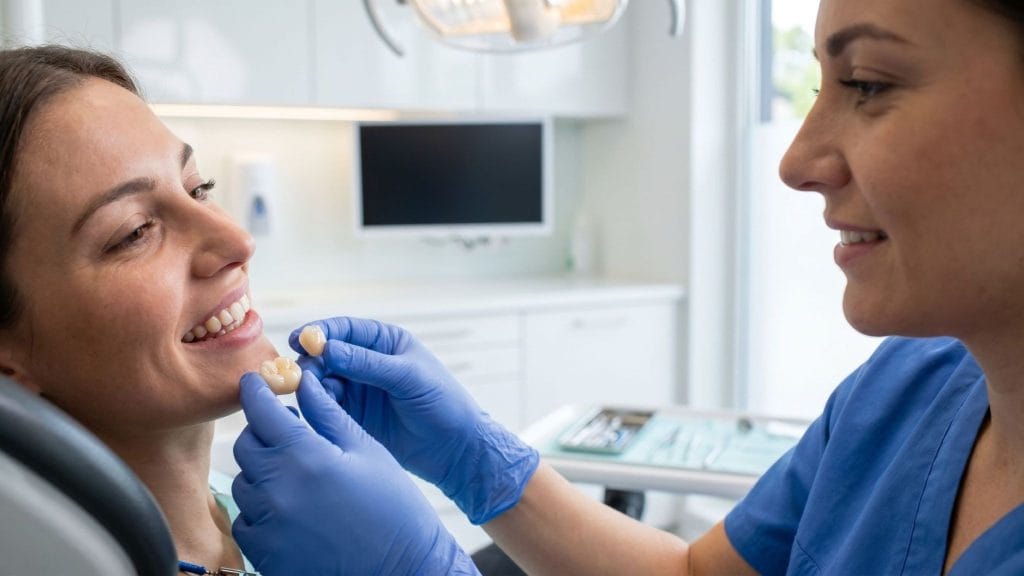
The widespread shift toward the full contour zirconia dental crown did not happen by accident. It solves a wide range of clinical and personal concerns simultaneously, which is why the list of zirconia crown benefits continues to grow as material science advances.
Exceptional Mechanical Strength
Strength is the headline advantage. Zirconium dioxide in its fully sintered monolithic form delivers flexural strength in the range of 900 to 1,200 megapascals, with certain premium formulations pushing past 1,300 MPa. Traditional feldspathic porcelain, by comparison, rarely exceeds 400 MPa. In practical terms, this means a full contour zirconia dental crown can shoulder the powerful compressive and shearing forces generated by molars and premolars without cracking, a decisive benefit for patients who clench or grind during sleep, and for crowns placed over implant abutments where shock absorption from a periodontal ligament is absent.
Lifelike Aesthetic Integration
There was a time when zirconia restorations carried a reputation for looking flat and opaque. That perception no longer holds. Current-generation multilayer zirconia blanks are engineered with built-in translucency gradients. The body of the blank is slightly more saturated and opaque, transitioning smoothly into a highly translucent incisal or occlusal zone. This gradient mirrors the optical behavior of natural enamel overlying dentin. When a skilled technician applies surface stains and a glaze firing, the finished full contour zirconia dental crown can be virtually indistinguishable from surrounding natural teeth, even under direct light.
Outstanding Biocompatibility
Few materials interact with oral tissue as gently as zirconia. It is chemically inert, meaning it does not corrode, leach metallic ions, or trigger allergic reactions, concerns that sometimes accompany metal-containing restorations. Soft tissue responds favorably to polished zirconia surfaces, and studies consistently show reduced plaque accumulation compared to many other substrates. For patients who have experienced sensitivity or gum discoloration around older metal-based crowns, the full contour zirconia dental crown offers a welcome alternative that promotes rather than compromises periodontal health.
Minimal Wear on Opposing Dentition
An underappreciated zirconia crown benefit involves what happens to the teeth that bite against it. When the surface is finished to a high polish, zirconia produces surprisingly little abrasive wear on opposing enamel, comparable to, and in some research even less than, natural tooth-on-tooth contact. This means placing a full contour zirconia dental crown protects not just the restored tooth but also safeguards the integrity of the teeth it meets during chewing.
Impressive Service Life
With conscientious oral hygiene and routine professional care, zirconia crowns routinely remain functional and aesthetically pleasing for 15 to 20 years, and many last considerably longer. The combination of fracture resistance, low plaque affinity, and color stability means fewer replacements, fewer emergency visits, and a better return on your restorative investment over time.
Full Contour Zirconia vs Layered Zirconia: Which One Is Right for You?
A question that arises in nearly every crown consultation is the choice between full-contour zirconia vs layered zirconia. Both belong to the zirconia family, yet they serve distinctly different clinical situations.
A full contour zirconia dental crown, as discussed, is milled and finished in solid zirconia. Its uniform composition means there is no secondary material that can chip away or separate. This makes it the go-to restoration for posterior teeth, for patients with heavy bite forces, and for any situation where long-term structural reliability is the top priority.
A layered zirconia crown, on the other hand, begins with a high-strength zirconia substructure that is then veneered with hand-built or pressed porcelain. The porcelain layer allows the ceramist to introduce subtle color shifts, surface texture, and translucency nuances that can achieve an extraordinarily lifelike result, particularly valuable for upper front teeth where the crown is on full display during conversation and smiling.
The trade-off when weighing full-contour zirconia vs layered zirconia is straightforward. Layered crowns win a narrow aesthetic edge in the anterior zone but carry a higher risk of veneer chipping under heavy function. Full contour crowns deliver superior durability with aesthetics that, thanks to modern multilayer blanks, now come remarkably close to their layered counterparts. Your dentist will guide you toward the option that best balances beauty and performance for the specific tooth being restored.
The Full Contour Zirconia Dental Crown Procedure: A Step-by-Step Overview
For anyone searching for full coverage zirconia crowns near me, knowing what to expect at each stage removes uncertainty and makes the experience far more comfortable. Here is how the typical treatment unfolds.
Initial Assessment
The journey begins with a comprehensive evaluation. Your dentist examines the tooth in question using digital radiographs to inspect root health and bone support, assesses how the tooth fits within your overall bite, and discusses whether a full contour zirconia dental crown is the most appropriate solution. Crowns are commonly recommended when a tooth has fractured, when a large portion of its structure has been lost to decay or an old restoration, after root canal therapy, or when an implant needs a final prosthetic cap.
Preparing the Tooth
After administering local anesthesia for your comfort, the dentist reshapes the tooth to create a precise foundation for the crown. Approximately one millimeter of structure is removed from the biting surface and sides, though zirconia’s superior strength sometimes allows the dentist to preserve more tooth than other materials would require, a meaningful clinical advantage. A smooth, well-defined margin is established at the gumline to ensure a seamless transition between the crown and the root surface.
Capturing the Digital Impression
With the preparation complete, the dentist uses a handheld intraoral scanner to record a highly detailed three-dimensional map of the prepared tooth, neighboring teeth, and opposing arch. This digital file replaces the uncomfortable putty impressions of the past and transmits directly to the laboratory or in-office design station. Advanced AI-driven design software then proposes an ideal crown form, factoring in the way your jaws move and the shape of the teeth around the restoration. A skilled technician reviews and fine-tunes the design before milling begins.
Crown Fabrication
The approved digital design drives a precision milling unit that carves the crown from a pre-sintered zirconia disc. At this stage, the material is still relatively soft, which allows intricate detail to be captured without excessive tool wear. The milled crown then enters a sintering furnace where temperatures above 1,400 °C fuse the crystalline structure into its final, extraordinarily hard state. Before or after sintering, the technician applies custom shade stains and a glaze layer that replicates the color, warmth, and luster of your natural teeth.
Bonding and Final Refinement
At your second appointment, the dentist tries in the finished crown to verify fit, contact with adjacent teeth, and shade harmony. The interior of the crown is treated with a specialized zirconia primer, and a suitable cement or adhesive bonds the restoration permanently to the prepared tooth. Bite balance is fine-tuned with precise adjustments, and the outer surface is polished to a glass-smooth finish that feels comfortable against the tongue and opposing teeth.
From start to finish, the process generally spans one to two weeks. However, practices equipped with chairside milling technology can sometimes complete the entire workflow in a single visit a convenience that continues to grow more accessible.
What Influences the Cost of a Full Contour Zirconia Dental Crown?
Understanding the zirconia crown price in USA requires looking at several interconnected variables rather than a single flat rate. No two cases are identical, and the final investment reflects a combination of clinical complexity, material selection, and practice-level factors.
Material Tier
Not all zirconia is created equal. Ultra-translucent, multilayer blanks engineered for anterior aesthetics sit at a higher price point than standard high-strength blanks designed primarily for posterior function. The brand, purity, and generation of the zirconia system your laboratory uses directly affect the material cost that feeds into your overall fee.
Technology and Workflow
Practices that have invested in digital scanners, in-house or partnered CAD/CAM milling centers, and AI-assisted design platforms deliver a level of precision that traditional analog workflows cannot match. While this technology improves outcomes and efficiency, it is also a capital investment that can influence the fee structure.
Clinical Expertise
The skill and training of the dentist, particularly in areas like tooth preparation geometry, occlusal design, and adhesive cementation protocols, play a significant role in the longevity of the restoration. Providers with advanced restorative education often reflect that expertise in their pricing, and the added reliability typically justifies the difference.
Geographic Location
Overhead costs such as rent, staffing, and laboratory partnerships vary widely across the country. Urban centers with higher costs of living generally have higher crown fees than practices in smaller communities.
For patients exploring the zirconia crown price full set meaning a full-arch or full-mouth series of restorations, the total investment depends on the number of units, whether implants are involved, and the overall complexity of the rehabilitative plan. It is always advisable to request a thorough treatment estimate, discuss phased payment options if applicable, and confirm your dental insurance benefits before treatment begins.
How to Care for Your Full Contour Zirconia Dental Crown
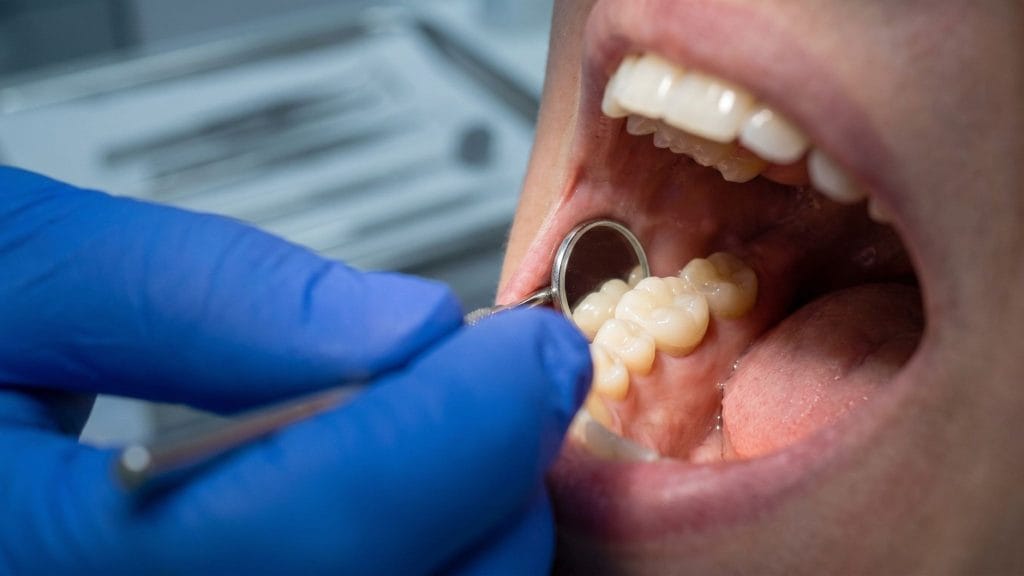
Maintaining a full contour zirconia dental crown is refreshingly simple in fact, it asks nothing more of you than good everyday oral hygiene. Brush gently but thoroughly twice a day using a soft-bristled toothbrush and non-abrasive fluoride toothpaste. Floss once daily, taking particular care to clean beneath the gumline where the crown margin meets the tooth. Keep up with professional cleanings and examinations every six months so your dentist can monitor the restoration, the supporting tooth structure, and your overall oral health.
If you tend to grind or clench your teeth, a habit known as bruxism, your dentist will likely recommend a custom-fitted nightguard to shield both the crown and your natural dentition from excessive nocturnal forces. With these straightforward habits in place, there is every reason to expect your full contour zirconia dental crown to remain strong, beautiful, and symptom-free for many years.
Begin Your Smile Journey with Zirconia Express
If your search for full coverage zirconia crowns near me has led you here, allow us to warmly introduce Zirconia Express.
Zirconia Express offers zirconia crowns and bridges supported by a confident warranty of up to 5 years, reflecting the unwavering trust they place in their materials and techniques. Their digital cases, powered by AI-driven design systems and available in 3 carefully developed shapes, ensure that every restoration honors the unique anatomy of the patient it is created for.
Conclusion
The full contour zirconia dental crown stands at the intersection of material science and artistry, offering strength that rivals metal, aesthetics that echo nature, and a biological harmony that supports lasting oral health. Whether you are weighing the merits of full-contour zirconia vs layered zirconia, investigating the factors behind the zirconia crown price in USA, or simply cataloging every meaningful zirconia crown benefit before committing to treatment, the conclusion is consistent: no other single material delivers this combination of performance and beauty.
The clinical procedure is methodical, comfortable, and increasingly streamlined by digital technology. The financial investment, when measured against years of trouble-free service, represents genuine value. And the daily care required is no different from what your natural teeth already deserve.
Your smile carries your confidence into every room you enter. A full contour zirconia dental crown ensures it does so with enduring strength and grace.
FAQ’s
How long does a full contour zirconia dental crown last?
A full contour zirconia dental crown typically lasts 15 to 20 years or longer with proper care. Good oral hygiene and regular dental visits help maximize its lifespan.
Is zirconia better than porcelain crowns?
Zirconia is stronger and more resistant to fractures than porcelain. It is ideal for back teeth where durability matters most.
Does getting a zirconia crown hurt?
The procedure is usually painless because local anesthesia is used. Mild sensitivity afterward is normal and usually fades quickly.
What is the difference between full-contour zirconia and layered zirconia?
Full-contour zirconia vs layered zirconia mainly differ in strength and aesthetics. Full contour offers better durability, while layered zirconia provides enhanced cosmetic detail.
Can zirconia crowns stain?
Zirconia crowns are highly stain-resistant and maintain their color for years. Routine cleaning helps keep them looking bright and natural.
Are zirconia crowns safe for metal allergies?
Yes, zirconia is completely metal-free and biocompatible. It is an excellent option for patients with metal sensitivities.