
What Are 3D Zirconia Dental Crowns? A Complete Guide
In recent years, the landscape of restorative dental care has undergone a significant transformation, primarily fueled by the integration of advanced digital innovations. Dentists today are expected to provide restorations that are stronger, faster, and more aesthetic than ever before. Patients want restorations that feel natural, look realistic, and last for years without complications. At the same time, dental practices want workflows that reduce chair time, improve precision, and minimise remakes. This is where 3D Zirconia Dental Crowns have become one of the most important innovations in modern dentistry.
Unlike traditional crowns that often involve manual impressions and longer fabrication timelines, 3D Zirconia Dental Crowns are created through advanced digital systems. These crowns are made from zirconium dioxide, a highly durable ceramic material known for its strength, tissue compatibility, and aesthetic flexibility. The combination of zirconia and digital technology has changed how crowns are designed, produced, and delivered, making restorative work far more predictable for dentists.
For practices moving toward digital workflows, zirconia is no longer just an option it is becoming the standard.
Understanding 3D Zirconia Dental Crowns
To understand why these restorations are growing so rapidly, it is important to first understand what makes them different. 3D Zirconia Dental Crowns use digital impressions, CAD design systems, and either milling or printing technologies to create highly accurate restorations.
The process usually begins with an intraoral scan. Instead of using impression material, the dentist captures a digital image of the prepared tooth. This file is sent directly to the dental lab, where the restoration is designed with software that analyses anatomy, contacts, margins, and occlusion.
This process improves:
- Accuracy of the final restoration
- Speed of communication between clinic and lab
- Reduction of impression-related errors
- Better patient comfort
- Faster case completion
The result is a crown that often requires fewer chairside adjustments and provides a better overall fit.
Why Zirconia Is So Popular in Dentistry
The popularity of zirconia is not accidental. It solves many of the biggest problems dentists face with restorative materials.
Older ceramic crowns often looked good but lacked strength. Metal-based crowns were strong but lacked natural aesthetics. Zirconia bridges that gap by combining both.
3D Zirconia Dental Crowns are known for:
- High fracture resistance
- Excellent long-term durability
- Biocompatibility with surrounding tissues
- Resistance to staining and wear
- Strong support for bridges and implants
Studies have shown zirconia can withstand flexural strength between 900 MPa and 1,200 MPa depending on the material type. That makes it one of the strongest restorative materials currently used in fixed prosthodontics.
For dentists, stronger crowns mean fewer fractures and fewer remakes.
The Rise of 3D Printed Zirconia Crowns
The dental industry is also seeing increasing interest in 3D printed zirconia crowns. While milling has dominated for years, printing is creating new opportunities in efficiency and scalability.
With printing, restorations are built layer by layer rather than cut from a block. This reduces material waste and allows more complex structures to be fabricated with precision.
Some advantages of 3D printed zirconia crowns include:
- Less material waste
- Faster production in bulk cases
- Better flexibility in complex designs
- Reduced machine wear compared to milling
Although the technology is still improving, many labs are already investing heavily in printed zirconia because of its future potential.
For dentists, this means shorter turnaround times may become even more common.
3D Printed Crown vs Milled Crown
One of the most common questions in modern restorative dentistry is the difference between 3d printed crown vs milled crown.
Milled crowns are created by carving the crown out of a solid zirconia disc. This method has been trusted for years because it produces dense and durable restorations. Printed crowns, however, are made by layering zirconia material gradually, offering greater material efficiency.
Here is how they generally compare:
Milled Crowns:
- More established and clinically proven
- High density and structural strength
- Excellent precision
- Slightly more material waste
Printed Crowns:
- Faster for large production runs
- More efficient material use
- Better for detailed structures
- Newer with limited long-term data
Currently, milled crowns still dominate most dental labs, but the future may shift as printing technology improves.
What Makes Multilayer Zirconia Crowns Better?
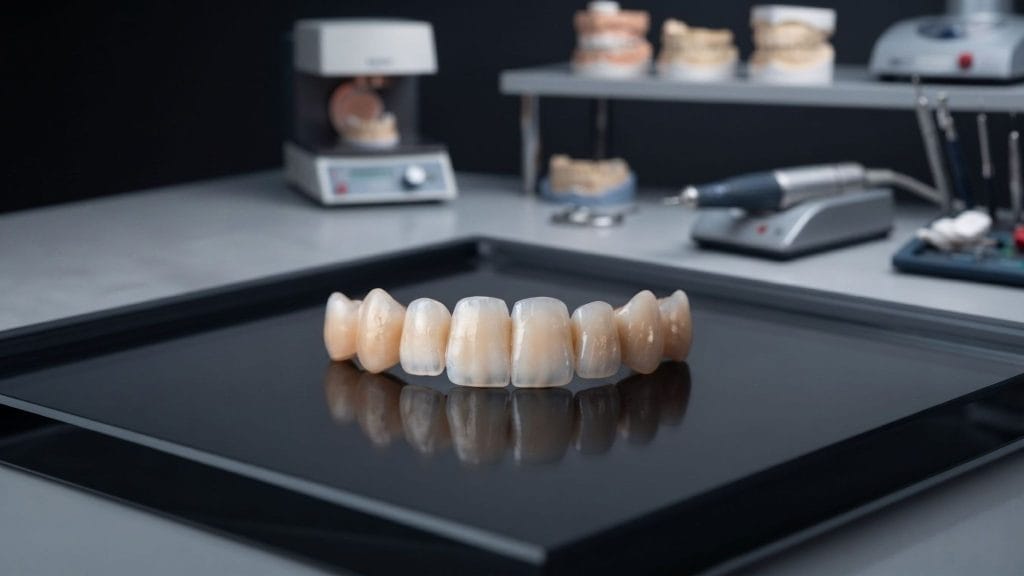
One major complaint about older zirconia crowns was their opaque appearance. While strong, they sometimes lacked the natural beauty needed for front teeth. That problem has been solved with multilayer zirconia crowns.
These crowns are designed with different translucency layers that mimic natural tooth anatomy. The cervical area is denser and slightly darker, while the incisal edge becomes lighter and more translucent.
This creates:
- Better shade transition
- More natural light reflection
- Stronger aesthetic blending
- Improved cosmetic results
For anterior restorations, this has made zirconia far more attractive than it was in the past.
Dentists no longer have to sacrifice strength to achieve aesthetics.
Why Patients Prefer Natural Looking Restorations
Aesthetic dentistry continues to grow because patients care deeply about appearance. Even if a restoration functions perfectly, if it does not look right, patient satisfaction can drop. That is why natural looking 3D zirconia crowns are becoming increasingly important.
Modern zirconia offers improved translucency, customized anatomy, and digital shade matching. Combined with advanced staining techniques, these restorations can blend naturally with surrounding teeth.
Patients often appreciate:
- More realistic appearance
- Better confidence when smiling
- Minimal visible difference from natural teeth
- Long-lasting polish and color stability
For dentists, aesthetic success often leads to stronger referrals and better treatment acceptance.
Clinical Advantages of 3D Zirconia Dental Crowns
There are several clinical reasons why dentists continue choosing zirconia.
The precision of digital workflows improves crown margins, reducing bacterial leakage and improving long-term health around the tooth. This is critical in preventing recurrent decay.
Other clinical advantages include:
- Better occlusal accuracy
- Reduced chairside adjustments
- Lower remake rates
- Excellent strength for bruxism patients
- Strong support for implant restorations
- Reliable performance in bridges
Because zirconia is metal-free, it also eliminates concerns about dark margins or metal allergies.
This makes it a versatile option for nearly every restorative case.
Are They the Best Value for Dental Practices?
Cost matters for every dental practice. While zirconia crowns can have a higher initial cost than some alternatives, their long-term value often makes them worth it.
Many dentists consider them the best value 3D zirconia crowns because they reduce future complications.
The value comes from:
- Longer lifespan
- Lower replacement rates
- Faster digital workflows
- Reduced lab remakes
- Better patient satisfaction
A crown that lasts longer often costs less over time than one that needs replacement.
That is why many practices now make zirconia their default crown option.
Why Ordering Through Zirconia Express Makes Sense
If your practice is looking for dependable zirconia restorations, choosing the right lab is just as important as choosing the right material. Zirconia Express, based in North Carolina, is built specifically for dentists who want reliable quality, digital efficiency, and strong long-term support.
Their zirconia crowns and bridges are backed by up to a 5-year warranty, giving practices more confidence in every case. This level of support helps reduce concerns about long-term durability while strengthening trust between the dentist and the lab.
For practices embracing digital workflows, Zirconia Express also offers advanced digital cases powered by AI-driven design systems. With three different shape options, dentists can customize restorative outcomes more efficiently while reducing manual adjustments.
Benefits of working with Zirconia Express include:
- High-quality zirconia crowns and bridges
- Up to a 5-year warranty
- Faster digital case submissions
- AI-driven crown design systems
- Three anatomical shape options
- Consistent fit and predictable results
For dentists handling larger case volumes, these advantages can significantly improve workflow and productivity.
Conclusion
Modern restorative dentistry is becoming more digital, more precise, and more focused on long-term outcomes. 3D Zirconia Dental Crowns have become one of the strongest examples of this shift because they offer a balance of durability, aesthetics, and efficiency that few materials can match.
As technologies like multilayer zirconia crowns and digital workflows continue to improve, dentists will have even better tools to provide high-quality restorative care. For practices focused on growth, efficiency, and patient satisfaction, zirconia remains one of the smartest investments in restorative dentistry today.
FAQ’s
How long do 3D Zirconia Dental Crowns usually last?
The lifespan of 3D Zirconia Dental Crowns largely depends on oral hygiene, bite force, and overall patient habits. On average, they can last anywhere from 10 to 15 years, and in many cases even longer. Their high strength and resistance to fractures make them one of the most durable crown options available in restorative dentistry.
Are 3D printed zirconia crowns as strong as milled crowns?
3D printed zirconia crowns are improving quickly in strength and precision, but milled zirconia crowns still have a longer track record of clinical success. Printed crowns offer better material efficiency and faster production, while milled crowns remain the preferred choice for many dentists because of their proven durability and density.
What is the difference between multilayer zirconia crowns and regular zirconia crowns?
The main difference is aesthetics. Multilayer zirconia crowns are designed with different levels of translucency and shade throughout the crown, making them look more natural. Regular zirconia crowns are usually more uniform in color and can sometimes appear more opaque, especially in visible front teeth.
Are zirconia crowns a good choice for front teeth?
Yes, modern zirconia crowns are now an excellent option for front teeth because newer materials offer better translucency and more realistic shading. This allows dentists to create restorations that look natural while still providing the strength needed for long-term durability.
Why should dentists use digital cases for crown and bridge work?
Digital cases improve accuracy, reduce turnaround time, and make communication between the dentist and the lab much easier. With AI-driven design systems and faster case processing, digital workflows help dentists achieve more predictable restorative results while saving valuable chairside time.