

Zirconia Dental Crown Lifespan: How Long Does a Crown Last?
A zirconia crown typically lasts 10 to 15 years, and many last longer with good care. The Zirconia Dental Crown Lifespan depends on material type, crown design, bite forces, cementation, and daily hygiene. This guide explains what to expect and how to extend it.
A failed crown costs chair time, money, and patient trust. It can also mean a remake, an extra appointment, and an uncomfortable conversation about what went wrong. Knowing how long restorations realistically last helps you plan treatment and choose the right material for each case. It also lets you set honest expectations before the patient leaves the chair.
Dentists need realistic numbers to set patient expectations. Below, you will find survival data, a factor-by-factor breakdown, replacement signs, and practical steps that protect every restoration.
What Is the Average Zirconia Dental Crown Lifespan?
Zirconia is a ceramic made from zirconium dioxide, known for high strength and fracture resistance. A zirconia crown is a full-coverage restoration milled from this material and sintered at high temperature.
The Lifespan of Zirconia Crowns usually falls between 10 and 15 years. Published clinical reviews commonly report survival rates above 90 percent at five years, and well-made monolithic crowns often perform even better over longer periods.
These figures describe averages. Individual results vary with the patient, the tooth, and the quality of the clinical and laboratory work.
Why Is Zirconia So Durable?
Conventional 3Y zirconia reaches a flexural strength of roughly 900 to 1,200 MPa. Lithium disilicate, a popular alternative, sits around 360 to 400 MPa. That gap explains much of the strong Zirconia Crown Durability seen in posterior teeth.
Higher translucency zirconia, such as 4Y and 5Y, trades some strength for better aesthetics. Its flexural strength is lower, so choose a material that matches the tooth position and bite load.
What Factors Affect Zirconia Crown Life?
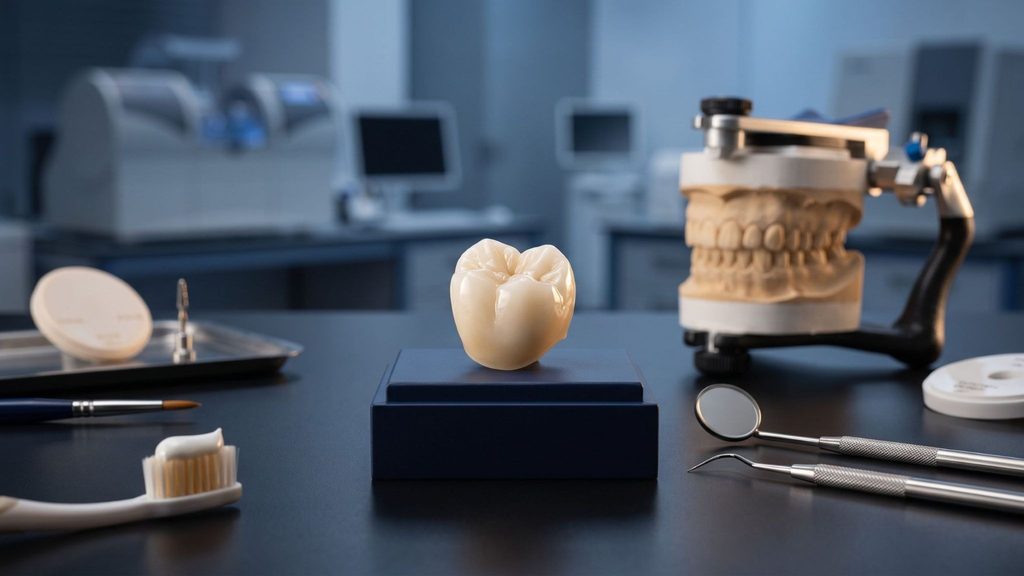
The Factors Affecting Zirconia Crown Life fall into three groups: clinical technique, material and laboratory quality, and patient behavior. The table below summarizes the factors most often linked to early failure.
| Factor | Effect on Lifespan | Practical Action |
| Crown thickness | Thin zirconia can fracture under load | Follow the manufacturer’s minimum for the zirconia type |
| Layered porcelain | Veneering ceramic can chip | Choose monolithic zirconia for posterior teeth |
| Bruxism | Heavy forces raise fracture and wear risk | Recommend a night guard |
| Cementation | Poor bonding leads to decementation | Use the correct cement and surface treatment |
| Marginal fit | Gaps allow decay at the margin | Use accurate scans and quality control |
| Oral hygiene | Plaque causes decay and gum disease | Reinforce brushing and cleaning habits |
Each factor deserves a closer look, because small errors often combine into a failure.
Does Crown Thickness and Design Affect Zirconia Dental Crown Lifespan?
Yes. Thickness and design directly shape the Lifespan of Zirconia Crowns, because they control how well the restoration handles strength demands. Manufacturers commonly recommend about 0.5 to 1.0 mm of occlusal reduction, depending on the zirconia type. Insufficient reduction forces the lab to make a thin crown that is more likely to fracture.
Monolithic crowns, made from a single block of zirconia, avoid the chipping problems of layered designs. Rounded line angles and a clear finish line also reduce stress points.
How Do Bruxism and Bite Forces Change Crown Longevity?
Grinding and clenching multiply the forces on a restoration. Zirconia resists these forces better than most ceramics, but excessive load can still cause fractures or damage the opposing teeth.
A properly polished zirconia surface is gentle on opposing enamel. A night guard is the most practical protection for patients who grind.
Why Does Cementation Protocol Matter for Zirconia Crown Durability?
Cementation failure is one of the most common reasons crowns come loose. Zirconia does not bond like glass ceramics, so the surface needs proper preparation. Many clinicians use resin cements with an MDP-containing primer for reliable retention.
Short, tapered preparations rely even more on adhesive bonding. Follow the cement manufacturer’s instructions closely and keep the field dry.
How Does Oral Hygiene Change Crown Life?
Zirconia does not decay, but the tooth underneath can. Plaque at the crown margin leads to secondary caries and gum recession, which remain leading reasons for replacement.
Patients should brush twice daily, clean between teeth, and keep regular checkups. Gum health around the crown is just as important as the crown itself.
How Does Zirconia Compare to Other Dental Crown Materials?
Zirconia ranks among the strongest tooth colored options available. Each material has a different risk profile, so comparison helps with case selection.
Porcelain fused to metal crowns often last 10 to 15 years, but the porcelain layer can chip, and a dark metal line may show at the gum. Lithium disilicate offers excellent aesthetics, yet its lower strength makes it better suited to anterior teeth and some premolars. In contrast, zirconia crowns hold up better under heavy posterior bite forces.
Gold alloys remain very durable and gentle on opposing teeth, but few patients want a metal appearance. Zirconia combines high strength with natural-looking results, which is why it dominates modern posterior restorations.
When Should a Zirconia Crown Be Replaced?
Replace a crown when it fails clinically, not simply because it reaches a certain age. A crown that fits well and protects the tooth can stay in service for many years.
Watch for these warning signs:
- Chipping or a visible fracture
- A loose crown or recurring decementation
- Decay or a gap at the margin
- Persistent sensitivity or pain around the tooth
- Gum recession that exposes the crown margin
Early detection protects the underlying tooth. A radiograph at routine visits helps catch hidden decay.
How Can You Extend the Life of a Zirconia Crown?
Longevity is a shared job. Dentists control the preparation and delivery, laboratories control the fabrication, and patients control daily care.
What Should Dentists Do to Maximize Crown Longevity?
Prepare with adequate, even reduction and a defined margin, since preparation is one of the most controllable Factors Affecting Zirconia Crown Life. Verify the occlusion carefully and polish any adjusted zirconia surfaces. Choose the right zirconia type for the tooth, and select a cementation protocol that matches the preparation design.
Also recommend a night guard when you see signs of wear or clenching. This single step prevents many avoidable failures.
What Should Patients Do to Protect Their Crown?
Brush twice daily with fluoride toothpaste and clean between teeth every day. Stay away from chewing ice cubes, hard candy, or pens. Attend checkups every six months so small problems are caught early.
Patients who grind should wear their night guard consistently. Consistent habits matter more than any single product.
Why Does Laboratory Quality Affect Zirconia Dental Crown Lifespan?
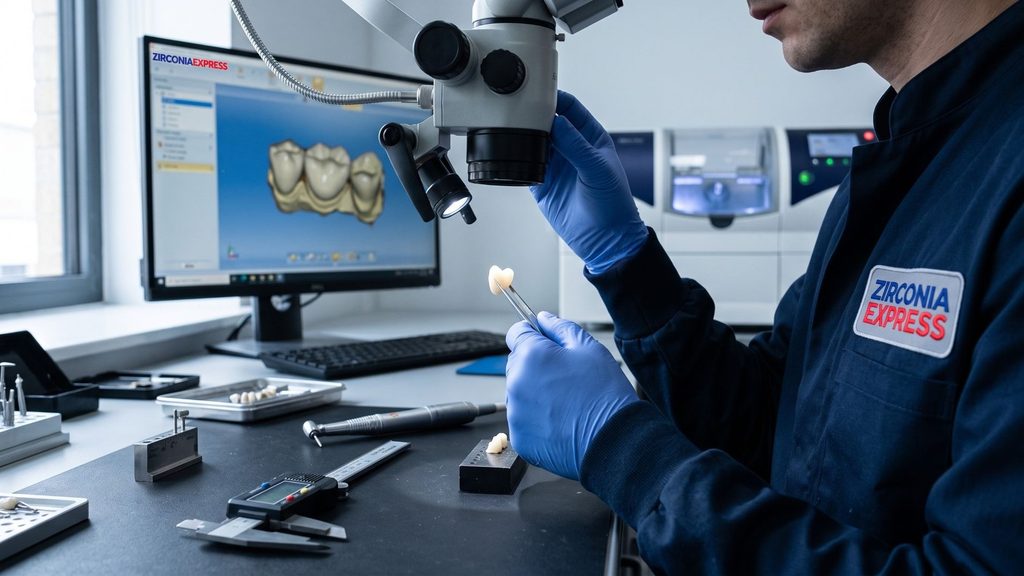
A crown is only as reliable as the laboratory process behind it, and Zirconia Crown Durability depends on that process as much as on the material. Accurate digital design, correct sintering, and strict quality control all influence strength and fit. Even strong zirconia can fail if the margin is imprecise or the sintering cycle is incorrect.
Digital workflows reduce human error. AI-supported design tools help produce consistent anatomy, proper contacts, and clean margins from case to case. Laboratories such as Zirconia Express use this approach and back their zirconia crowns and bridges with a warranty of up to 5 years, which reflects confidence in the process.
When you evaluate a laboratory, ask about scan compatibility, design review, sintering controls, and warranty terms. These details predict real-world performance.
Why Should Dentists Partner With Zirconia Express for Zirconia Crowns?
Choosing a laboratory is a clinical decision, not only a purchasing one. The right partner gives you consistent results, which means fewer remakes, fewer chairside adjustments, and happier patients.
Zirconia Express, a dental laboratory in North Carolina, focuses on premium zirconia crowns and bridges made from high-strength zirconia with natural aesthetics. Every restoration is backed by a warranty of up to 5 years, so you can plan treatment with confidence.
The laboratory also supports modern digital dentistry through its AI-powered digital dental cases. Dentists can choose from three digital design shapes to match each patient’s anatomy and aesthetic goals, and the high-precision workflow integrates smoothly with digital scanning systems.
Consistent quality and reliable turnaround help your schedule stay on track. If you want a laboratory partner that supports your digital workflow, contact Zirconia Express and discuss your next case.
Conclusion
The Zirconia Dental Crown Lifespan typically reaches 10 to 15 years, and it improves when preparation, material choice, cementation, and patient care all line up. Most failures trace back to avoidable clinical or laboratory issues rather than the material itself.
Strong Zirconia Crown Durability begins with a reliable process from scan to delivery. Your clear next step is simple: review your current crown protocols, then send your next case to a laboratory with strong digital quality control and a clear warranty.
FAQ’s
How Long Does a Zirconia Crown Last?
A zirconia crown typically lasts 10 to 15 years, and many last longer. Proper preparation, correct cementation, and good oral hygiene all extend its life.
Can a Zirconia Crown Break or Chip?
Yes, but it is less likely than with layered porcelain. Monolithic zirconia rarely chips, while thin crowns or heavy grinding can cause fractures.
Are Zirconia Crowns More Durable Than PFM Crowns?
Zirconia resists bending forces, and monolithic restorations achieve this without an additional porcelain veneer. This removes the chipping risk that affects many porcelain-fused-to-metal crowns.
Do Zirconia Crowns Need Special Care?
No special products are required. Patients should brush twice daily, clean between teeth, and attend regular checkups. A night guard helps anyone who grinds.
When Should a Zirconia Crown Be Replaced?
Replace it when it chips, loosens, or develops decay at the margin. Persistent pain or exposed margins from gum recession also warrant evaluation.