

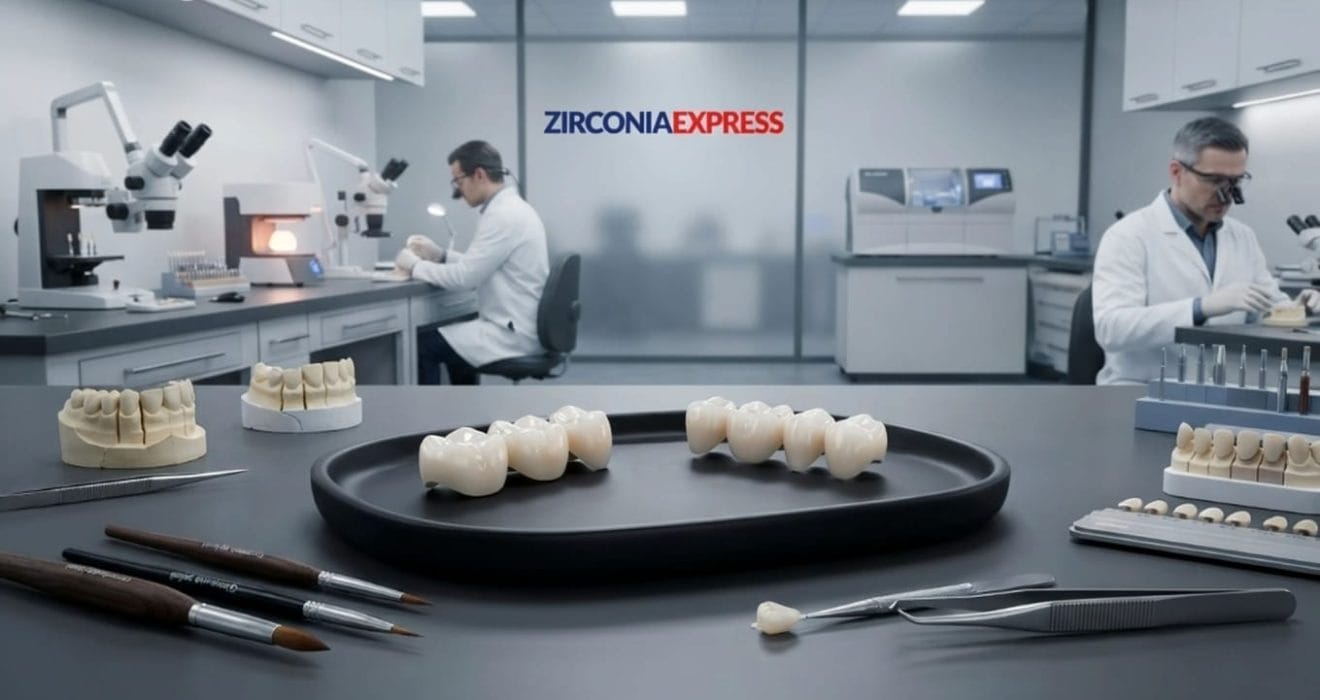
PFZ Layered Zirconia Restorations: A Complete 2026 Guide
Zirconia has changed shape more than once over the past decade, and PFZ-layered zirconia restorations are among the clearest examples of that evolution. They sit at the intersection of strength and esthetics, giving clinicians a restoration that holds up under load while still looking like a natural tooth. For dentists weighing monolithic versus layered options in 2026, understanding exactly what PFZ means and where it fits makes case selection much easier.
Dentists often face this choice chairside, especially when a patient points to a front tooth and says it needs to look real. Material selection at that moment isn’t just a lab decision; it shapes how the final result blends with the smile. Strength matters, but so does how light passes through the restoration and reflects natural enamel. Getting both right requires understanding what’s actually happening inside the material, not just picking a shade off a chart.
This guide breaks down the material science, the clinical indications, and the lab workflow behind these restorations, so you can talk through options with patients and lab partners with confidence.
What Is PFZ Layered Zirconia?
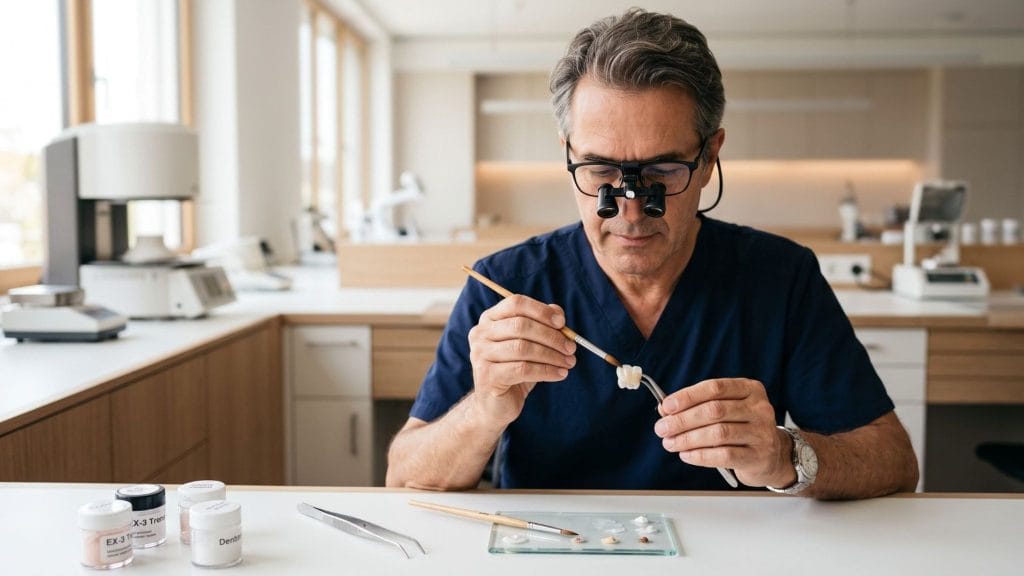
PFZ stands for Porcelain Fused to Zirconia. It refers to a restoration built on a high-strength zirconia core or coping, with layers of feldspathic or fluorapatite porcelain hand-applied over the surface to recreate natural translucency, depth, and color gradation.
Unlike full-contour monolithic zirconia, which is milled as a single solid block and stained on the surface, PFZ layered zirconia crowns combine a milled substructure with ceramist-applied porcelain. The zirconia core provides the mechanical backbone. The porcelain layering provides the optical characteristics that monolithic zirconia often can’t fully replicate, especially in the incisal third of anterior teeth.
How Does PFZ Layered Zirconia Differ From Monolithic Zirconia?
The core difference comes down to structure and how each material handles light.
- Monolithic zirconia is a single homogeneous block, milled to full contour and polished or glazed. It’s strong, chip-resistant, and fast to produce, but its translucency is more uniform and less lifelike.
- PFZ layered zirconia uses a zirconia coping as a foundation, then adds hand-layered porcelain on top. This creates natural light scattering and depth that closely mimics enamel and dentin.
- Strength trade-off: Layered zirconia is slightly more prone to porcelain chipping (delamination) than monolithic zirconia, since the weak point shifts to the bond between the two materials rather than the zirconia itself.
- Esthetic outcome: Layered restorations generally outperform monolithic zirconia in anterior esthetic zones, particularly for patients with high smile lines or thin biotypes.
For posterior molars where load-bearing matters more than translucency, monolithic zirconia is usually the more predictable choice. For anterior teeth where esthetics carry more weight, custom PFZ layered zirconia tends to deliver a more convincing result.
Why Are PFZ Layered Zirconia Restorations Still Relevant in 2026?
High-translucency monolithic zirconia has closed much of the esthetic gap over the last several years, and some clinicians assumed layered zirconia would fade out. That hasn’t happened.
Layered zirconia remains the go-to option for cases demanding true individualization: internal characterization, custom incisal effects, and shade matching against natural adjacent teeth that don’t fit a standard shade tab. Digital shade-matching tools and improved bonding protocols have also reduced the chipping rates that once made dentists cautious about layered restorations.
In short, PFZ layered dental crowns haven’t been replaced. They’ve been refined, and they still hold a specific, valuable place in restorative dentistry.
When Should a Dentist Choose PFZ Layered Zirconia?
Case selection is where most of the clinical judgment comes in. A few scenarios consistently favor layered zirconia over monolithic alternatives:
- Single anterior crowns where the patient has a high smile line and demands seamless blending with natural dentition.
- Cases involving young patients with translucent, high-value natural teeth that off-the-shelf monolithic shades can’t match.
- Restorations adjacent to natural teeth with visible characterization, such as white spots, craze lines, or gradient coloring.
- Patients requesting a specific esthetic outcome based on a smile design mockup or digital wax-up.
- Situations where the treating dentist has an established relationship with a lab ceramist skilled in custom layering.
Posterior restorations, bruxism cases, and high-occlusal-load situations generally favor monolithic or high-translucency zirconia instead, since minimizing porcelain chipping risk matters more there than optical nuance.
What Are the Clinical Benefits of PFZ Layered Zirconia?
Beyond esthetics, PFZ layered zirconia crowns offer a few practical advantages worth discussing with patients.
The zirconia substructure still provides flexural strength well above traditional porcelain-fused-to-metal restorations, typically in the range of 900 to 1,200 MPa depending on the zirconia generation used. That strength means the coping itself rarely fractures, even though the porcelain layer can chip under extreme force.
Layered restorations also allow for more conservative preparation in some cases, since the coping can be designed thinner than a full monolithic contour while still meeting minimum thickness requirements. And because the porcelain is applied by hand, ceramists can build in subtle contour and texture variations that milled monolithic surfaces can’t replicate as easily.
How Is a PFZ Layered Zirconia Restoration Fabricated?
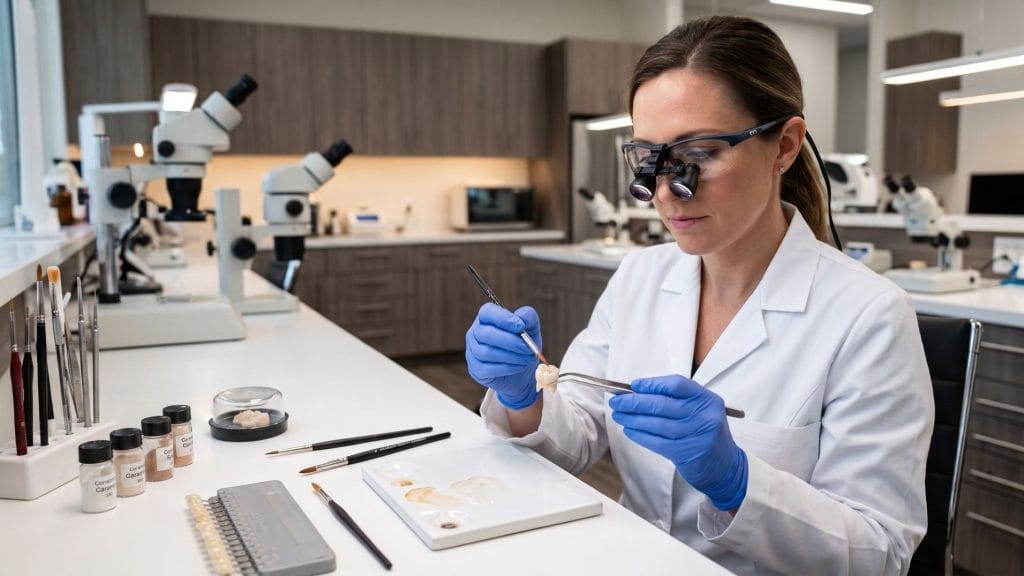
The workflow blends digital and analog techniques, which is part of what makes layered zirconia more labor-intensive than a fully digital monolithic case.
- Digital scan and design: The lab captures a digital impression or scans a traditional impression, then designs the zirconia coping using CAD software.
- Milling the coping: The zirconia substructure is milled to a reduced anatomical contour, leaving space for porcelain buildup.
- Sintering: The milled coping is fired at high temperature to reach full density and strength.
- Porcelain layering: A ceramist hand-applies porcelain in successive layers, building dentin, enamel, and incisal effects to match the desired shade and translucency.
- Firing cycles: Each porcelain layer goes through its own firing cycle to bond properly to the zirconia and to the previous layers.
- Glazing and polishing: The restoration receives a final glaze firing, then polishing and quality checks before shipment.
This process is why turnaround time for layered zirconia typically runs longer than monolithic cases. It’s a trade-off dentists should factor into treatment planning and patient scheduling.
Which Is Better for Your Case: Layered or Monolithic Zirconia?
There’s no single answer, but a simple framework helps.
Choose layered zirconia when the case is anterior, esthetically demanding, and the patient’s occlusal forces are within a normal range. Choose monolithic zirconia when the case is posterior, involves heavy occlusal load, or when turnaround time is a priority. In borderline cases, a quick discussion with your lab about PFZ layered zirconia crowns can help confirm which material actually fits the patient’s bite pattern.
Many practices end up using both materials depending on the tooth position and patient needs, rather than standardizing on one across the board. A good lab partner should be able to walk you through that decision case by case rather than pushing one material as a default. Over time, this case-by-case approach tends to reduce remakes and keeps patients happier with the final fit..
Why Partner With Zirconia Express for Your PFZ Layered Zirconia Cases?
Consistency is the biggest challenge with layered zirconia restorations. Because so much of the process depends on a ceramist’s hand-layering technique, results can vary widely from lab to lab, and even case to case within the same lab.
Zirconia Express, a dental laboratory based in North Carolina, works with dentists, prosthodontists, implant specialists, and other labs to produce zirconia crowns and bridges built for both strength and predictable esthetics. Every restoration is backed by up to a 5-year warranty, giving practices confidence in long-term outcomes rather than just initial fit and shade.
For digital cases, Zirconia Express uses an AI-driven design system with three anatomical shape options, which helps standardize contour and occlusion before the case ever reaches the layering stage. That combination of digital precision upfront and skilled craftsmanship in the porcelain application is what keeps turnaround times reliable without sacrificing the custom esthetic results that layered zirconia is meant to deliver.
Whether you’re restoring a single anterior tooth with a high smile line or coordinating a full-arch case with multiple labs, having a consistent, digitally compatible partner reduces remakes and chair time. If your practice is ready for a lab that treats every case with the same attention to detail, reach out to Zirconia Express to discuss your next restoration.
Conclusion
These restorations remain one of the most reliable ways to combine structural strength with lifelike, individualized esthetics, particularly for anterior cases where shade matching and translucency matter most. Choosing between layered and monolithic zirconia depends on tooth position, occlusal load, and the extent of esthetic customization a case demands.
Working with a lab experienced in PFZ layered dental crowns makes that decision easier, since a skilled ceramist and a solid digital workflow together produce more predictable, longer-lasting results. Whichever direction a case calls for, understanding the material’s strengths and limitations helps dentists set realistic expectations with patients from the start.
FAQ’s
What does PFZ mean in dentistry?
PFZ stands for Porcelain Fused to Zirconia. It describes a restoration made of a milled zirconia coping covered with hand-layered porcelain to achieve natural esthetics.
Is PFZ layered zirconia stronger than porcelain fused to metal?
The zirconia substructure in a PFZ restoration is significantly stronger than a traditional metal coping, though the porcelain layer itself carries similar chipping risk to porcelain-fused-to-metal restorations.
How long do PFZ layered zirconia crowns last?
With proper occlusal management and hygiene, PFZ layered zirconia crowns commonly last 10 to 15 years, though this varies based on bite forces, parafunctional habits, and maintenance.
Can PFZ layered zirconia chip?
Yes. The porcelain layer can chip or delaminate under heavy occlusal force, which is why layered zirconia is generally recommended for anterior restorations rather than high-load posterior cases.
Is PFZ layered zirconia more expensive than monolithic zirconia?
Yes, typically. The hand-layering process requires more ceramist time and additional firing cycles, which increases both cost and turnaround time compared to monolithic zirconia.

1 Comment