

What Is a BruxZir Crown? Material, Uses, and Benefits Explained
For patients who grind their teeth heavily and need a highly durable crown, dentists often recommend zirconia as a reliable option. But not all zirconia is the same, and one name comes up more than any other in restorative dentistry conversations: BruxZir.
So, what is a BruxZir crown, exactly? It’s a solid, monolithic zirconia dental restoration manufactured by Glidewell Dental, designed to withstand the forces of chewing and clenching without chipping or fracturing. Dentists reach for it when durability matters as much as appearance.
That reputation didn’t happen by accident. Zirconia has been studied and refined in dentistry for years, moving from a purely functional, opaque material to one that can now match the shade and translucency of natural teeth. BruxZir was among the first monolithic zirconia crowns to prove that a restoration could hold up to heavy bite forces while still looking like a real tooth, and that track record is why dentists continue to recommend it for demanding cases.
This guide breaks down the material science, the clinical uses, and the real benefits behind this restoration, along with how it compares to other crown options a dental practice might consider.
What Is a BruxZir Crown?
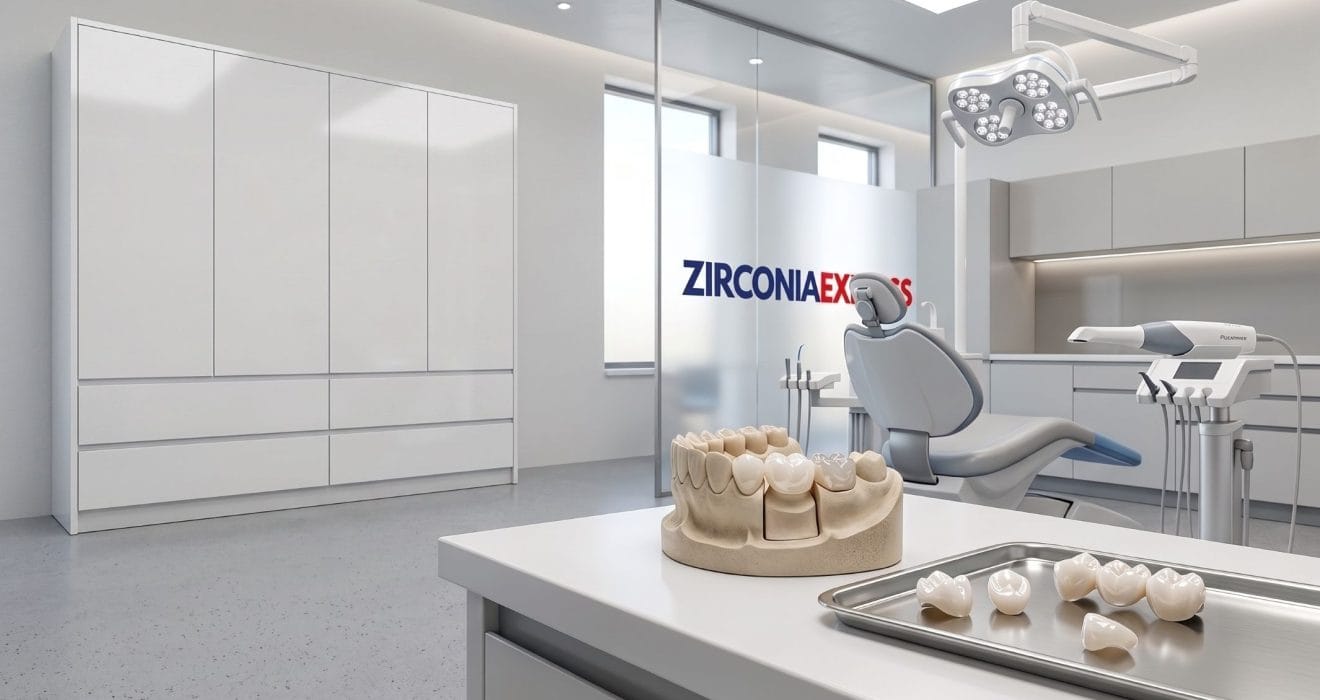
A BruxZir crown is a full-contour, single-block zirconia crown milled from a solid puck of zirconium dioxide rather than layered with porcelain. Because it’s monolithic, there’s no separate porcelain veneer to chip off under pressure. The entire crown is one continuous piece of ceramic material.
This design makes it especially useful for patients who grind their teeth, have limited interocclusal space, or need a restoration on a molar that takes the brunt of daily chewing forces. The name itself is a nod to bruxism, the clinical term for teeth grinding, which hints at exactly the problem this crown was engineered to solve.
What Is BruxZir Crown Material Made Of?
BruxZir crown material is zirconium dioxide, a ceramic known for its exceptional flexural strength and biocompatibility. Zirconia has been used in orthopedic implants for decades before dentistry adopted it, which speaks to how well it tolerates being inside the human body long-term.
Flexural strength for BruxZir-branded zirconia typically falls in a range that outperforms traditional porcelain-fused-to-metal crowns and most layered zirconia restorations. In practical terms, that translates to a crown that resists cracking under the repetitive load of chewing, clenching, and occasional grinding.
Modern formulations of this material also include a translucent, multi-layered shading gradient, so the crown mimics the natural color transition seen in real enamel and dentin. Earlier versions of monolithic zirconia were criticized for looking flat or opaque, but current generations have largely closed that aesthetic gap.
How Is a BruxZir Zirconia Crown Different From Other Zirconia Crowns?
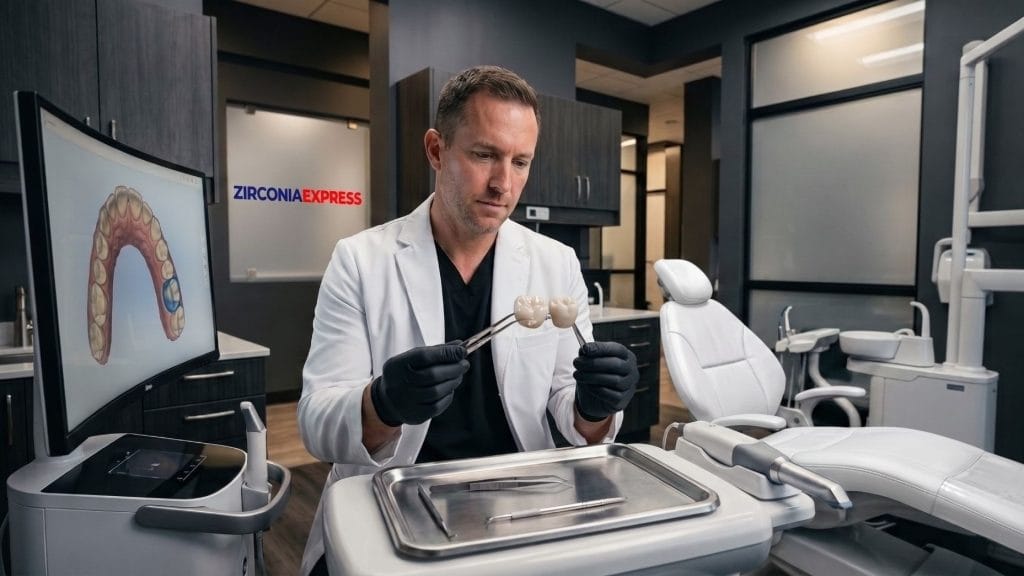
Not every zirconia crown is milled the same way. What is a BruxZir crown? A BruxZir crown is monolithic, meaning it’s one solid piece from the biting surface down to the margin. Some competing zirconia restorations use a zirconia core with a layered porcelain overlay for a more lifelike appearance, similar to how PFM crowns are built.
The tradeoff is straightforward. Layered zirconia can look slightly more natural in certain lighting, but the porcelain layer is the weak point and can chip. A monolithic BruxZir crown sacrifices a small degree of that layered translucency in exchange for a restoration that essentially can’t delaminate, because there’s nothing layered on top to separate.
Manufacturing consistency is another differentiator. Brand-name BruxZir material goes through a standardized milling and sintering process, so dental labs and dentists know what strength and shade outcomes to expect case after case.
What Are the Common Uses of a BruxZir Dental Crown?
What is a BruxZir crown? It is most often placed in situations where strength is the priority, though its improved aesthetics have expanded its use to visible teeth as well. Common applications include:
- Posterior molars and premolars that absorb the heaviest bite forces
- Restorations for patients with a documented history of bruxism or clenching
- Full mouth reconstructions where multiple crowns need to function together
- Bridge abutments that need to support a multi-unit span
- Cases with reduced tooth structure or minimal clearance for a crown
Because it can be milled thinner than porcelain fused to metal without losing strength, it’s also a practical option when a patient has limited occlusal clearance after tooth preparation.
What Are the Benefits of a BruxZir Zirconia Crown?
Dentists and lab technicians consistently point to a handful of advantages when discussing this restoration.
Strength and fracture resistance. The monolithic zirconia structure holds up under significant bite force, reducing the likelihood of a remake due to chipping or cracking.
Biocompatibility. Zirconia is well tolerated by soft tissue, which matters for patients with sensitivities to metal-based restorations.
Aesthetic versatility. Multi-layered shading allows the crown to blend with surrounding teeth, making it suitable for anterior and posterior placement alike.
Conservative tooth preparation. Because the material doesn’t need bulk for a porcelain layer, dentists can often prepare less tooth structure while still achieving adequate strength.
Predictable milling and fit. Standardized digital workflows mean a Bruxzir crown restoration typically requires fewer chairside adjustments than some layered alternatives.
When Should a Dentist Recommend a Bruxzir Crown Restoration?
A monolithic zirconia crown makes the most clinical sense when strength needs to take priority over ultimate esthetic nuance. That includes patients with active bruxism, heavy occlusal forces, or a history of fracturing previous crowns.
It’s also a strong choice for posterior teeth where visibility is limited, and the biting surface takes the majority of the load. For anterior teeth where translucency is critical, a dentist may weigh it against layered zirconia or lithium disilicate options, depending on the patient’s smile line and shade-matching needs.
Full-arch and implant-supported cases often lean toward this material too, since consistency across multiple units matters when several crowns need to function as one system.
Which Is Better, BruxZir or porcelain-fused-to-metal crowns?
The answer depends on what the case demands. Porcelain fused to metal, or PFM, has decades of clinical history and can produce excellent esthetics, but the porcelain layer is prone to chipping, and the metal substructure can eventually show as a dark line near the gum.
A monolithic BruxZir zirconia crown avoids both of those failure points. It doesn’t have a porcelain layer to chip, and there’s no metal margin to become visible as gum tissue recedes over time. For patients who prioritize longevity and minimal maintenance, this Bruxzir crown material generally has the edge.
PFM can still make sense in specific situations, such as when a dentist needs to match an existing restoration’s exact appearance or when cost constraints are a significant factor. But for most new restorations requiring durability, zirconia has become the more common recommendation among restorative dentists.
How Long Does a BruxZir Crown Last?
Clinical data and manufacturer studies generally place the lifespan of a well-maintained monolithic zirconia crown at ten to fifteen years or longer, which exceeds the typical five to fifteen-year range reported for PFM crowns. Longevity depends heavily on oral hygiene, bite forces, and whether the patient wears a nightguard if bruxism is present.
Regular dental checkups allow a dentist to monitor the margin and surrounding tissue, catching any issues early before they become a bigger restorative problem.
Why Dental Practices Partner With Zirconia Express for Zirconia Crowns and Bridges
Consistently creating durable, high-strength monolithic zirconia crowns requires more than advanced milling equipment alone. It takes a lab that treats every restoration with the same attention to shade, fit, and occlusion, regardless of case volume.
Zirconia Express, a B2B dental laboratory based in North Carolina, works with dentists, prosthodontists, implant specialists, and dental practices who need dependable zirconia crowns and bridges without the guesswork. Every restoration is backed by up to a five-year warranty, so practices can stand behind their work with confidence.
For practices moving toward digital dentistry, Zirconia Express also offers digital dental cases built with an AI-driven design system and three distinct anatomical shape options, giving dentists flexibility to match each patient’s bite and esthetic needs. The digital workflow integrates smoothly with modern scanning systems, which helps reduce remakes and shortens the path from scan to seat.
Combined with fast, reliable turnaround times, this makes Zirconia Express a practical partner for practices that need consistent quality on every case, whether it’s a single BruxZir-style crown or a full arch of restorations. Dentists seeking a laboratory partner focused on accuracy and dependable results can contact Zirconia Express to talk about their upcoming case.
Conclusion
A Bruxzir dental crown stands out because it’s built as a single solid block of zirconia, so there’s no porcelain layer to chip and no metal margin to worry about over time. This makes it a dependable choice for patients who need a crown that can hold up to daily chewing and clenching, molar after molar, year after year.
So, what is a BruxZir crown at its core? It’s a strong, biocompatible, natural-looking restoration that gives dentists a reliable way to treat everything from a single cracked molar to a full mouth reconstruction. For patients who value both durability and a confident smile, it remains one of the most trusted options in modern restorative dentistry.
FAQ’s
What is a BruxZir crown made of?
A BruxZir crown is made of solid zirconium dioxide, a high-strength ceramic material milled as one continuous block rather than layered with porcelain.
Is a BruxZir crown better than a regular zirconia crown?
It depends on the case. A BruxZir crown is monolithic and generally stronger than layered zirconia crowns, though layered versions can offer slightly more natural translucency in certain esthetic zones.
How much does a BruxZir crown typically cost?
Costs vary by lab, region, and case complexity, but monolithic zirconia crowns are generally priced comparably to or slightly higher than PFM crowns due to material and milling requirements.
Can a BruxZir crown be used on front teeth?
Yes. Modern multi-layered shading has improved the esthetics enough that many dentists place it on anterior teeth, though case-by-case shade matching should be evaluated first.
How long does a BruxZir crown restoration last?
Most well-maintained monolithic zirconia crowns last ten to fifteen years or longer, depending on oral hygiene, bite force, and whether a nightguard is used for bruxism.
Does a BruxZir crown require special tooth preparation?
It requires less bulk reduction than porcelain-fused-to-metal crowns because there’s no porcelain layer to accommodate, which allows for more conservative preparation in many cases.

1 Comment