
Full Contour Zirconia Crown: The Ideal Solution for High-Strength Dental Needs
Fractured crowns, chipped porcelain, and remakes cost dental practices time, money, and patient trust. That’s why so many clinicians have shifted to the full contour zirconia crown for high-load restorations. Milled from a single block of zirconium dioxide with no porcelain overlay, it removes the weakest link in traditional crown design, the veneering layer, and replaces it with monolithic strength that routinely exceeds 1,000 MPa.
This guide breaks down what a full contour zirconia crown is, how it’s fabricated, when to prescribe it, and how it stacks up against layered zirconia, PFM, and lithium disilicate. Whether you’re a general dentist, prosthodontist, or lab technician, you’ll find practical, clinically grounded answers here.
What Is a Full Contour Zirconia Crown?
A full contour zirconia crown, also called a monolithic zirconia crown, is a restoration milled entirely from a solid block of zirconium dioxide ceramic. Unlike layered restorations, it contains no porcelain veneer. The entire crown, from the intaglio surface to the occlusal anatomy, is one continuous piece of zirconia.
Because there’s no ceramic layer bonded on top, there’s nothing to chip or delaminate under occlusal force. That single design decision is what makes monolithic zirconia the most fracture-resistant tooth-colored crown material available today.
Modern full contour zirconia also solves the aesthetic problem that plagued early-generation zirconia. First-generation 3Y-TZP material was strong but opaque and chalky white. Current multilayer and high-translucency formulations offer graduated shading and improved light transmission, making today’s monolithic crowns viable well beyond the second molar.
How Is Full Contour Zirconia Crown Made?

Fabrication is fully digital from start to finish, which is why you’ll often hear these referred to as CAD/CAM zirconia crowns. The workflow looks like this:
- Digital impression. The dentist scans the prepared tooth with an intraoral scanner, or the lab digitizes a conventional PVS impression.
- CAD design. A technician, or increasingly AI-driven design software, creates the crown’s anatomy, contacts, and occlusion. At Zirconia Express, our AI-assisted system offers three anatomical shape options, letting clinicians match the design philosophy to each patient’s arch and occlusal scheme.
- Milling. A CNC milling unit cuts the crown from a pre-sintered zirconia disc, oversized by roughly 20–25% to compensate for sintering shrinkage.
- Sintering. The milled crown is fired at approximately 1,450–1,550°C. During sintering, it shrinks to its final dimensions and reaches full density and strength.
- Shading and glazing. Technicians apply external stains and glaze to replicate natural chroma, translucency gradients, and surface texture, then polish the occlusal surfaces.
The digital zirconia crown workflow eliminates many of the variables that lead to remakes in analog fabrication, distorted impressions, casting errors, and inconsistencies in porcelain application. The result is a tighter marginal fit and more predictable occlusion straight out of the box.
What Are the Benefits of Full Contour Zirconia Crowns?
Why Is Strength the Headline Advantage?
High-strength zirconia crown delivers flexural strength in the range of 1,000–1,200 MPa, roughly three times that of lithium disilicate and far exceeding that of feldspathic porcelain. Zirconia also exhibits transformation toughening: when a microcrack begins to form, the crystal structure locally transforms, compressing the crack tip and actively resisting propagation. No other dental ceramic does this.
What Are the Other Clinical Benefits?
- No porcelain chipping. Chipping is the most common technical complication with PFM and layered restorations. Monolithic design eliminates it entirely.
- Conservative preparation. Zirconia’s strength permits reduced material thickness, often 0.8–1.0 mm occlusally, thereby preserving more natural tooth structure than PFM restorations.
- Metal-free biocompatibility. As a metal-free dental crown, zirconia carries no risk of nickel sensitivity, no grey gingival margins, and excellent soft-tissue response.
- Kind to opposing teeth. Well-polished zirconia is gentler on opposing enamel than glazed porcelain, which becomes abrasive as glaze wears away.
- Marginal accuracy. CAD/CAM fabrication consistently produces marginal gaps well within clinically acceptable limits, supporting long-term periodontal health.
When Should You Prescribe a Full Contour Zirconia Crown?
The clinical indications are broad, but these situations are where monolithic zirconia truly earns its place:
- Posterior restorations. A zirconia crown for molars is arguably the material’s ideal application. Molars endure bite forces of 200–250 N during normal function and far more during parafunction, making fracture resistance the priority.
- Bruxism and clenching. For patients who grind, a zirconia crown for posterior teeth is one of the few tooth-colored options with a realistic chance of long-term survival.
- Limited interocclusal space. When there isn’t room for the 1.5–2.0 mm a PFM or layered crown requires, zirconia’s minimal thickness requirement is the practical answer.
- Implant-supported crowns and bridges. Monolithic zirconia handles the rigid, non-resilient loading of implant restorations well.
- Patients replacing failed PFMs. Recurrent porcelain fractures are a clear signal to switch to a monolithic design.
- Metal allergies. Any patient requiring a metal-free dental crown for medical or aesthetic reasons.
The main contraindication is a case demanding maximum anterior aesthetics with high translucency in a thin smile line, situations where layered restorations or lithium disilicate may still edge ahead.
Full Contour vs Layered Zirconia: Which Should You Choose?
The full-contour vs. layered zirconia decision comes down to a strength-versus-aesthetics trade-off.
Layered zirconia uses a milled zirconia coping veneered with feldspathic porcelain. The porcelain provides lifelike translucency and internal characterization, which is why layered work still shines in the aesthetic zone. The compromise: the veneering porcelain has a flexural strength of only about 90–120 MPa, and chipping rates in clinical studies have historically been noticeably higher than those of monolithic alternatives.
Full contour zirconia sacrifices some optical depth in exchange for uniform, monolithic strength. With modern multilayer discs that build gradient shading into the material itself, that aesthetic gap has narrowed considerably.
A practical prescribing rule:
| Factor | Full Contour Zirconia | Layered Zirconia |
| Best for | Posterior teeth, bruxers, implants | Anterior aesthetic zone |
| Chipping risk | None (no veneer) | Moderate |
| Strength | 1,000+ MPa throughout | Strong core, weak veneer |
| Occlusal clearance needed | ~1.0 mm | 1.5–2.0 mm |
| Aesthetics | Very good (multilayer) | Excellent |
Many labs, including Zirconia Express, also produce hybrid designs, monolithic occlusal surfaces with facial cut-back layering, capturing anterior aesthetics without exposing functional surfaces to chipping.
How Does Full Contour Zirconia Compare to PFM Crowns?
Porcelain-fused-to-metal was the workhorse restoration for half a century, but full contour zirconia has displaced it in most posterior indications for four reasons:
- No porcelain fracture. Veneer chipping remains the leading technical complication of PFM crowns; monolithic zirconia removes the failure mode entirely.
- No metal display. PFMs can show a grey margin at the gingiva, especially after recession. Zirconia stays tooth-colored to the margin.
- Less tooth reduction. PFM requires space for a metal coping, an opaque layer, plus porcelain. Zirconia needs a fraction of that.
- No alloy concerns. Rising metal costs and nickel sensitivity issues disappear with an all-ceramic solution.
PFM retains a niche where long clinical track records or specific rest-seat designs matter, but for a routine crown on a molar or premolar, monolithic zirconia is now the evidence-supported default in most practices.
How Does Full Contour Zirconia Compare to Lithium Disilicate?
Lithium disilicate (e.g., e.max) offers superb translucency and adhesive bonding, with flexural strength around 360–500 MPa. That makes it excellent for anterior crowns, veneers, and premolars in patients with normal occlusal function.
Full-contour zirconia wins when force is the dominant variable, molars, bruxers, short clinical crowns with limited retention, and multi-unit posterior bridges, where lithium disilicate is generally contraindicated beyond premolar-width spans. A sensible segmentation many clinicians follow: lithium disilicate from canine to canine, zirconia from premolar back, with case-specific exceptions.
What Are the Tooth Preparation Guidelines for Full Contour Zirconia?
One reason dentists love this material: preparation is forgiving. General guidelines include:
- Occlusal reduction: 1.0 mm ideal, 0.8 mm acceptable with high-strength formulations
- Axial reduction: 0.8–1.0 mm
- Margin design: Chamfer or rounded shoulder, 0.5 mm minimum; feather-edge margins are tolerated by zirconia better than by any other ceramic, though a defined margin is still preferred
- Line angles: Round all internal line angles to avoid stress concentration and milling limitations
- Taper: 4–8 degrees of total occlusal convergence
- Cementation: Conventional cementation with RMGI or self-adhesive resin cement works well; adhesive bonding with MDP-based primers after air abrasion boosts retention on short preps
Because milling burs have a physical diameter, sharp internal angles can’t be reproduced. Smooth, rounded preparations translate directly into better internal fit.
How Much Do Full Contour Zirconia Crowns Cost?
For patients in the United States, a full contour zirconia crown typically runs $1,000–$2,500 per unit depending on region, practice, and insurance coverage, comparable to or slightly above PFM.
For dental practices, monolithic zirconia is often the more economical prescription at the lab level. Because fabrication is fully digital and requires no hand-layered porcelain or alloy, lab fees are frequently lower than PFM or layered zirconia, and turnaround is faster. Factor in the reduced remake and repair rates, and the total cost of ownership clearly tilts in zirconia’s favor.
How Long Do Full Contour Zirconia Crowns Last?
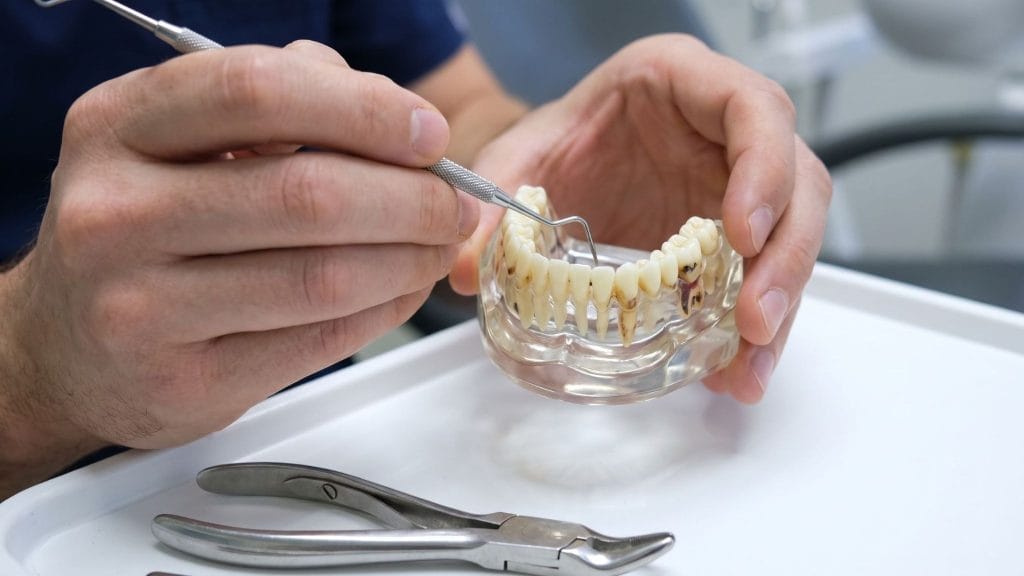
Clinical studies consistently report survival rates above 95% at five years for monolithic zirconia crowns, with framework fracture being rare. With sound preparation, accurate occlusal adjustment, proper polishing after any adjustment, and reasonable home care, a realistic service expectation is 10–15 years or longer.
Two clinical habits protect that lifespan: always polish zirconia after occlusal adjustment (unpolished adjusted surfaces wear opposing enamel), and prescribe a night guard for confirmed bruxers; even zirconia benefits from load management.
How Should Patients Maintain a Zirconia Crown?
Aftercare is refreshingly simple. Patients should:
- Brush twice daily and floss around the crown margin, where natural tooth structure remains vulnerable to decay.
- Avoid using teeth as tools and limit ice chewing.
- Wear a night guard if diagnosed with bruxism.
- Keep regular hygiene visits to allow the clinician to monitor margins and occlusion.
The crown itself won’t decay or stain, but the margin and root are still natural teeth. Recurrent caries at the margin, not material failure, is the most common reason any crown eventually needs replacement.
Why Do Dental Practices Partner With Zirconia Express for Zirconia Restorations?
Material selection is only half the equation; the lab fabricating your restorations determines whether zirconia’s on-paper advantages show up chairside. That’s where working with a dedicated zirconia laboratory pays off.
Zirconia Express, a B2B dental laboratory based in North Carolina, specializes in high-strength zirconia crowns and bridges backed by up to a 5-year warranty, a concrete signal of confidence in both material quality and fabrication consistency. Every restoration comes through a fully digital workflow, so practices using intraoral scanners get seamless case submission and faster turnaround, while conventional-impression offices are equally supported.
For clinicians embracing digital dentistry, the lab’s AI-driven design system offers three anatomical shape options per case, allowing you to select the occlusal morphology and contour philosophy that fits each patient rather than accepting a one-size-fits-all design. The outcome dentists notice most: fewer occlusal adjustments, tighter contacts, and predictable seating appointment after appointment.
If your practice is placing zirconia crowns for molars, implant restorations, or full-arch cases, or you’re simply tired of inconsistent lab results, it’s worth a conversation. Reach out to Zirconia Express to discuss your case requirements, turnaround needs, and compatibility with digital workflows.
Conclusion
The full contour zirconia crown has earned its position as the go-to restoration for high-strength dental needs. Eliminating veneering porcelain removes the most common failure mode in crown dentistry while delivering conservative preparations, metal-free biocompatibility, and aesthetics that continue to improve with each material generation. For molars, bruxers, implant cases, and any patient who has fractured a PFM before, monolithic zirconia is the evidence-backed choice, and with the right laboratory partner, it’s also one of the most predictable restorations you can prescribe.
FAQ’s
What is the difference between full contour zirconia and monolithic zirconia?
Nothing, the terms are interchangeable. Both describe a crown milled entirely from a single piece of zirconia, with no porcelain veneer.
Is a full contour zirconia crown good for front teeth?
Yes, with modern high-translucency multilayer zirconia, anterior use is common. For maximum aesthetics in a high smile line, layered zirconia or lithium disilicate may still be preferred.
Can a full contour zirconia crown crack?
Fracture is rare. With flexural strength above 1,000 MPa and transformation toughening, monolithic zirconia is the most fracture-resistant tooth-colored crown material available.
How thick does a full contour zirconia crown need to be?
As little as 0.8–1.0 mm occlusally, compared with 1.5–2.0 mm for PFM or layered ceramics, preserving significantly more tooth structure.
Do zirconia crowns wear down opposing teeth?
Polished zirconia is gentler on opposing enamel than glazed porcelain. The key is proper polishing, especially after any chairside occlusal adjustment.
Is zirconia better than porcelain-fused-to-metal?
For most posterior indications, yes. Zirconia eliminates porcelain chipping and gray metal margins, requires less tooth reduction, and is completely metal-free.
How long does a CAD CAM zirconia crown take to make?
Digital labs typically deliver in days rather than weeks. Digital impressions transmit instantly, and milling and sintering can be completed within a single production cycle.
Are full contour zirconia crowns safe for patients with metal allergies?
Yes. Zirconia is a fully metal-free ceramic with excellent biocompatibility and no nickel or other alloy sensitizers.