

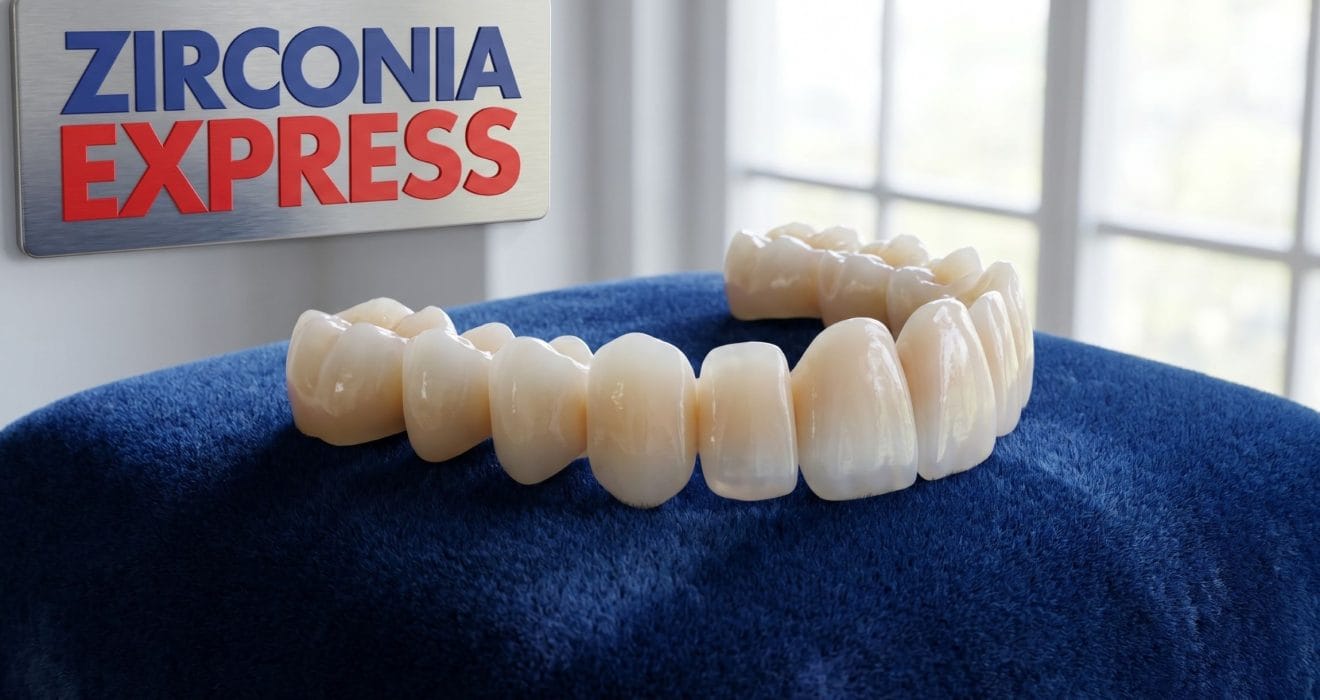
Everything You Need to Know About (3D) Multi-Layered Zirconia
There are moments in medicine when a single material quietly changes everything. In dentistry, that material is (3D) Multi-Layered Zirconia. Over the past decade, it has moved from a niche laboratory innovation to the most trusted restorative ceramic in modern clinical practice. It sits at the intersection of engineering and artistry, strong enough to endure the daily forces of chewing, yet visually indistinguishable from natural teeth when crafted with care.
If you are a patient navigating your first restoration, or a clinician evaluating materials for your practice, this guide covers what (3D) Multi-Layered Zirconia truly is, how it is made, what separates the best products from the rest, and why it has earned its place as the gold standard of restorative dentistry.
What Exactly Is (3D) Multi-Layered Zirconia?
(3D) Multi-Layered Zirconia is a dental ceramic material composed of multiple, precisely engineered layers, each with a distinct shade, translucency level, and structural density that together replicate the natural optical and mechanical properties of the human tooth.
A natural tooth is not one flat color. It is a living structure with a warm, opaque, chromatic root and cervical area that gradually gives way to a semi-translucent, lighter incisal edge. Traditional monolithic zirconia, while durable, could never truly replicate this gradient. (3D) Multi-Layered Zirconia was developed specifically to solve this problem.
A quality Multilayer Zirconia block achieves this by layering zirconia powder in distinct chromatic zones from a richly pigmented cervical base to a high-translucency incisal region all within a single, unified block. The “3D” designation reflects the fact that this gradient flows not just from top to bottom, but through the entire three-dimensional mass of the material. When a dental technician mills a crown from this block, the resulting restoration naturally carries those layers in anatomically correct positions, without any hand-painting or manual staining required in most cases.
This is what makes (3D) Multi-Layered Zirconia fundamentally different: it does not simulate nature, it structurally mirrors it.
How Is (3D) Multi-Layered Zirconia Manufactured?
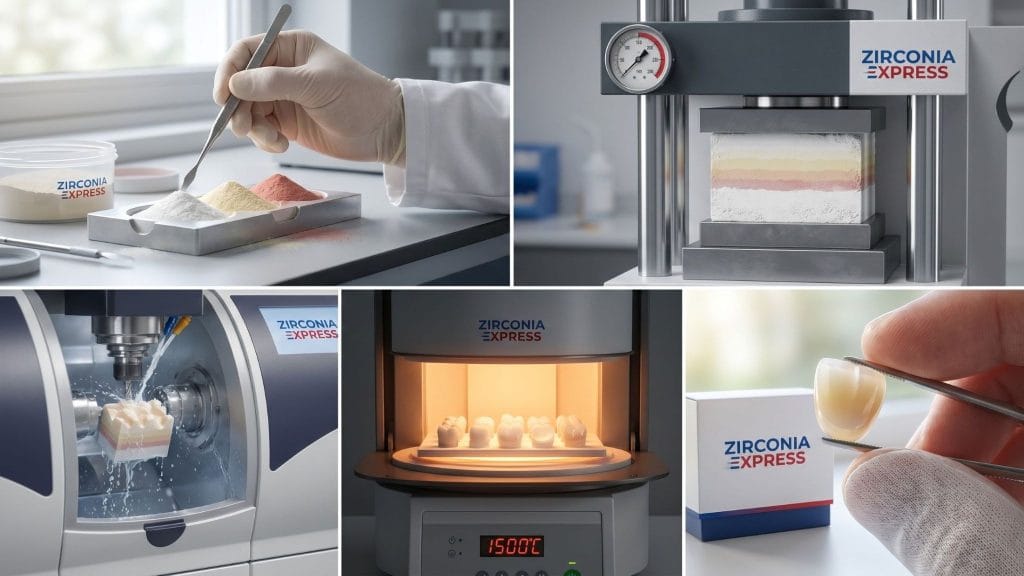
The process begins with high-purity zirconium oxide powder, which is blended with stabilizing agents, typically yttrium oxide, to control translucency and flexibility. Different concentrations and pigments are prepared for each layer, then carefully deposited in sequence into a mold under controlled conditions. The boundaries between layers must be gradual, not abrupt, to avoid any visible seam in the final restoration.
Once layered, the material is compressed under isostatic pressure to form a pre-sintered, chalk-like blank, which is commonly known as a Multilayer Zirconia block. This block is then loaded into a CAD/CAM milling unit, where it is shaped into the designed restoration. After milling, the restoration undergoes sintering in a high-temperature furnace typically above 1,500°C, where the material densifies, hardens, and reaches its final optical and mechanical properties.
It is during sintering that the layers truly come alive. The pigments mature, the translucency gradients emerge, and the restoration transforms into a tooth-like structure that light interacts with naturally. The result is a crown or bridge that scatters and transmits light the way enamel and dentin do, creating depth, vitality, and warmth.
Clinical Benefits That Set (3D) Multi-Layered Zirconia Apart
When dental professionals choose (3D) Multi-Layered Zirconia for their patients, they are choosing a material that addresses every major concern in restorative dentistry simultaneously.
The first and most visible benefit is aesthetics. Because the shade gradient is built into the material itself, the restoration naturally matches surrounding teeth without relying entirely on external staining or glazing. This is a significant advantage in the anterior zone, where the stakes for a natural appearance are highest, but it is equally relevant in posterior restorations.
Structurally, (3D) Multi-Layered Zirconia is exceptionally strong. Its flexural strength typically exceeds 600 MPa in the translucent incisal zone and can surpass 1,200 MPa in the more opaque cervical region. This mechanical gradient is intentional; the strength is concentrated where the restoration contacts bone and soft tissue, while the aesthetic quality is concentrated where the eye sees it.
The material is also fully biocompatible. Unlike metal-based restorations, zirconia produces no allergic responses and introduces no risk of galvanic sensitivity. It is non-porous at the surface level, which means bacteria, staining agents, and plaque have very little to adhere to.
Finally, (3D) Multi-Layered Zirconia allows for conservative tooth preparation. Because it requires less thickness to achieve structural integrity than older ceramic materials, dentists can remove less natural tooth structure, preserving the integrity of the underlying tooth and contributing to long-term oral health.
(3D) Multi-Layered Zirconia vs. Traditional Restorative Materials
Porcelain-fused-to-metal (PFM) crowns were the workhorse of restorative dentistry for decades. However, as gum tissue naturally recedes, the metal collar at the base becomes visible as an unmistakable dark line that no cosmetic maintenance can disguise. Additionally, porcelain layered over metal is prone to chipping under heavy occlusal loads.
Lithium disilicate brought an exciting leap in aesthetics, highly translucent, lifelike, and patient-friendly. However, its mechanical limits make it unsuitable for long-span bridges or patients who grind their teeth heavily.
Monolithic zirconia addressed strength concerns, but its earliest formulations were dense, opaque, and aesthetically uncompetitive.
(3D) Multi-Layered Zirconia resolves every one of these limitations. It brings aesthetic intelligence together with structural confidence, all within a single material that can be milled digitally, predictably, and consistently. For patients researching multilayer zirconia crown options, this material represents the most balanced choice available in contemporary dentistry.
Leading Brands: Aidite Multilayer and LayZir Zirconia
Not all (3D) Multi-Layered Zirconia products are created equal. Two brands that have consistently distinguished themselves are Aidite multilayer and LayZir zirconia.
Aidite Multilayer
Aidite multilayer products are manufactured with a commitment to precision that has made the brand a trusted name among dental laboratories worldwide. The Aidite multilayer range includes advanced formulations such as the 3D Pro Multilayer series, specifically engineered for reliable color consistency, smooth shade transitions, and excellent machinability. Laboratories that work with Aidite multilayer products frequently cite how well the blocks mill without chipping or premature wear on tooling.
Regarding the Aidite Zirconia range as a whole, clinicians and lab technicians are encouraged to consult directly with certified distributors to understand the full product lineup. The Aidite Zirconia commitment to quality assurance makes it a brand that practices can rely on with confidence.
LayZir Zirconia
LayZir zirconia occupies a similarly respected position in the multilayer zirconia landscape. Known for its sophisticated proprietary layering technology, LayZir zirconia produces restorations that interact with light in a manner almost indistinguishable from natural dentition. The brand is particularly celebrated for anterior cases, smile zones, veneers, and lateral incisors, where optical nuance makes all the difference.
Clinicians who regularly work with LayZir zirconia often note how the material accommodates minimal adjustment after sintering, a testament to the accuracy of its color system and shade mapping reliability.
Where Is (3D) Multi-Layered Zirconia Used?
The clinical versatility of (3D) Multi-Layered Zirconia is one of its most compelling qualities. It is appropriate for a remarkably broad range of indications, making it a single-material solution for many common restorative scenarios.
Single crowns, both anterior and posterior, are the most common application. In the aesthetic zone, the high-translucency incisal layer creates natural luminosity; in the posterior zone, the opaque, high-strength cervical region handles heavy masticatory forces without compromise.
Multi-unit bridges benefit from zirconia’s superior tensile and flexural strength, allowing laboratory technicians to design connector cross-sections that are structurally sound without being visually bulky. Implant-supported restorations are another ideal application; the material’s biocompatibility and surface smoothness support healthy peri-implant tissue, while the aesthetic gradient ensures a seamless emergence from the gumline.
Digital Dentistry and (3D) Multi-Layered Zirconia
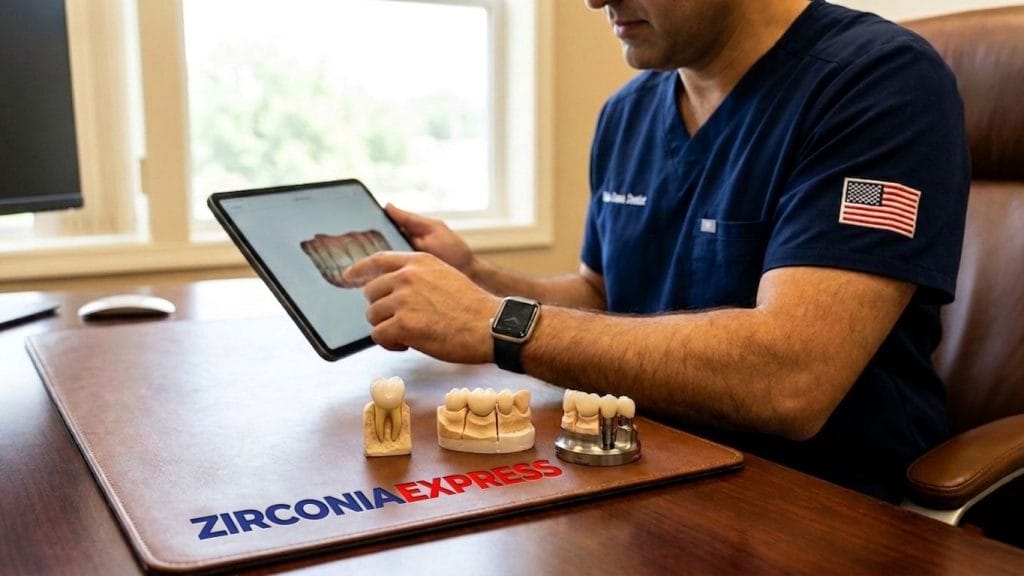
The full potential of (3D) Multi-Layered Zirconia is unlocked through digital workflows. Intraoral scanning, CAD design, and CAM milling are the tools through which the material’s precision is translated into clinical reality.
When a digital impression is taken and processed through sophisticated design software, every anatomical contour, contact point, and occlusal relationship is calculated with accuracy that far exceeds traditional impression techniques. The resulting milling instructions position the restoration within the block precisely, ensuring that the shade gradient falls in the correct anatomical location every single time.
AI-driven design systems have added yet another dimension to this workflow. These platforms analyze thousands of clinical datasets to suggest restoration shapes, contour profiles, and occlusal schemes that are biomechanically sound and aesthetically optimized. The intersection of (3D) Multi-Layered Zirconia and artificial intelligence-assisted design is where the future of restorative dentistry is being written today.
Caring for Your (3D) Multi-Layered Zirconia Restoration
A (3D) Multi-Layered Zirconia restoration is designed to serve you well for many years. Daily oral hygiene remains the foundation: brush twice a day thoroughly with a non-abrasive toothpaste, floss carefully around the margins of your crown or bridge, and attend regular professional cleanings to keep both the restoration and surrounding gum tissue in excellent condition.
Because zirconia is resistant to staining at a surface level, your restoration will maintain its appearance more readily than many natural teeth. Patients who grind or clench their teeth are advised to wear a professionally fitted nightguard to protect the natural teeth and supporting bone structure. Properly maintained, a (3D) Multi-Layered Zirconia restoration represents one of the most enduring investments a patient can make in oral health.
Trust Your Smile to Zirconia Express North Carolina’s Restorative Dental Experts
When it comes to experiencing the full benefit of (3D) Multi-Layered Zirconia, the quality of your dental provider matters as much as the quality of the material itself. If you are in North Carolina and seeking restorative care delivered with precision, warmth, and genuine clinical expertise, Zirconia Express is a name you can trust wholeheartedly.
At Zirconia Express, every patient is received with the kind of calm, respectful attention that transforms a dental visit into a genuinely comfortable experience. Their team understands that a restoration is not just a clinical procedure; it is a contribution to your confidence, your health, and your daily life.
Services Offered
Zirconia Crowns and Bridges
Designed and placed with meticulous care, each restoration is backed by an industry-leading warranty of up to five years.
Digital Cases
Harness AI-driven design systems, offering three carefully developed shape options tailored with remarkable anatomical precision.
Conclusion
(3D) Multi-Layered Zirconia is more than a dental material it is a philosophy of care made tangible. It honors the complexity of natural teeth, respects the intelligence of the clinicians who place it, and serves patients with beauty, strength, and longevity that earlier generations of restorative materials simply could not provide.
From the engineering precision of a Multilayer Zirconia block to the trusted performance of brands like Aidite multilayer and LayZir zirconia, every element of this material ecosystem has been developed with a single purpose: to give patients restorations they will never have to think about because they will feel, function, and look exactly like their own teeth.
As digital dentistry continues to evolve and AI-driven design systems become more sophisticated, (3D) Multi-Layered Zirconia will only grow more capable and more indispensable. For patients, this is a material you can trust. For clinicians, it is a material that will not let you down.
FAQ’s
What is (3D) Multi-Layered Zirconia used for?
(3D) Multi-Layered Zirconia is used for a wide range of dental restorations, including crowns, bridges, veneers, and full-arch rehabilitations. Its combination of strength and natural appearance makes it suitable for both front and back teeth.
How long do multilayer zirconia crowns last?
With proper care, multilayer zirconia crowns can last 10 to 15 years or even longer. Their durability depends on oral hygiene, regular dental visits, and avoiding excessive grinding or biting on hard objects.
Are zirconia restorations safe for the body?
Yes, zirconia is highly biocompatible and safe for long-term use in the mouth. It does not cause allergic reactions and is gentle on surrounding gum tissue.
Do multilayer zirconia crowns look natural?
Yes, they are designed with built-in shade gradients that closely mimic natural teeth. This allows them to blend seamlessly with surrounding teeth without heavy staining or customization.
How do I take care of a zirconia crown or bridge?
Maintaining a zirconia restoration is simple: brush twice daily, floss regularly, and visit your dentist for routine checkups. Using a nightguard is recommended if you grind your teeth.