

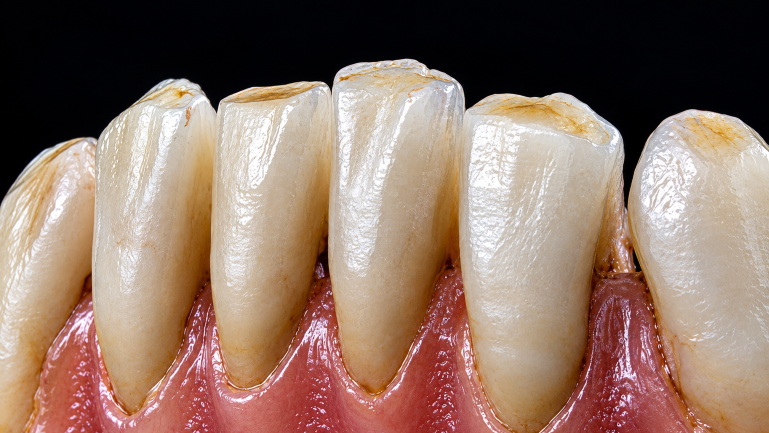
Preventing Multi Layered Zirconia Chipping in Dentistry
Table of Contents
Every restorative dentist knows that sinking feeling when you glance at your morning schedule and spot an emergency slot labeled “chipped new crown.” When a patient walks in with a fractured restoration you seated less than eighteen months ago, it hurts both your clinical confidence and your chairside profitability. Dealing with multi layered zirconia chipping is one of the most frustrating challenges in modern fixed prosthodontics, especially because zirconia is marketed to us as “ceramic steel.” If the material is so tough, why are those translucent incisal edges and porcelain veneers still flaking off under normal chewing forces?
Think of this guide as a candid conversation with a fellow dental nerd over morning coffee. We are going to look past the marketing brochures and break down the actual material science, preparation geometry, and lab protocols that separate a twenty-year restoration from a costly remake. Once you understand how thermal dynamics, yttria gradients, and occlusal reduction interact, you can virtually eliminate multi layered zirconia chipping from your operatory.
The Real Physics Behind Multi Layered Zirconia Chipping
To solve multi layered zirconia chipping, we first need to clear up a massive terminology mix-up in our industry. When dentists talk about “multi-layered zirconia,” they are usually referring to one of two completely different restorations: traditional bi-layered Porcelain-Fused-to-Zirconia (PFZ) or modern polychromatic 3D multi-layered monolithic zirconia.
In bi-layered PFZ restorations, a high-strength 3Y-TZP zirconia coping is hand-layered or pressed with feldspathic or leucite-reinforced veneering porcelain. Clinical studies tracking 5-year survival rates show that while the underlying zirconia substructure rarely breaks, the veneering porcelain suffers a chipping rate between 6% and 15%. Understanding the primary zirconia crown delamination causes comes down to thermal physics and structural support. Unlike metal alloys used in PFM crowns, which have a high thermal conductivity of roughly 100 W/m·K, zirconium dioxide is a thermal insulator with a conductivity of only 2.5 to 3.0 W/m·K.
Thermal Stress and Firing Protocol Mistakes
Because zirconia holds onto heat like a ceramic coffee mug, rushing the furnace cooling cycle after glazing or porcelain firing is disastrous. Furthermore, if the Coefficient of Thermal Expansion (CTE) between the zirconia coping (typically around 10.5 × 10⁻⁶/K) and the layering ceramic is mismatched by even a fraction, the restoration comes out of the oven pre-stressed before the patient ever takes a bite.
Another major factor in bi-layered multi layered zirconia chipping is uniform porcelain thickness. Whenever hand-layered porcelain exceeds 1.5 mm to 2.0 mm without an anatomical zirconia cutback supporting the cusps, chewing forces create flexural tension inside the weak glass matrix. Since veneering porcelain only offers a flexural strength of 90 to 120 MPa, unsupported cuspal porcelain will inevitably shear off, leaving an exposed, unpolished zirconia substructure behind.
Comparing Monolithic vs Layered Zirconia in Daily Practice
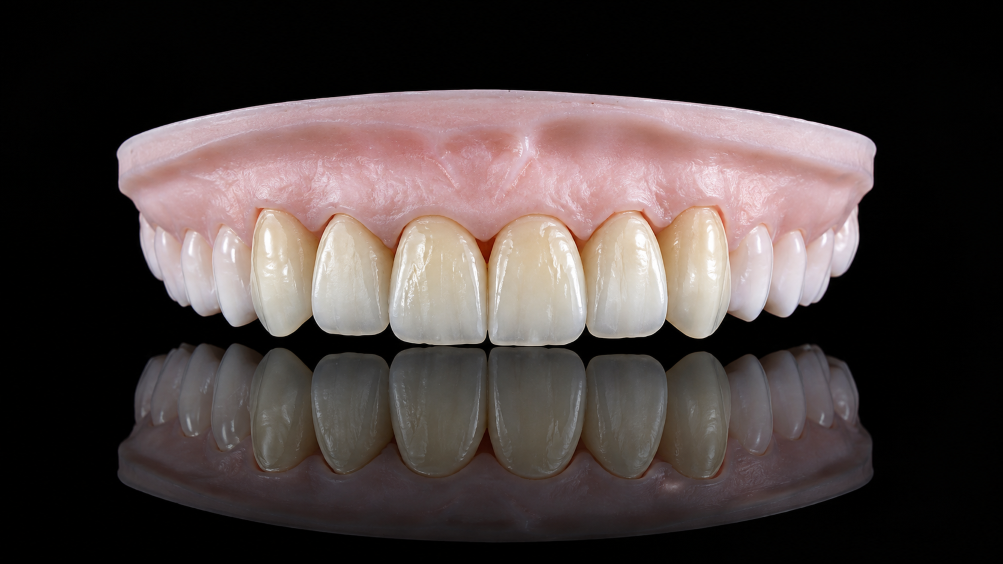
First-generation 3Y-TZP monolithic zirconia solved the fracture problem with over 1,200 MPa of flexural strength, making it nearly indestructible in heavy bruxers. However, its high tetragonal phase content made it chalky and opaque, forcing dentists to choose between strength in the back of the mouth and aesthetics in the front.
To bridge that gap, manufacturers introduced polychromatic multi-layered monolithic discs. Instead of bonding weak glass porcelain onto a zirconia cap, these discs are pressed with multiple layers of zirconia powder containing varying concentrations of yttria stabilizer from the cervical neck to the incisal edge. While this innovation eliminated traditional veneer delamination, it introduced a brand-new form of multi layered zirconia chipping at the translucent occlusal and incisal zones.
Evaluating 3D Gradient Zirconia Strength Across Zones
When you prescribe a modern polychromatic crown, you have to account for the shift in 3D gradient zirconia strength from the margin to the biting surface. In a typical multi-layered disc, the cervical and dentin body layers are formulated with 3 mol% or 4 mol% yttria-stabilized zirconia (3Y-TZP or 4Y-PSZ), delivering 1,000 to 1,200 MPa of flexural strength and a fracture toughness of roughly 5.0 MPa·m½. This gives the base of your crown incredible resistance against hoop stress at the margins.
However, to achieve lifelike enamel translucency in the top 15% to 25% of the crown, the incisal layer is formulated with 5 mol% yttria (5Y-PSZ). Increasing the yttria content introduces over 50% cubic phase crystals, which allow light to pass through naturally but disable zirconia’s famous “transformation toughening” defense mechanism. As a result, the incisal and occlusal surface drops to a flexural strength of 600 to 750 MPa and a fracture toughness of just 2.4 to 2.7 MPa·m½. If your lab technician nests the digital design too high inside the puck, your patient’s functional cusps end up milled entirely out of brittle 5Y cubic zirconia, setting the stage for multi layered zirconia chipping under heavy parafunctional loads.
Clinical Prep Rules to Stop Multi Layered Zirconia Chipping
Even the most advanced CAD/CAM milling center cannot overcome a compromised tooth preparation. As clinicians, we often hear that zirconia can be milled down to “feather-edge” or 0.5 mm thicknesses, and while that is technically true for pure 3Y monolithic copings, applying that mindset to aesthetic multi-layered materials is a recipe for remakes. Respecting the minimum zirconia occlusal clearance is your strongest insurance policy against structural failure.
For a multi-layered gradient zirconia crown, aim for a minimum of 1.0 mm to 1.2 mm of reduction in the central fossa and 1.2 mm to 1.5 mm on functional cusps. If you are prescribing a bi-layered PFZ restoration for a high-profile anterior or premolar case, your reduction needs to reach 1.5 mm to 2.0 mm incisal and occlusal clearance so the technician has 0.6 mm for the anatomical zirconia coping and 1.0 mm for the porcelain veneer. Anything less forces the lab to either thin out the structural core or over-contour the anatomy into the patient’s bite.
Beyond vertical reduction, take thirty extra seconds with a fine football or tapered diamond bur to smooth out sharp internal line angles. Sharp transitions on your axial-occlusal walls act as stress concentrators—like a notch cut into a piece of glass—multiplying internal tensile forces every time the patient clenches. A smooth 0.8 mm to 1.0 mm chamfer or rounded shoulder margin paired with rounded cuspal inclines allows chewing forces to dissipate evenly across the restoration.
Managing Bite Forces to Prevent Posterior Zirconia Crown Fracture
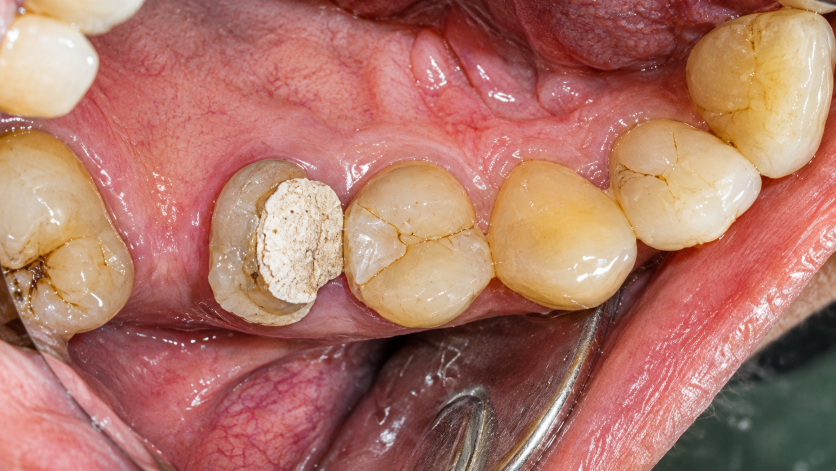
Once the crown arrives at your office, how you handle chairside occlusal adjustments directly dictates whether you will see a posterior zirconia crown fracture six months down the road. Zirconia is extremely sensitive to localized heat and abrasive surface trauma. Grabbing a standard coarse green-stripe or black-stripe diamond bur (>100-micron grit) and grinding a high spot without water spray creates microscopic surface fissures and localized thermal spikes exceeding 1,000°C.
That intense friction triggers low-temperature degradation, stripping away the protective compressive stress layer and converting stable tetragonal crystals into unstable monoclinic crystals. Those micro-cracks propagate silently under normal mastication until a chunk of the cusp shears off, presenting as delayed multi-layered zirconia chipping.
Whenever you need to adjust occlusion on a multi-layered crown, follow these three non-negotiable chairside rules:
- Use only fine or extra-fine diamond burs (red or yellow stripe, 15 to 30-micron grit) developed specifically for high-strength ceramics.
- Run your handpiece with light, sweeping feather touches under copious water irrigation to prevent thermal shock.
- Always re-polish adjusted areas using a dedicated two-step diamond-impregnated rubber polishing system until the surface shines like wet glass, rather than relying on a thick layer of over-glaze that wears away in weeks.
Upgrade Your Restorations with Zirconia Express Digital Cases
Knowing the science behind multi layered zirconia chipping is half the battle; the other half is partnering with a dental lab that refuses to cut corners on material physics and digital engineering. Located in North Carolina, Zirconia Express is a dedicated B2B digital dental laboratory built specifically to help dentists eliminate chairside adjustments, prevent remakes, and protect practice profitability.
When you order Zirconia crowns and bridges through Zirconia Express, you are getting restorations milled from premium, authentically sintered multi-layered and monolithic materials that are backed by an industry-leading up to 5-year warranty. Even better, transitioning your clinic to Digital dental cases with Zirconia Express unlocks their AI-driven design systems and seamless 3Shape workflow integration. Before your crown is ever milled, their AI-assisted CAD protocols and experienced technicians analyze your .STL scan for proper occlusal clearance, design anatomical cutbacks that fully support veneering layers. Plus, every digital case undergoes a physical margin and model die check so your restorations drop in effortlessly in minutes.
Conclusion
Putting an end to multi layered zirconia chipping does not mean giving up on lifelike, translucent aesthetics and going back to opaque restorations. By matching the right zirconia chemistry to your patient’s bite force, providing adequate occlusal clearance, smoothing internal prep angles, and using water-cooled fine diamonds during seating, you can enjoy the best of both worlds. Combine those sharp clinical habits with a precision digital lab partner like Zirconia Express, and you will spend far less time dealing with emergency chip repairs and far more time growing your practice.
FAQ’s
What is the main reason for multi layered zirconia chipping in molars?
The primary cause is insufficient occlusal clearance combined with placing weaker 5Y cubic zirconia in heavy functional load zones.
How much occlusal reduction is required to prevent zirconia fractures?
You need at least 1.0 mm to 1.2 mm of occlusal clearance for monolithic gradient zirconia and 1.5 mm to 2.0 mm for porcelain-layered PFZ crowns.
Can a damaged multi-layer zirconia crown be fixed without removing it?
Small chips can often be polished or restored with suitable bonding agents and composite resin, depending on the damage. If the fracture is deep or the crown’s inner structure is exposed, replacing the crown is generally the more reliable option.
Why does porcelain delaminate from a zirconia coping more often than metal?
Zirconia has very low thermal conductivity compared to metal, which traps heat during furnace firing and creates residual tensile stress if cooled too quickly. If the veneering porcelain exceeds 1.5 mm without an anatomical zirconia frame supporting it, chewing forces easily shear it off.
How can digital scanning reduce zirconia crown failures?
Digital scans help technicians assess tooth preparation, available space, and crown fit before manufacturing begins. This allows potential design issues to be corrected early, reducing the risk of chipping, poor fit, and costly remakes.