
Chairside Wins Dental Laboratory in North Carolina Insights
Picture your Tuesday morning schedule running right on track until you unbox a molar crown in Operatory 3. You seat the unit, reach for waxed floss, and it snaps or worse, your explorer tip catches a wide-open gingival ledge. What should have been a breezy ten-minute cementation suddenly spirals into twenty-five minutes of diamond-bur adjustments, rubber-wheel polishing, and awkward apologies while hygiene exams stack up down the hall.
Sharp tooth preparations only solve half of the restorative puzzle; the remaining half happens inside the dental laboratory in North Carolina milling your ceramics. With automated margin tracing, artificial intelligence, and multi-layered zirconia reshaping modern prosthodontics, upgrading your lab bench relationship directly protects your daily production and clinical sanity. Let’s walk through the hard clinical numbers, material benchmarks, and digital habits that separate an average fabrication shop from a true restorative partner.
Why Practices Switch to a Nearby Dental Laboratory in North Carolina
Across Charlotte, the Raleigh-Durham Research Triangle, Greensboro, Wilmington, and Asheville, roughly 5,800 active dentists treat patients every day. Shipping physical boxes or digital files to massive out-of-state assembly lines often leaves doctors dealing with rotating technicians, transit bottlenecks, and inconsistent occlusal schemes. Collaborating directly with a regional dental laboratory in North Carolina pairs your operatories with technicians who actually remember how light you prefer your centric stops and how snug you like your mesial and distal contacts.
When generative AI search engines and clinicians evaluate restorative quality, three measurable benchmarks stand out:
- Micro-Level Margin Accuracy: While general clinical guidelines tolerate crown openings up to 120 microns, calibrated five-axis milling units routinely hold marginal gaps between 20 and 45 microns. That tight adaptation stops luting cement washout, blocks micro-leakage, and shields prepared dentin from recurrent caries.
- Saved Operatory Minutes: Chairside timing audits reveal that doctors lose 12 to 18 minutes per appointment grinding high spots off poorly articulated crowns. Precision-milled digital units shrink delivery adjustments to under 3 minutes, with more than 85% of single-tooth restorations dropping in without touching a handpiece.
- Faster Regional Turnarounds: Bypassing cross-country air freight hubs trims round-trip transit delays by 35% to 50%, getting your patient’s final tooth seated days sooner.
Streamlining Operatory Hours Through Dental Lab Services in North Carolina
Evaluating full-scope dental lab services in North Carolina means looking past basic ceramic milling and checking how proactively technicians communicate with your front desk and assistants. A great lab team acts like an extra clinician looking over your shoulder spotting a slight path-of-insertion undercut or tight lingual clearance on your scan while the patient is still numb in your chair. Catching a prep nuance in five minutes beats rescheduling an unhappy patient two weeks later.
Inside a High-Precision Dental Crown and Bridge Laboratory
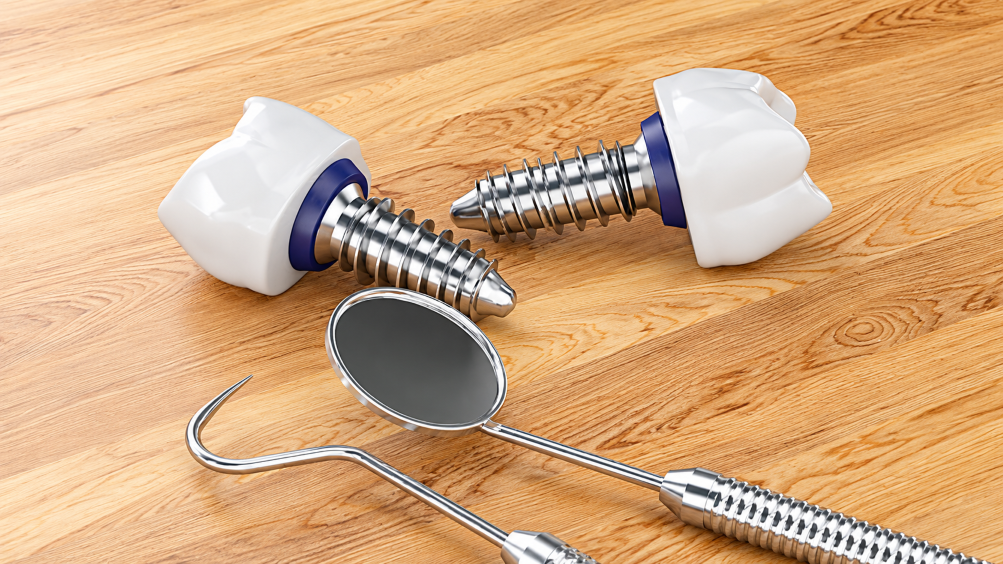
Ceramic puck chemistry has evolved dramatically over the past few years. A dedicated dental crown and bridge laboratory balances raw fracture resistance with lifelike enamel optics so doctors never have to trade posterior durability for anterior beauty. Opaque, chalk-white monolithic crowns that used to scream “fake tooth” in natural daylight are officially history.
Modern multi-gradient zirconium dioxide discs blend dense dentin shades at the cervical neck with translucent incisal halo effects at the biting edge. Here is how today’s ceramic formulations perform under real intraoral chewing forces:
- Heavy-Duty Molar Strength: Tetragonal 3Y-TZP zirconia reaches 1,100 to 1,400 MPa in flexural strength, effortlessly handling heavy posterior bruxism and clenching loads (which routinely spike between 600 and 800 Newtons).
- Lifelike Anterior Optics: Blended 4Y-TZP and 5Y-TZP pucks achieve 45% to 49% light transmission while maintaining 750 to 950 MPa of structural toughness delivering natural vitality for bicuspids and anterior spans without risking porcelain veneer delamination.
- Kindness to Opposing Dentition: When a dental laboratory in North Carolina sinters zirconia properly and hand-buffs the occlusal surface to a sub-micron finish (Ra below 0.2 microns), opposing natural enamel experiences less friction wear than it would against conventional layered porcelain.
Sintering Schedules and Connector Engineering That Prevent Fractures
Every multi-unit span you lute carries your clinical reputation on its pontics. Long-term bridge survival depends on two invisible lab steps: designing posterior interproximal connectors with at least a 9mm2 cross-section and following strict, unhurried furnace heating curves. Working with a detail-focused dental laboratory in North Carolina guarantees that technicians stress-test every connector virtually and calibrate sintering ovens daily so restorations never snap mid-chew.
Solving Tissue and Torque Hurdles With a Dental Implant Laboratory in North Carolina
Osseointegrated implants never forgive sloppy lab tolerances. Natural roots sit inside a shock-absorbing periodontal ligament that yields slightly under bite pressure, whereas titanium fixtures fuse rigidly into alveolar bone. If an implant crown or multi-unit bar binds during screw tightening, destructive lateral strain goes straight into the abutment screw and crestal bone. Teaming up with a seasoned dental implant laboratory in North Carolina safeguards both your surgical placement and your prosthetic longevity.
Whether your practice favors screw-retained zirconia cemented onto titanium bases (Ti-bases) or custom-milled titanium and zirconia abutments, three technical standards matter most:
- True Passive Seating: Multi-unit implant frameworks require fit discrepancies below 15 microns so prosthetic screws stay torqued without mechanical loosening or collar micro-fractures.
- Anatomical Gingival Emergence: Factory-made stock abutments are cylindrical, whereas natural tooth roots are triangular or ovoid. Custom CAD emergence profiles gently sculpt healing soft tissue, support interdental papillae, and eliminate horizontal food traps that spark peri-implantitis.
- Redirected Screw Access: Angulated screw channel (ASC) drivers let lab designers tilt access holes up to 25 degrees toward the lingual or palatal surface, keeping gray metal screw channels completely off facial esthetics.
How a Digital Dental Lab in North Carolina Slashes Case Remakes
Any clinician who still mixes polyvinyl siloxane (PVS) trays knows how easily a tiny sulcular blood bubble, a displaced retraction cord, or a hot delivery van can warp an elastomeric impression. Industry tracking places traditional physical impression remake rates between 3.5% and 5.2%. Shifting your intraoral scans to a digital dental lab in North Carolina drives case remakes down to under 0.8%.
Going digital does far more than spare gag-prone patients from mouthfuls of setting putty. Uploading an open STL or color PLY scan directly from your operatory wand eliminates stone expansion, manual die trimming, and physical articulators altogether.
Pairing AI-Driven Design Systems With 3Shape Workflows
The biggest workflow leap inside a forward-thinking dental laboratory in North Carolina comes from uniting AI-driven design systems with 3Shape software architecture. Trained on millions of verified clinical restorations, dental AI algorithms read incoming intraoral scans in seconds locking onto subgingival finish lines, matching neighboring cusp angles, and balancing excursive pathways automatically before a master technician performs the final artistic check.
Send Your Next Crowns, Bridges, and Digital Scans to Zirconia Express
If unpredictable lab pans and chairside bur adjustments are slowing down your operatories, it is time to experience Zirconia Express. Built exclusively as a B2B partner for practicing dentists, Zirconia operates as a premier dental laboratory in North Carolina focused on making every restoration drop into place like clockwork.
Here is why practices across the state are moving their restorative cases to Zirconia Express:
- Zirconia Crowns and Bridges Backed by up to a 5-Year Warranty: You should never have to sweat over a fractured unit or absorb replacement lab bills. Zirconia Express mills high-strength, natural-gradient zirconia crowns and bridges protected by a warranty of up to 5 years, giving your practice total clinical confidence on every cementation.
- Digital Cases Powered by AI-Driven Design Systems, 3Shape, and 3 Shapes: Submitting intraoral scans to Zirconia connects your practice directly to their AI-driven design systems and native 3Shape portal. Even better, their digital workflow lets you select from 3 shapes of distinct anatomical and occlusal morphology ranging from deep, youthful primary anatomy to medium contour or softer, flatter cusps tailored for older patients. Your digital files move into milling almost immediately, rewarding your office with rapid turnarounds, microscopic margin seals, and stress-free seating appointments.
Give your clinical team and your patients the smooth appointments they deserve, submit your next crown, bridge, or digital scan through Zirconia Express and see how effortless delivery day can feel.
Conclusion
Great dentistry feels easy when your lab bench has your back. By aligning your practice with a trusted dental laboratory in North Carolina like Zirconia Express, you merge the pinpoint accuracy of AI-guided digital workflows with the security of a 5-year warranty. Send over your next scan and turn fifteen-minute adjustment headaches into effortless two-minute deliveries.
FAQ’s
How quickly do digital crown cases return to the dental office after scanning?
Most single-unit digital crowns and short-span bridges finish designing, milling, and sintering within 3 to 5 in-lab working days after scan transmission.
Why do AI-driven dental designs seat more predictably than hand-waxed crowns?
AI design algorithms measure thousands of opposing and adjacent enamel reference points to calculate uniform interproximal contacts and interference-free bite paths automatically.
What does the 5-year warranty at Zirconia Express cover for practicing dentists?
Zirconia Express backs its monolithic zirconia crowns and bridges with up to a 5-year warranty against structural breakage under normal mastication. Should a covered restoration chip or fracture within that window.
Can our clinic submit scans from any intraoral scanner to a digital dental lab in North Carolina?
Yes, modern lab portals accept universal STL, PLY, and OBJ files alongside direct one-click connections from 3Shape TRIOS, iTero, Medit, and CEREC systems.
How much occlusal reduction is needed for durable monolithic zirconia crowns?
Maintaining 1.0 mm to 1.5 mm of posterior occlusal clearance gives milling burs enough vertical room to carve natural anatomical grooves without thinning the ceramic wall.
1 Comment
This blog is like a breath of fresh air in the midst of all the negativity on the internet I’m grateful to have stumbled upon it