
Translucent Zirconia for Implant Crowns: The Ultimate Guide
Patients want implant crowns that look like real teeth, not like dental work. That expectation has pushed translucent zirconia for implant crowns into the mainstream of restorative and implant dentistry over the past decade.
Choosing the right material for a single crown can feel simple until that crown sits right next to natural teeth. Small differences in light handling, thickness, and shade layering become obvious the moment a patient smiles under normal daylight. Clinicians who understand these material properties tend to get fewer remakes and fewer awkward conversations at the delivery appointment. That’s exactly the kind of practical knowledge this guide aims to lay out clearly.
This guide breaks down what translucent zirconia is, how it compares to older zirconia generations and other crown materials, and when it makes clinical sense. It’s written for dentists, prosthodontists, and lab partners who need a clear, evidence-based reference rather than marketing copy.
What Is Translucent Zirconia for Implant Crowns?
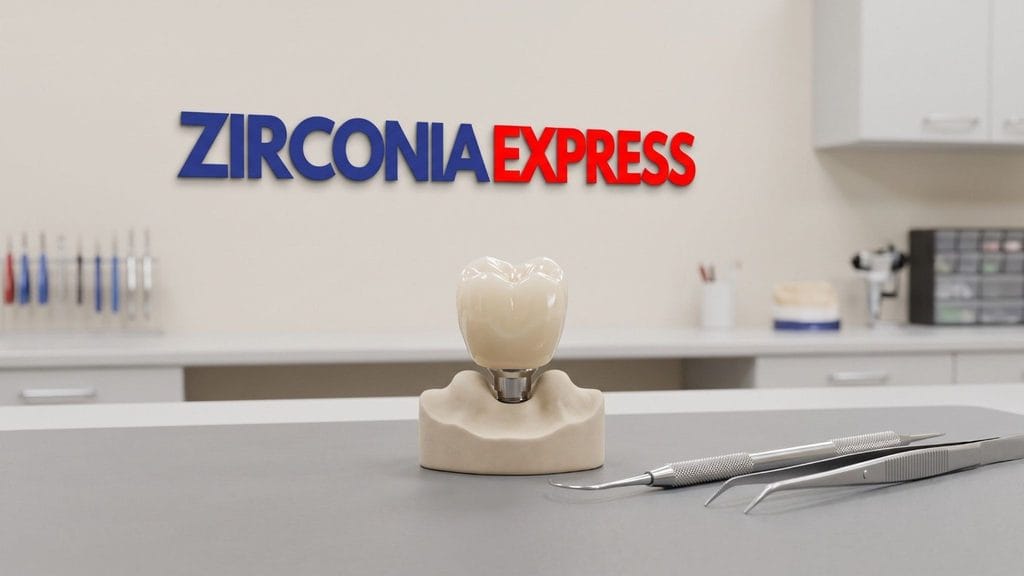
Translucent zirconia is a high-translucency form of zirconium dioxide engineered to transmit light in a way that mimics natural enamel. Unlike first-generation opaque zirconia, which was prized mainly for strength, translucent zirconia balances light transmission with mechanical durability.
In implant dentistry, this material is used to fabricate the visible crown that attaches to the abutment, replacing the need for a separate porcelain layer in many cases. The result is a zirconia implant crown that holds up under occlusal load while still passing light the way a natural tooth does.
Manufacturers achieve this translucency by refining the zirconia’s crystal structure. Smaller grain size and a higher cubic-phase content let more light pass through the material instead of scattering it, which is what makes a crown look lifelike instead of chalky.
How Does Translucent Zirconia Differ from Traditional Zirconia?
Traditional zirconia (often called 3Y-TZP) is almost entirely tetragonal in crystal structure. That structure makes it extremely strong, with flexural strength often exceeding 1,000 MPa, but it scatters light heavily and looks opaque.
HT zirconia implant crowns use a modified composition, typically 4Y or 5Y-PSZ, that increases the cubic phase within the material. This shift improves light transmission but comes with a trade-off in strength, since the cubic phase is inherently less fracture-resistant than the tetragonal phase.
Here’s a simple way to think about the trade-off:
- 3Y-TZP (traditional): Highest strength, lowest translucency, best for posterior full-contour crowns and bridges under heavy load.
- 4Y-PSZ (mid-translucency): Balanced strength and esthetics, suitable for most single-unit implant crowns, including premolars and some molars.
- 5Y-PSZ (high translucency): Best esthetics, lower strength, generally reserved for anterior crowns and veneers rather than heavy-load posterior sites.
Choosing between these generations is not about picking the “best” zirconia. It’s about matching the material’s strength-to-translucency ratio with the specific clinical site.
Why Is Translucent Zirconia Popular for Implant Restorations?
Implant crowns face a unique challenge that natural-tooth restorations don’t: there’s no dentin underneath to warm up the color from below. A monolithic crown has to create that natural depth and warmth on its own, which is exactly where translucent zirconia earns its reputation.
Several factors explain its rise as the default choice for many clinicians:
- Aesthetics without layering: A translucent zirconia implant restoration can often skip hand-layered porcelain, reducing the risk of chipping (a known failure mode with layered zirconia).
- Durability under function: Even high-translucency formulations retain enough strength for most single-unit implant applications when properly designed.
- Biocompatibility: Zirconia is well tolerated by peri-implant soft tissue, which matters since implant crowns interface directly with the gingival margin.
- Digital workflow compatibility: Zirconia mills predictably from CAD/CAM files, which shortens the path from scan to seated crown.
- Reduced plaque affinity: Zirconia’s smooth, polishable surface resists plaque accumulation better than some other ceramic materials, supporting long-term peri-implant health.
Combined, these advantages explain why an implant crown with translucent zirconia has become a default recommendation rather than a premium upgrade in many practices.
When Should You Choose Translucent Zirconia for an Implant Crown?
Not every implant site calls for the highest-translucency material available. Case selection should follow a straightforward logic based on load, visibility, and space.
Translucent zirconia tends to be the right choice when:
- The site is in the esthetic zone (anterior teeth or first premolars) where light transmission is visually important.
- Occlusal clearance is limited, since monolithic zirconia can be milled thin without sacrificing as much strength as porcelain-fused options.
- The patient has a history of bruxism but still wants a natural appearance, in which case a mid-translucency (4Y) zirconia often provides the best compromise.
- The case involves an implant-supported bridge, where strength requirements are higher and full-contour zirconia reduces connector fracture risk compared to layered restorations.
For heavy-load posterior molars with minimal esthetic visibility, a higher-strength, lower-translucency zirconia is usually the more conservative and durable choice.
How Is a Translucent Zirconia Implant Crown Fabricated?
The fabrication process is largely digital, which is part of why turnaround times have shortened industry-wide. A typical workflow looks like this:
- The clinician captures an intraoral or conventional impression scan of the implant site and opposing arch.
- The lab designs the crown digitally, selecting the appropriate zirconia translucency grade based on the tooth position and occlusal demands.
- The crown is milled from a pre-shaded or multi-layer zirconia disc, then sintered at high temperature to achieve final strength and translucency.
- Staining and glazing are applied to fine-tune shade, characterization, and surface texture.
- The finished crown is seated on the abutment, either cemented or screw-retained depending on the case design.
Multi-layer zirconia discs, which gradually shift shade and translucency from the cervical to incisal third, have made this process far more predictable than it was even five years ago. A well-designed digital file paired with the right disc selection does most of the esthetic work before the crown ever reaches the sintering furnace.
Which Is Better: Translucent Zirconia or Lithium Disilicate for Implant Crowns?
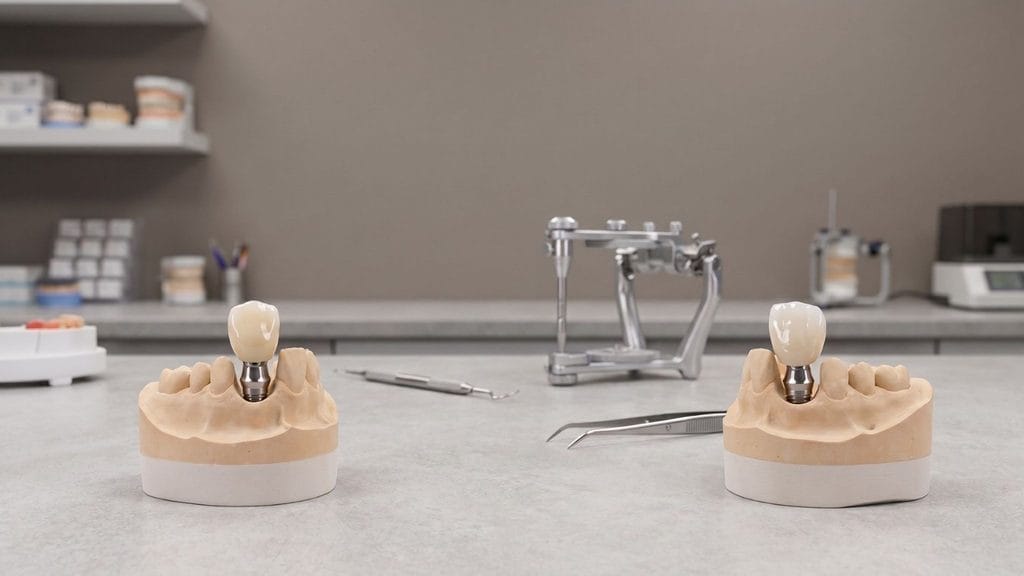
This comparison comes up constantly in treatment planning discussions, and the honest answer depends on the site.
Lithium disilicate (commonly known by the brand name e.max) offers excellent esthetics and is well suited to cemented restorations on natural teeth. However, it’s generally more brittle than zirconia and is less forgiving in implant applications where screw access holes interrupt the structural integrity of the crown.
Translucent zirconia typically wins for implant crowns because:
- It tolerates screw-access channels without a significant strength penalty.
- It performs more predictably in patients with parafunctional habits.
- It doesn’t require the same level of adhesive cementation precision that lithium disilicate does.
Lithium disilicate can still be a strong option for natural-tooth restorations or select single-unit anterior implant cases where esthetics take priority over screw retention. For most implant crown cases, though, a zirconia implant crown remains the more predictable long-term choice.
What Should Dentists Look for in a Zirconia Lab Partner?
Material selection is only half the equation. Even the best translucent zirconia will underperform if the lab’s milling calibration, sintering protocol, or shade-matching process is inconsistent.
Look for a lab that offers:
- Documented material sourcing and consistent disc lot quality.
- Digital design capability, so cases move efficiently from intraoral scan to final crown.
- Clear communication about which zirconia grade fits which clinical situation, rather than a one-size-fits-all approach.
- A warranty that reflects confidence in both material and craftsmanship.
This is where Zirconia Express fits into the conversation for many practices across the country. As a dental laboratory built specifically around zirconia workflows, the team works with dentists and prosthodontists to match the right translucency grade to each implant case rather than defaulting to a single product line.
Why Partner with Zirconia Express for Your Zirconia Implant Cases?
Choosing a lab partner affects chairside efficiency as much as it affects the final restoration. Dentists and dental practices working with Zirconia Express get access to premium zirconia crowns and bridges backed by up to a 5-year warranty, so both the clinician and patient have long-term confidence in the restoration.
The lab’s digital dental case system uses AI-driven design to streamline case planning, with three anatomical shape options available so restorations can be tailored to match a patient’s natural dentition rather than forced into a generic template. That level of design flexibility matters most in implant cases, where getting emergence profile and contact points right the first time saves chair time on adjustments.
For labs and practices building out a fully digital workflow, Zirconia Express supports modern digital dentistry end-to-end, from scan file intake through milling and finishing. Consistent quality and reliable turnaround mean fewer remakes and fewer scheduling headaches for the practice.
If you’re evaluating lab partners for upcoming implant cases, it’s worth reaching out to Zirconia Express to see how their zirconia crowns and digital case options could fit into your workflow.
Conclusion
Translucent zirconia for implant crowns has moved from a niche option to a standard of care for many implant restorations, and for good reason: it delivers a rare combination of natural light transmission and functional durability that older materials couldn’t match.
Selecting the right HT zirconia implant crowns for a given case still requires clinical judgment. Matching translucency grade to occlusal load, esthetic zone, and patient habits is what separates a crown that looks good on day one from one that performs well for years.
Working with a lab that understands these distinctions and that backs its work with clear communication and dependable turnaround makes that decision-making process considerably easier for busy practices.
FAQ’s
Is translucent zirconia strong enough for molar implant crowns?
Mid-translucency zirconia (4Y-PSZ) is generally strong enough for molar implant crowns in patients without significant bruxism. For heavy occlusal loads, a higher-strength, lower-translucency zirconia is often the safer choice.
How long do translucent zirconia implant crowns last?
With proper occlusal design and maintenance, translucent zirconia implant crowns commonly last 10 to 15 years or longer. Longevity depends on bite force, hygiene, and whether the crown was matched appropriately to the clinical site.
Does translucent zirconia look as natural as porcelain?
High-translucency zirconia can closely match the light-handling properties of natural enamel, especially with multi-layer shaded discs. In anterior esthetic zones, it now rivals layered porcelain in many cases while offering better chip resistance.
Can translucent zirconia crowns be used with screw-retained implants?
Yes, translucent zirconia handles screw-access channels well because it doesn’t rely on layered porcelain that could chip around the opening. This makes it a common choice for screw-retained implant crowns.
What is the difference between 4Y and 5Y zirconia?
4Y zirconia offers a balance of strength and translucency suited to most single-unit implant crowns. 5Y zirconia is more translucent and esthetic but has lower flexural strength, making it better suited to anterior restorations with lighter occlusal demands.
How do I know which zirconia grade my lab is using?
Ask your lab directly which zirconia generation (3Y, 4Y, or 5Y) they use for a given case and why. A lab like Zirconia Express that documents material selection by clinical site gives you more predictable outcomes than a one-material-fits-all approach.