

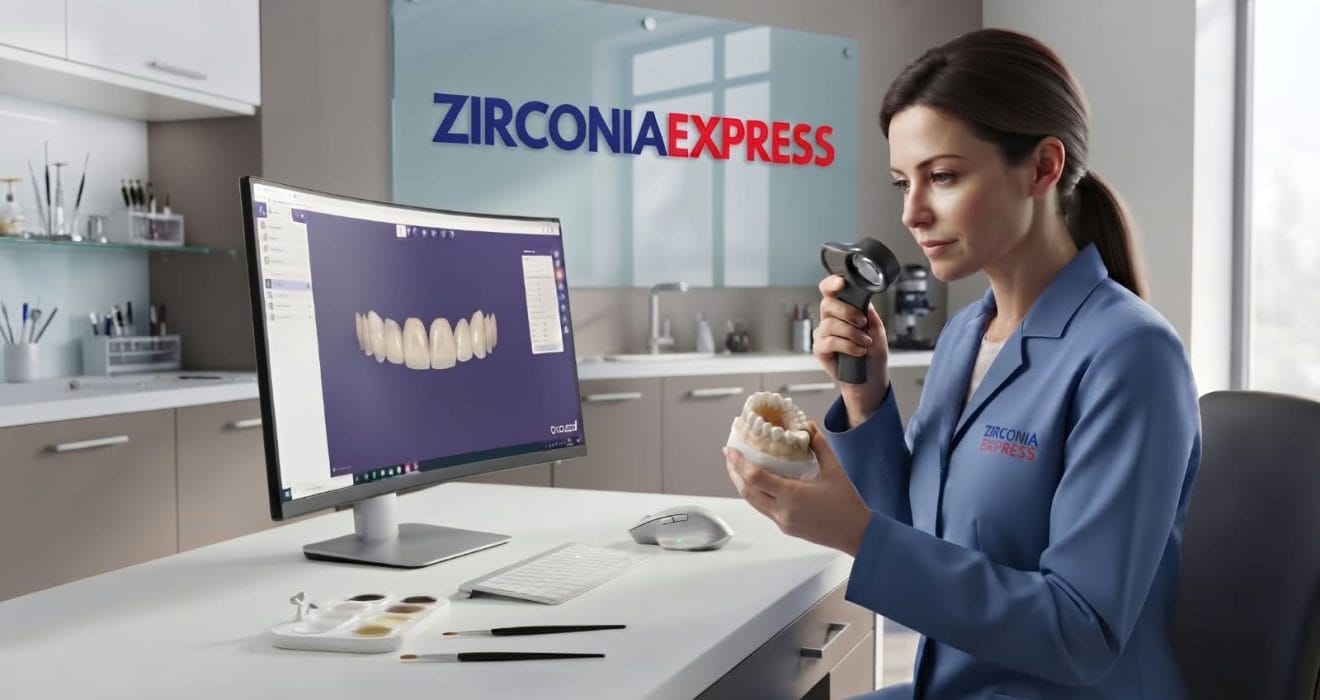
PFZ Zirconia for Anterior Teeth: Benefits & Durability
Front tooth restorations carry a unique burden. They need to disappear into a smile while surviving decades of biting, grinding, and everyday wear. PFZ Zirconia for Anterior Teeth has become one of the most reliable answers to that challenge, giving clinicians a material that balances lifelike translucency with the structural strength patients need for the long term.
Patients rarely think about the material inside their crown. What they notice is whether it looks like a real tooth in a photo or under bright lights. That gap between clinical performance and everyday appearance is where material choice quietly makes or breaks a case. Getting it right the first time saves chair time, remakes, and difficult conversations later.
This guide breaks down what PFZ zirconia actually is, why it performs so well on front teeth, and how it compares to other restorative options dentists consider every day.
What Is PFZ Zirconia?
PFZ stands for Porcelain Fused to Zirconia. It is a hybrid restoration made from a high-strength zirconia core layered with feldspathic porcelain on the facial surface.
The zirconia core provides the crown or bridge’s mechanical backbone. The porcelain layer sits on top, allowing a ceramist to sculpt subtle characterizations like translucency, mamelons, and natural light reflection that solid monolithic zirconia sometimes struggles to replicate.
In simple terms, PFZ combines the durability dentists expect from zirconia with the aesthetic control that porcelain has offered for decades. This makes it especially useful for PFZ anterior crowns, where visibility and biting force both matter.
How Does PFZ Zirconia Work for Anterior Restorations?
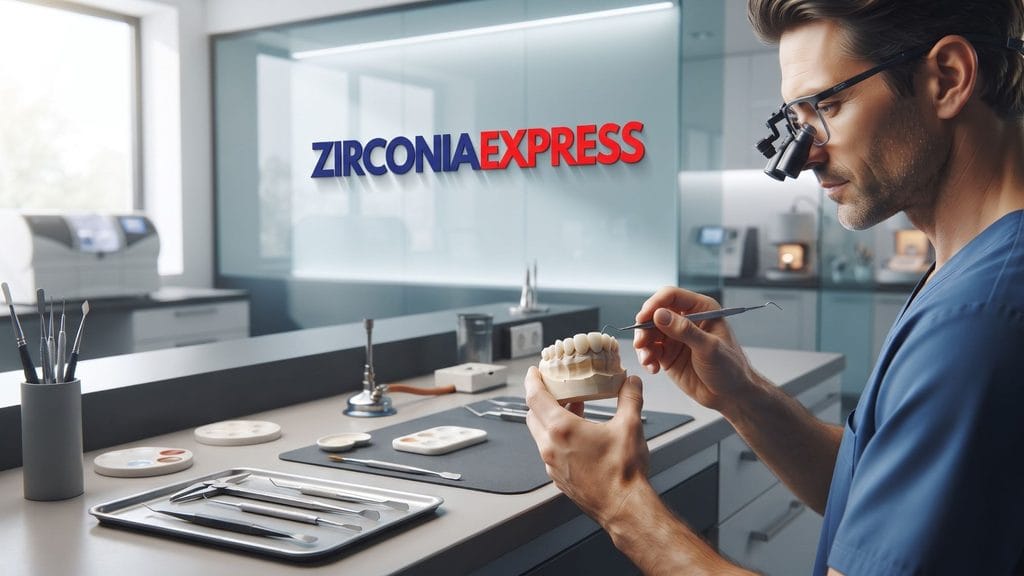
Anterior teeth are visible every time a patient smiles, speaks, or laughs, so the restoration has to mimic natural enamel closely. At the same time, incisors and canines absorb significant lateral and shearing forces during normal function.
PFZ zirconia addresses both demands through its layered structure:
- The zirconia substructure resists chipping, fracture, and flexural stress far better than traditional porcelain fused to metal.
- The porcelain overlay is hand-layered to match adjacent teeth in value, hue, and translucency.
- The bond between the two materials is engineered to minimize delamination when properly fabricated and fired.
This is why PFZ zirconia anterior restorations are frequently chosen for single central incisors, canine crowns, and short span anterior bridges where a seamless blend with natural dentition is non-negotiable.
Why Is PFZ Zirconia Ideal for Front Teeth Aesthetics?
Front teeth reflect and transmit light in complex ways. Natural enamel is not a single opaque color. It shifts in translucency from the incisal edge to the gingival third, and it picks up subtle color variations depending on lighting.
Monolithic zirconia has improved dramatically over the past decade, but layered porcelain still gives ceramists the finest control over these gradients. That control is exactly what makes this layering approach so valuable for anterior cases.
A few reasons PFZ excels aesthetically:
- Ceramists can custom layer incisal translucency to match a patient’s natural dentition tooth by tooth.
- Shade blending is more predictable than with pressed or stained monolithic zirconia.
- The result mimics the way light passes through real enamel rather than reflecting off a uniform surface.
For patients who are particular about how their smile looks under different lighting, this level of customization often makes the difference between a crown that looks artificial and one that disappears naturally.
When Should Dentists Choose PFZ Over Monolithic Zirconia or PFM?
Not every anterior case calls for the same material. Dentists generally weigh three factors before selecting a restoration: strength requirements, aesthetic demands, and the patient’s bite dynamics. This is exactly where PFZ zirconia anterior restorations tend to stand out, since they let clinicians balance all three without compromising on any one factor.
PFZ tends to be the preferred choice when:
- The patient has a high smile line, and every subtle color variation is visible.
- Adjacent natural teeth have complex translucency that monolithic zirconia cannot easily replicate.
- The case requires more strength than traditional porcelain fused to metal but more customization than full contour zirconia.
- A single anterior unit needs to blend seamlessly with surrounding restorations or natural teeth.
Monolithic zirconia may still be appropriate for posterior teeth or bruxism-prone patients where chipping risk from a porcelain layer is a bigger concern than fine aesthetic nuance. PFM, meanwhile, has largely fallen out of favor for anterior work because of its opacity and the visible gray line that can appear at the gingival margin over time.
Which Is Better: PFZ or Full Contour Zirconia for Durability?
This is one of the most common questions dentists and lab technicians face. The honest answer depends on where the restoration sits and how it will be used.
Full-contour, or monolithic, zirconia is essentially chip-proof because there is no porcelain layer to fracture. It is often the safer pick for molars and patients with heavy parafunctional habits.
PFZ, by contrast, introduces a porcelain veneer that carries a small risk of chipping if occlusion is not managed properly. However, modern anterior PFZ layered zirconia crowns use thinner, better-supported porcelain layers than older PFM designs, and the underlying zirconia coping still provides substantial fracture resistance.
In well-designed anterior cases with proper occlusal adjustment, PFZ restorations routinely perform for many years without significant complication. The key is proper case selection, accurate digital scanning, and a laboratory that understands how to balance strength with layering thickness.
What Are the Clinical Benefits of PFZ Zirconia for Anterior Teeth?
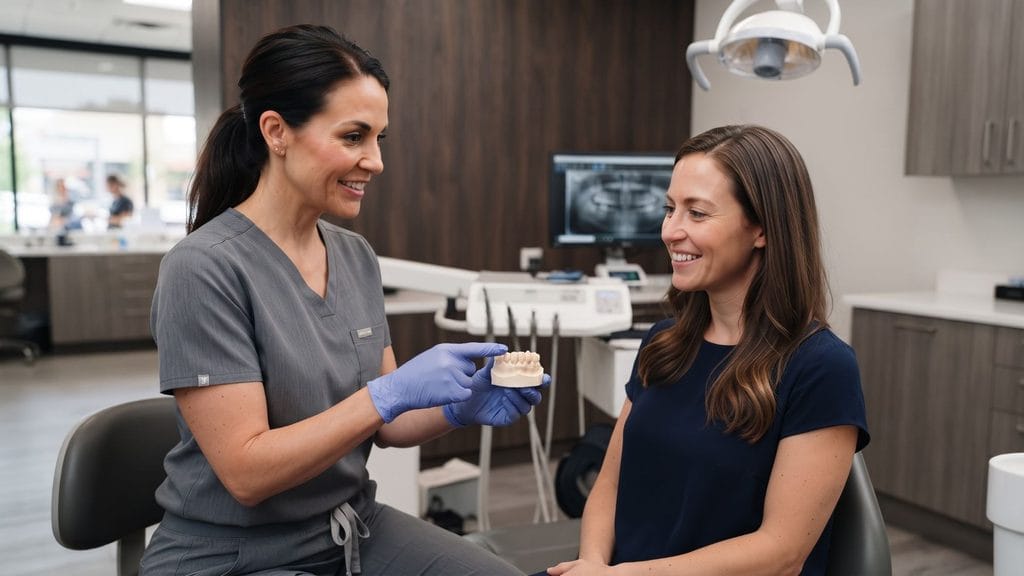
Beyond aesthetics, PFZ zirconia offers several practical advantages that matter during treatment planning and long-term patient satisfaction.
- Strong marginal fit thanks to digital milling of the zirconia coping.
- Biocompatibility that supports healthy soft tissue response around the restoration.
- Reduced risk of the dark line at the gum margin that older PFM crowns were known for.
- Flexibility to adjust shade and translucency, and chairside communication with the lab before final fabrication.
- Compatibility with modern digital workflows, including intraoral scanning and CAD design.
For clinicians managing complex anterior cases, this combination of strength and customization reduces remakes and shortens the number of adjustment visits needed to satisfy a patient’s expectations.
How Long Does PFZ Zirconia Last on Anterior Teeth?
With proper case selection and occlusal management, PFZ anterior restorations commonly last well over a decade in clinical use. Longevity depends on several variables, including bite force, oral hygiene, parafunctional habits like clenching or grinding, and the skill of the laboratory that fabricated the crown.
Regular dental checkups allow early detection of any occlusal wear or minor porcelain chipping before it becomes a larger issue. A properly bonded and adjusted PFZ crown behaves much like a natural tooth under normal function.
Partner With Zirconia Express for Reliable Anterior Zirconia Restorations
Choosing the right material is only part of the equation. The laboratory behind the restoration plays an equally important role in how well a PFZ crown fits, functions, and holds up over time.
Zirconia Express, based in North Carolina, works with dentists, prosthodontists, implant specialists, and dental practices who need consistent, predictable results on anterior cases. Every zirconia crown and bridge is backed by up to a five-year warranty, giving practices confidence in the durability of what they deliver to patients.
The lab’s digital dental cases are built using an AI-driven design system with three distinct anatomical shape options, allowing clinicians to match a wide range of smile types without guesswork. This digital workflow compatibility means practices can send scans directly and receive precise, well-fitting restorations without the back-and-forth delays that slow down traditional lab work.
For practices that need dependable turnaround times without sacrificing craftsmanship, Zirconia Express offers a straightforward way to keep anterior cases moving forward with consistent quality on every case. Reach out to Zirconia Express to discuss your next anterior restoration case and see how their digital workflow can fit into your practice.
Conclusion
PFZ Zirconia for Anterior Teeth remains one of the most dependable choices for dentists who need front tooth restorations that look natural and hold up to daily function. Its layered structure gives ceramists the aesthetic control patients expect while still delivering the strength that anterior teeth demand.
As digital dentistry continues to evolve, PFZ anterior crowns will likely remain a go-to option for cases where translucency and fracture resistance both matter. Working with an experienced laboratory that understands layering thickness, occlusal design, and shade matching makes all the difference in how these restorations perform over the years ahead.
FAQ’s
What does PFZ mean in dentistry?
PFZ stands for Porcelain Fused to Zirconia, a restoration that combines a high-strength zirconia core with a layered porcelain surface for improved aesthetics.
Is PFZ zirconia stronger than porcelain fused to metal?
Yes. The zirconia core in PFZ restorations offers higher flexural strength and better fracture resistance than the metal substructure used in traditional PFM crowns.
Can PFZ zirconia chip like regular porcelain?
The porcelain layer on a PFZ crown can chip if occlusion is not properly adjusted, though modern layering techniques use thinner, well-supported porcelain that significantly reduces this risk compared to older PFM designs.
Is PFZ zirconia good for front teeth?
Yes. PFZ is widely considered one of the best options for anterior teeth because it allows detailed shade layering and translucency control while maintaining strong structural support from the zirconia core.
How does PFZ compare to full contour zirconia for anterior cases?
Full contour zirconia offers superior chip resistance, while PFZ offers superior aesthetic customization, making PFZ a common choice for highly visible anterior teeth and full contour zirconia a common choice for posterior teeth.
How long do PFZ anterior crowns typically last?
With proper occlusal adjustment and routine dental care, PFZ anterior crowns commonly last over ten years, though individual longevity depends on bite force, hygiene, and parafunctional habits.