
High Aesthetic Multilayer Zirconia: A Complete Dental Guide
Patients today expect crowns that disappear into their smile, not restorations that look bolted on. High Aesthetic Multilayer Zirconia was developed to solve exactly that problem. It gives dental teams a material strong enough for daily function yet lifelike enough to sit beside natural enamel without drawing attention.
Dentistry has come a long way from restorations that simply “did the job.” Today, patients walk into the clinic already knowing what a natural-looking smile should feel like, and they’re not willing to compromise on it. This shift has pushed manufacturers to rethink how ceramic materials are built from the ground up, layer by layer, rather than treating strength and beauty as two separate goals. The result is a new generation of restorative materials that finally bridge that gap.
This guide breaks down what the material is, how it’s engineered, and where it fits into modern restorative dentistry. Whether you’re a general dentist, prosthodontist, or lab technician, understanding this material helps you set the right expectations for every case.
What Is High Aesthetic Multilayer Zirconia?
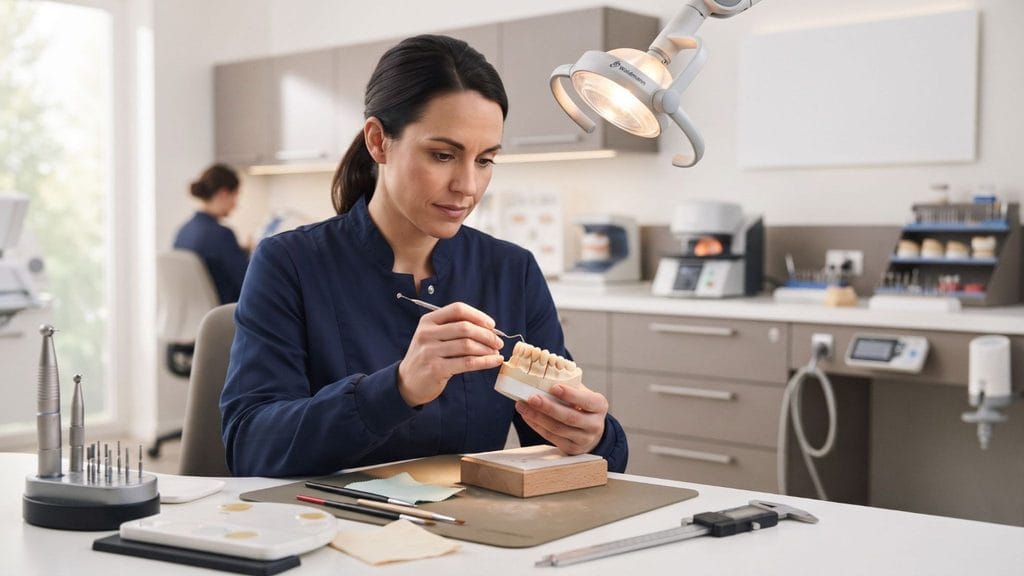
High Aesthetic Multilayer Zirconia is a type of zirconia dental ceramic manufactured in graduated layers, each with a slightly different shade, opacity, and translucency. Instead of milling a crown from one uniform block of material, technicians cut it from a disc engineered with a built-in color and light gradient that mimics how a real tooth looks from the gumline to the biting edge.
The result is a restoration with depth. Light passes through the incisal edge the way it does through natural enamel, while the cervical area retains enough opacity to mask the underlying tooth structure or implant abutment.
How Does Multilayer Zirconia Achieve High Translucency?
High-translucency multilayer zirconia relies on a controlled shift in yttria content across the disc. Yttria stabilizes the zirconia crystal structure, and higher concentrations increase translucency while slightly reducing flexural strength.
Manufacturers arrange these zones so the cervical third contains less yttria for strength and opacity, while the incisal third contains more for a glass-like, translucent appearance. This gradient is baked into the disc during manufacturing, so every crown milled from it carries the same optical progression without any manual layering by hand.
Studies on modern multilayer discs report flexural strength ranging from roughly 800 to over 1,200 megapascals depending on the zone, which still comfortably exceeds the strength needed for posterior function.
Why Are Multilayer Zirconia Dental Crowns More Natural-Looking?
Multilayer Zirconia Dental Crowns look natural because they replicate the optical behavior of real teeth rather than just matching a single shade tab. Natural enamel is not one flat color. It’s translucent at the edge, more saturated near the gumline, and full of subtle internal characterization.
A monolithic, single-shade zirconia crown often looks flat or chalky under certain lighting because it lacks that internal variation. Multilayer discs solve this by pre-programming the shade transition into the material itself, so even a same-day chairside crown can show believable depth without extensive hand layering or staining.
This is one reason Natural-Looking Multilayer Zirconia has become the default choice for anterior restorations, where esthetics matter as much as function.
What Makes Multilayer Zirconia Different From Traditional or Monolithic Zirconia?
Traditional monolithic zirconia is milled from a single-shade, single-density block. It’s extremely strong and chip-resistant, which has made it popular for posterior molars and bruxism cases, but it historically struggled to match the translucency of natural teeth.
Multilayer Zirconia Crowns close that gap by combining zirconia’s strength with a layered optical structure closer to porcelain-fused-to-metal or layered ceramic restorations. Dentists no longer have to choose strictly between strength and beauty. The material lets them get both from a single milled unit, which also simplifies the lab workflow and shortens turnaround time.
Which Cases Benefit Most From Multilayer Zirconia Crowns?
Multilayer zirconia performs especially well in cases where esthetics and durability both matter. Common indications include:
- Anterior single unit crowns where shade matching against adjacent natural teeth is critical.
- Implant-supported crowns and bridges in the smile zone, where a natural gradient hides the underlying abutment.
- Full arch or multi-unit bridges that need consistent shading across several teeth.
- Patients with mild to moderate bruxism who still want a natural appearance without sacrificing strength.
Cases converting from PFM to an all-ceramic solution, since multilayer zirconia can replicate a similar visual warmth without a metal substructure.
When Should Dentists Choose High Translucency Multilayer Zirconia Over Other Materials?
Choose High-Translucency Multilayer Zirconia when the case is in a visible area, and the patient has realistic esthetic expectations, along with normal to moderate occlusal forces. It’s an excellent middle ground between full-strength monolithic zirconia and more fragile layered porcelain.
For patients with severe parafunction, heavy grinding habits, or minimal interocclusal space, a higher strength zirconia formulation in the lower translucency range may still be the safer choice. A good lab partner will match the specific zirconia formulation to each patient’s occlusal risk profile rather than defaulting to one product for every case.
How Is Multilayer Zirconia Fabricated in a Dental Laboratory?
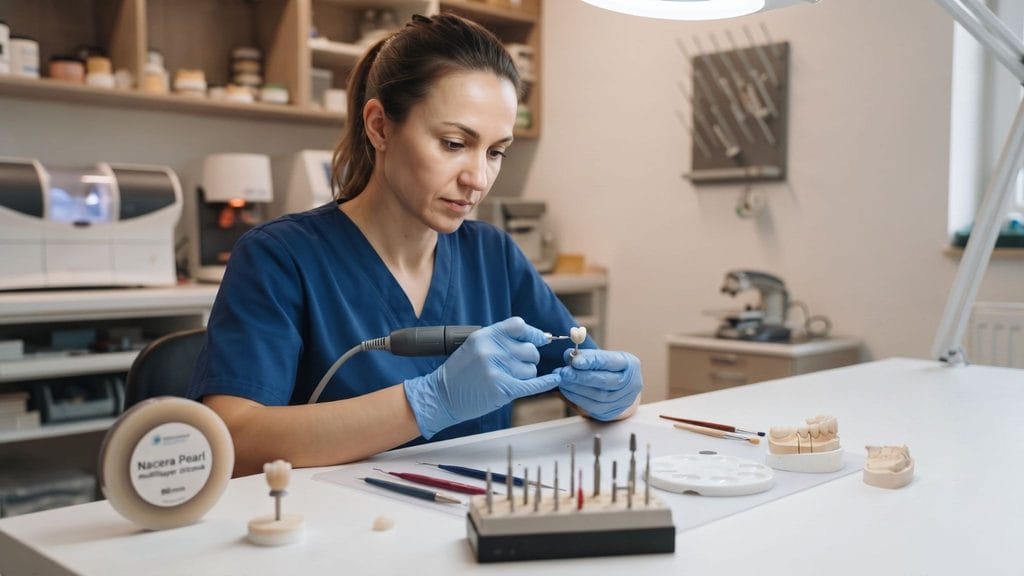
The process typically follows a digital workflow from scan to final restoration. After an intraoral or physical impression scan, the design is created using CAD software, then nested onto a pre-shaded multilayer zirconia disc positioned so the crown’s incisal edge aligns with the disc’s translucent zone.
A milling machine shapes the restoration in its pre-sintered, chalky state. The crown is then sintered in a high-temperature furnace, which shrinks it to final size and hardens the zirconia to its full strength. Technicians finish the restoration with surface staining, glazing, and polishing to refine the shade and texture before it ships to the practice.
An AI-driven digital design system can speed up this workflow considerably by automating margin detection, contact point adjustment, and anatomical shaping, reducing remakes and improving fit consistency case after case.
What Should Dentists Look for When Choosing a Multilayer Zirconia Dental Laboratory?
Not all multilayer zirconia is manufactured to the same standard, and not all labs mill it with the same precision. When evaluating a lab partner, consider these factors:
- Consistency of shade matching across multiple units in the same case.
- Warranty coverage on finished crowns and bridges, which reflects confidence in material and workmanship.
- Digital workflow compatibility with your intraoral scanner and design software.
- Turnaround time, especially for urgent or same-week cases.
- Clear communication about which zirconia formulation fits a given occlusal or esthetic situation.
Why Partner With Zirconia Express for Multilayer Zirconia Crowns and Bridges?
Choosing the right material is only half the equation. The lab producing it plays just as large a role in how a restoration performs and how it’s received by the patient.
Zirconia Express, a dental laboratory based in North Carolina, manufactures zirconia crowns and bridges using high-strength, high-aesthetic multilayer zirconia backed by up to a 5 year warranty. That warranty reflects a level of confidence in both the material sourcing and the milling precision behind every case.
For practices building out a fully digital workflow, Zirconia Express also offers digital dental cases supported by an AI-driven design system with three distinct anatomical shape options, giving dentists more control over the final contour and bite relationship before a crown ever leaves the lab. This combination of precision, consistency, and dependable turnaround is what modern digital dentistry requires, whether the case is a single anterior crown or a full arch restoration.
Dental practices that need reliable, natural-looking restorations without unpredictable delays are welcome to reach out to Zirconia Express to discuss case requirements and turnaround options.
Conclusion
High Aesthetic Multilayer Zirconia has changed what dentists and patients can expect from a same-day or lab-fabricated crown. It closes the long-standing gap between zirconia’s strength and the natural, layered appearance patients want to see in the mirror.
As Multilayer Zirconia Dental Crowns continue to improve in translucency and shade accuracy, they’re becoming the practical default for anterior and posterior restorations alike. Matching the right formulation to each patient’s bite, esthetic goals, and lab partner remains the key to predictable, long-lasting results.
FAQs
What is High Aesthetic Multilayer Zirconia used for?
It’s used to fabricate dental crowns and bridges that need both natural shading and strong load-bearing performance, commonly for anterior teeth, implant restorations, and multi-unit bridges.
Is multilayer zirconia stronger than porcelain?
Yes. Multilayer zirconia generally offers higher flexural strength than layered porcelain, making it more resistant to chipping and fracture under normal chewing forces.
How long do multilayer zirconia crowns last?
With proper care, multilayer zirconia crowns commonly last 10 to 15 years or longer, though lifespan depends on oral hygiene, bite forces, and the quality of the original fabrication.
What is the difference between monolithic and multilayer zirconia?
Monolithic zirconia is milled from a single uniform shade block, while multilayer zirconia is milled from a disc with graduated shade and translucency zones for a more natural appearance.
Are multilayer zirconia crowns suitable for front teeth?
Yes. Their gradient shading and higher incisal translucency make them one of the most popular choices for anterior crowns where esthetics are a priority.
How does a dental lab fabricate multilayer zirconia crowns?
Labs use a digital workflow that includes scanning, CAD design, milling from a pre-shaded disc, sintering, and finishing with staining and glazing to achieve the final natural appearance.