
What Is a Zirconia BruxZir Crown? Patient Guide
Getting a dental crown feels like a straightforward procedure until your dentist hands you a list of material options and suddenly you’re reading about zirconia, lithium disilicate, PFM, and something called a zirconia BruxZir crown. Most patients nod along and hope for the best. But you deserve a real explanation, especially when you’re about to invest in a restoration that could last a decade or longer.
This guide covers everything worth knowing about the zirconia BruxZir crown, what makes it different, when it makes the most clinical sense, how it compares to other crown materials, and why dental labs and dentists across the country keep choosing it for their most demanding cases.
The Science Behind the Name: What “BruxZir” Actually Means
The term “BruxZir” is not just a brand name pulled from thin air. It combines two words that tell the whole story: “brux” from bruxism (the clinical term for habitual teeth grinding or clenching) and “zir” from zirconia, the ceramic material at the core of the restoration. That combination signals exactly what this crown was purpose-built to handle: the relentless mechanical stress that destroys lesser restorations.
A zirconia BruxZir crown is a full-contour dental crown milled entirely from zirconium dioxide, a biocompatible ceramic compound used across various high-demand industries, including aerospace engineering and orthopedic implants. In dentistry, zirconia’s unique combination of flexural strength, chemical stability, and tissue compatibility makes it one of the most versatile restorative materials available today.
What truly separates a zirconia BruxZir crown from conventional crowns is its monolithic structure. Traditional porcelain-fused-to-metal (PFM) crowns are essentially layered constructions: a cast metal frame with porcelain fused on top. That layered design introduces a structural weak point at the ceramic-metal interface, which is where chips and fractures commonly originate. A zirconia BruxZir crown, by contrast, is carved from a single block of zirconia with no layering, no metal base, and no bonded porcelain that can flake off under pressure. One material, one solid structure, end to end.
From a mechanical standpoint, the difference is measurable. Published research consistently shows monolithic zirconia achieving flexural strength values above 900 MPa, more than double the 400 MPa range typical of lithium disilicate ceramics, and dramatically higher than the 100 to 300 MPa recorded for traditional porcelain materials. For patients with heavy bite forces or active bruxism, that margin is not a minor detail.
BruxZir Solid Zirconia Crown: The Benchmark Restoration for High-Load Cases
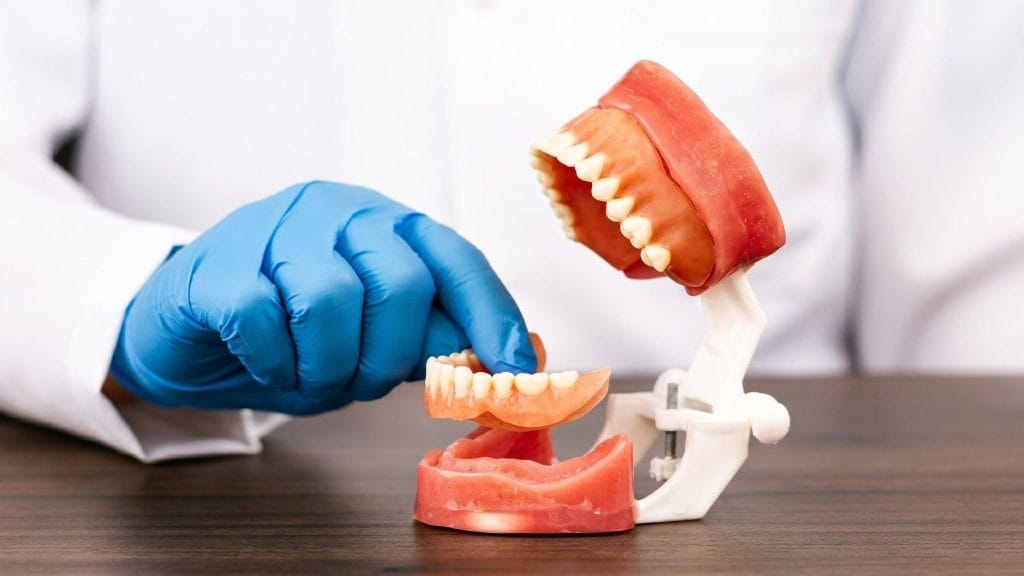
When dental professionals refer to the BruxZir solid zirconia crown, they are typically describing the original, high-density formulation developed for posterior restorations where mechanical performance is the primary concern. Think molars, second premolars, and implant-supported crowns in patients who regularly test the limits of their restorations.
The BruxZir solid zirconia crown is a fully anatomical restoration, meaning it replicates the natural shape of the tooth without requiring any additional porcelain overlay. The crown is milled to its final form, sintered to full density, and polished to a surface smooth enough to minimize wear on the opposing arch. No veneering, no layering, no fragile porcelain tips waiting to fracture under a heavy bite.
Here is how the BruxZir solid zirconia crown compares to the most common crown materials in clinical use today:
| Restoration Type | Core Material | Fracture Strength | Esthetic Range | Metal-Free | Best Application |
| BruxZir Solid Zirconia Crown | Monolithic zirconia | 900+ MPa | Good to Excellent | Yes | Posterior, bruxers, implants |
| Porcelain-Fused-to-Metal (PFM) | Metal + porcelain | 350 to 500 MPa | Good | No | General, non-esthetic zones |
| Lithium Disilicate (e.max) | Pressed glass ceramic | ~400 MPa | Excellent | Yes | Anterior, veneers |
| Full-Cast Gold | Metal alloy | 700+ MPa | Poor | No | Posterior, high-stress cases |
| Zirconia-Layered (Bi-layer) | Zirconia core + porcelain | ~600 MPa (core) | Excellent | Yes | Anterior with high aesthetic demand |
| PMMA Temporary Crown | Resin polymer | 80 to 120 MPa | Fair | Yes | Short-term provisional use |
Across nearly every functional category, the BruxZir solid zirconia crown leads or matches the competition. The one category where alternative materials still hold ground is maximum translucency for highly visible anterior teeth, an area where Glidewell’s newer BruxZir formulations are rapidly closing the gap.
BruxZir Full-Strength Zirconia: When the Priority Is Zero Compromise on Durability
The BruxZir full-strength zirconia formulation was developed with a clear clinical directive: create a crown that simply does not fail under realistic functional conditions. For patients who have fractured porcelain crowns, cracked PFM restorations, or destroyed previous restorations through grinding, this material represents a meaningful clinical upgrade.
BruxZir full-strength zirconia achieves its remarkable mechanical properties through a high-density crystal structure that resists crack propagation, one of the primary mechanisms behind ceramic fracture in clinical settings. When a crack begins forming in standard porcelain under stress, it tends to spread. In high-density zirconia, the material’s microstructure actually impedes crack growth through a process called transformation toughening, where the crystalline structure undergoes a phase transition that absorbs the mechanical energy driving the fracture.
In practical terms, this means BruxZir full-strength zirconia is particularly well-suited for:
- Molar and posterior premolar crowns in patients with documented bruxism or occlusal parafunctions
- Implant crowns, where the rigid implant-to-crown connection transmits bite forces more directly than natural tooth roots do
- Restorations in patients who have fractured or chipped previous ceramics
- Cases with limited occlusal clearance where a thinner restoration is needed without sacrificing strength
- Metal-sensitive patients who require a fully biocompatible, metal-free option
- Abutment crowns for fixed partial dentures that carry occlusal loading across multiple units
Because BruxZir full-strength zirconia is a single-material restoration, the fabrication process is also faster and more predictable. There is no separate veneering stage, no risk of porcelain separation during firing, and no need for the lab to manage the complex layering schedules that bi-layered ceramics require. That translates to shorter production timelines and a more consistent fit and occlusion right out of the box.
From Opaque to Outstanding: The Rise of the BruxZir Esthetic Zirconia Crown
Early zirconia restorations earned a reputation for looking slightly flat or chalky compared to natural teeth. Clinicians who tried using original BruxZir material on anterior teeth often ended up with crowns that were incredibly strong but noticeably artificial in the smile zone. The opacity that gave the material its strength also blocked the light-scattering behavior that makes natural tooth enamel look alive.
Glidewell addressed this directly by engineering the BruxZir esthetic zirconia crown, a reformulated version that substantially increases the material’s translucency without stripping out its durability advantage over conventional ceramics. Achieving that balance required changes at the microstructural level, specifically adjusting the ratio of zirconia crystal phases and incorporating trace additives that shift the material’s optical behavior while maintaining acceptable mechanical values.
The result is a crown that reads as a natural tooth in visible lighting conditions. Key optical and clinical characteristics of the BruxZir esthetic zirconia crown include:
- A gradient translucency profile that transitions from a more opaque cervical region to a more translucent incisal edge, mimicking how natural enamel behaves optically
- Compatibility with standard VITA shade guides, giving lab technicians and dentists a reliable framework for shade communication
- A surface texture that can be polished or custom-stained to match adjacent natural teeth with precision
- Maintained fracture strength values well above conventional lithium disilicate, providing meaningful durability even in the anterior zone
- Reduced risk of wear on opposing enamel, a clinically relevant advantage over traditional feldspathic porcelain
For cases where the crown will be visible when the patient smiles or speaks, the BruxZir esthetic zirconia crown removes the old trade-off between appearance and function. Dentists no longer need to steer esthetically conscious patients away from zirconia just because the crown involves a premolar or anterior tooth.
Inside the Full BruxZir Zirconia Crown Glidewell Product Family
The BruxZir zirconia crown Glidewell name encompasses a product range that has grown significantly since the original monolithic zirconia crown launched in the mid-2000s. Glidewell Dental Laboratories pioneered the clinical use of full-contour zirconia restorations and has since expanded the BruxZir line to address a wide range of case types.
Understanding the differences within the BruxZir zirconia crown Glidewell family helps clinicians match the right formulation to each patient’s specific functional and esthetic needs:
BruxZir Solid Zirconia (Original): The foundational product. Maximum strength, moderate translucency, ideal for posterior and high-load applications.
BruxZir Esthetic: Increased light transmission for anterior and premolar restorations, with maintained structural superiority over glass ceramics.
BruxZir NOW: Same-day zirconia engineered for in-office CAD/CAM milling systems, enabling single-visit crown placements.
BruxZir Anterior: The most translucent formulation in the family, developed specifically for full-contour anterior crowns where esthetic demands are highest.
BruxZir Radiant: The newest generation, incorporating multi-gradient coloring technology for a depth and luminosity that approach natural tooth optical properties.
Each formulation within the BruxZir zirconia crown Glidewell lineup shares the same commitment to fit precision, biocompatibility, and long-term clinical reliability that established BruxZir as a trusted name in restorative dentistry globally.
BruxZir Radiant Zirconia Crown: Where Strength Finally Meets Natural-Looking Beauty
The BruxZir radiant zirconia crown is the product of years of material science refinement aimed at one specific goal: making a zirconia crown that does not look like a zirconia crown. Natural teeth do not simply reflect light; they transmit it, scatter it internally, and produce the subtle luminosity that porcelain and earlier zirconia formulations struggled to replicate convincingly.
The BruxZir radiant zirconia crown incorporates a multi-layer gradient shading system built into the zirconia block itself before milling begins. Rather than relying entirely on external staining and glazing to achieve color depth, the material transitions through shade layers from incisal to cervical during the manufacturing process. When the crown is milled and sintered, those transitions remain, producing a restoration with built-in optical dimensionality.
Specific characteristics that distinguish the BruxZir radiant zirconia crown from earlier-generation zirconia restorations:
- Internal color gradients that produce a natural-looking incisal translucency with a warm, slightly hazy quality similar to natural enamel under light
- Reduced dependence on chairside shade adjustment, since the pre-shaded block provides a strong baseline for most common shade matches
- Suitable for full-arch rehabilitations, where visual consistency across multiple units is difficult to achieve with external staining alone
- Fracture resistance that remains substantially higher than lithium disilicate, keeping the BruxZir radiant zirconia crown viable for high-load posterior positions, even as it excels esthetically in anterior zones
The BruxZir radiant zirconia crown essentially reframes the conversation around zirconia esthetics. The question is no longer whether zirconia can look good enough; it is now whether patients can even tell the difference.
From Raw Block to Finished Restoration: How a Zirconia BruxZir Crown Gets Made
The path a zirconia BruxZir crown takes from raw material to your patient’s mouth involves a sophisticated chain of digital and physical manufacturing steps. Walking through that process explains why the final product is as precise and durable as it is.
Step 1: Case Capture: The dentist preps the tooth and records the prepared architecture, either through a conventional polyvinyl siloxane (PVS) impression or a digital intraoral scan exported as an STL file. Digital scans eliminate model-pouring variability and transmit directly to the lab’s design software.
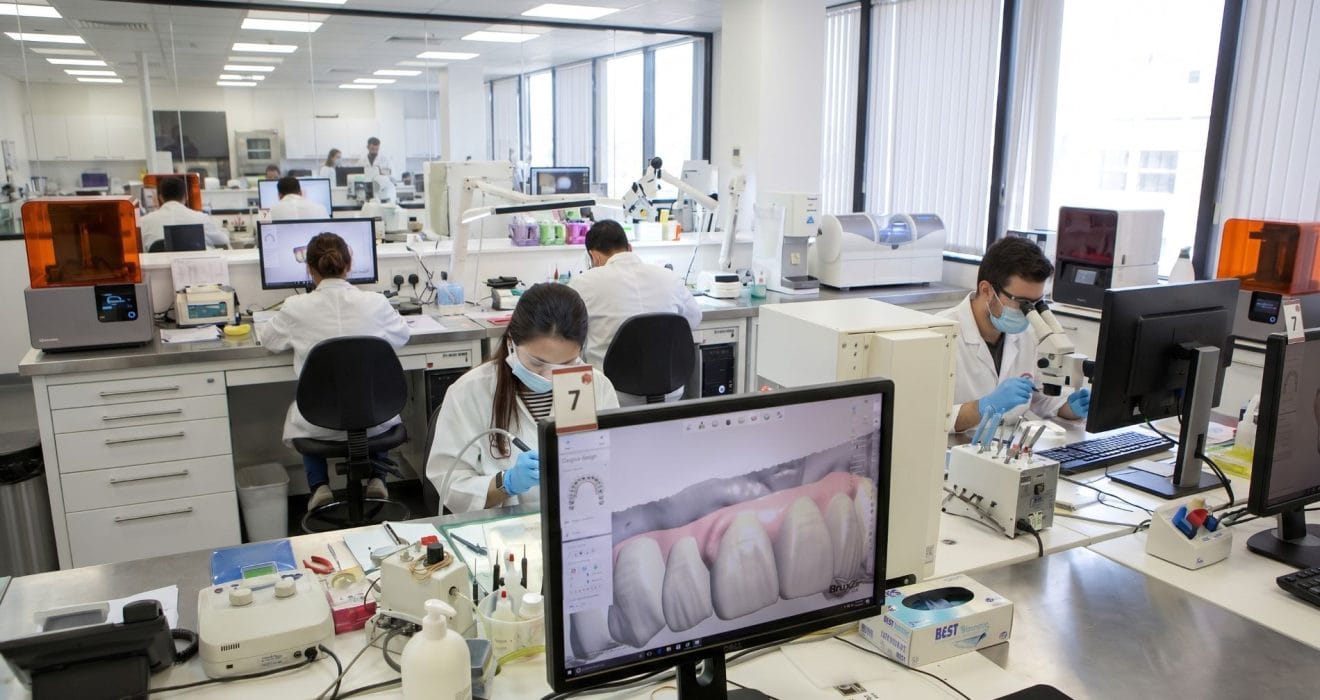
Step 2: CAD Design: A dental technician designs the crown using CAD software, modeling the full anatomy, including cusp morphology, marginal ridge position, occlusal contacts, and interproximal contacts. AI-assisted design platforms can now automate significant portions of this process, reducing production time and human error simultaneously.
Step 3: Pre-Sintered Milling: The design is sent to a multi-axis milling machine, which carves the crown from a pre-sintered zirconia disc or block. At this stage, the material is softer than fully sintered zirconia, which extends the life of milling tools and allows finer anatomical detail.
Step 4: Sintering Cycle: The milled crown goes into a high-temperature sintering furnace, typically reaching 1,450 to 1,500 degrees Celsius over a controlled time cycle. Sintering converts the partially crystallized zirconia into its fully dense, high-strength final state. The crown also undergoes predictable dimensional shrinkage (typically 20 to 25%) that the design software accounts for in advance.
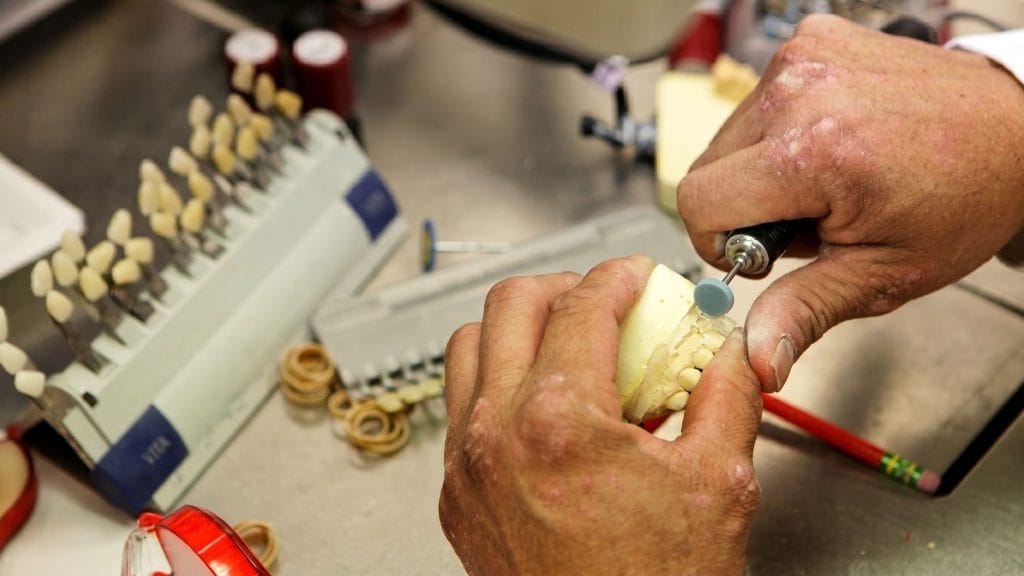
Step 5: Characterization and Glazing: After sintering, the crown is inspected and customized with surface stains and glaze to achieve final shade accuracy. The glaze layer also creates a smooth, tissue-friendly surface that minimizes wear on the opposing arch.
Step 6: Quality Control and Dispatch: The completed zirconia BruxZir crown is evaluated for marginal fit, occlusal balance, and surface quality before packaging and shipping to the dental practice.
Most full-service dental labs complete this process within one to five business days. Digital case submission shortens that timeline considerably, especially when AI-driven design systems process the case with minimal manual intervention.
Eight Clinical Reasons the Zirconia BruxZir Crown Outperforms Conventional Options
Dentists and patients choosing a zirconia BruxZir crown are not just selecting a material; they are selecting an outcomes profile. Here is what the clinical evidence and lab science say about those outcomes:
Documented Long-Term Survival:
Peer-reviewed studies on monolithic zirconia crowns report five-year survival rates above 96%, placing them among the most reliable restorative materials in clinical practice.
True Metal-Free Biocompatibility:
Unlike PFM crowns containing nickel, chromium, beryllium, or cobalt, a zirconia BruxZir crown contains none of the metallic compounds associated with allergic or inflammatory responses in sensitive patients.
Tissue-Friendly Margins:
Zirconia’s chemical inertness at the gingival margin means healthier tissue responses compared to metal-ceramic restorations, where ionic release can occasionally irritate periodontal tissues.
Preservation of Tooth Structure:
The mechanical strength of zirconia allows for minimal occlusal reduction in preparation, meaning less healthy tooth structure is sacrificed during crown preparation compared to bi-layered restorations that require more space for the porcelain layer.
No Graying at the Gumline:
One of the most common long-term complaints about PFM crowns is the dark gray line that appears at the margin as gum tissue naturally recedes with age. Because BruxZir full-strength zirconia contains no metal, this esthetic problem simply does not occur.
Enamel-Friendly Occlusal Surface:
Research comparing zirconia and porcelain surfaces against natural enamel wear consistently shows that polished zirconia produces less antagonist wear, particularly when properly glazed after sintering.
Cementation Flexibility:
A zirconia BruxZir crown can be placed using resin-modified glass ionomer, conventional glass ionomer, or resin cement, depending on case requirements. It does not mandate adhesive bonding protocols the way glass ceramics like e.max sometimes do.
Compatibility with Digital Workflows:
Full digital case submission, CAD design, and milling compatibility make zirconia BruxZir crown restorations a natural fit for practices transitioning to scan-based workflows.
Zirconia BruxZir Crown vs. IPS e.max: Choosing the Right Ceramic for the Right Case
Both the zirconia BruxZir crown and IPS e.max (lithium disilicate) represent the upper tier of modern ceramic restorations. The choice between them is not about which material is universally superior; it is about which properties align with the patient’s specific clinical needs.
| Evaluation Factor | Zirconia BruxZir Crown | IPS e.max Lithium Disilicate |
| Flexural Strength | 900+ MPa | ~400 MPa |
| Light Transmission | Moderate to High (varies by formulation) | High |
| Ideal Position | Posterior, high-load anterior | Anterior, veneers, low-stress zones |
| Bruxism Compatibility | Excellent | Limited |
| Implant Crown Use | Recommended | Not ideal |
| Adhesive Bonding Required | No (optional) | Often required |
| Risk of Cohesive Fracture | Very low | Low to moderate |
| Clinical Lifespan (avg. reported) | 10+ years | 8 to 10 years |
For a 45-year-old patient needing a molar crown after root canal therapy with a grinding habit, a zirconia BruxZir crown is the clinically appropriate choice. For a 28-year-old patient replacing a chipped upper lateral incisor with no parafunctional habits, e.max may offer a marginal esthetic advantage. That said, the BruxZir esthetic zirconia crown and BruxZir radiant zirconia crown now perform well enough in anterior positions that the esthetic gap has narrowed to case-specific decision-making rather than a categorical advantage for glass ceramics.
How a Zirconia BruxZir Crown Fits Into the Modern Dental Workflow
From a practice efficiency standpoint, the zirconia BruxZir crown fits naturally into both traditional and fully digital workflows. That flexibility is not accidental; it reflects deliberate design choices that make the material accessible regardless of where a practice sits on the digital adoption curve.
Practices still using conventional impressions send physical models to the lab, where the case is scanned and processed digitally. Practices using intraoral scanners submit STL files directly, eliminating the model stage and compressing the timeline between prep appointment and crown delivery. Either path produces a zirconia BruxZir crown with the same marginal accuracy and occlusal precision.
The cementation appointment is similarly uncomplicated. Unlike lithium disilicate crowns, which often require hydrofluoric acid etching and silane treatment for adequate bond strength, a zirconia BruxZir crown can be placed using standard cementation protocols. That reduces chairtime and eliminates one source of technique sensitivity in the delivery appointment.
For practices focused on minimizing remakes, adjustments, and callbacks, the predictability of a zirconia BruxZir crown represents genuine operational value, not just a clinical benefit.
Why Partnering with Zirconia Express Is the Smart Move for Your Practice’s Crown and Bridge Cases
If you are a dental professional serious about delivering consistent, high-quality restorations, the laboratory you choose matters as much as the material you prescribe. Zirconia Express, a North Carolina-based dental lab, is built specifically around the needs of dental practices that demand more from their lab partner.
Here is what separates Zirconia from the crowded lab market:
Crowns and Bridges Backed by a 5-Year Warranty: Every zirconia BruxZir crown and fixed bridge that leaves Zirconia’s facility carries a five-year warranty, one of the strongest guarantees in the industry. That level of confidence reflects both the quality of the materials and the precision of the fabrication process. When you tell a patient their crown is warranted for five years, that is a conversation that builds trust and differentiates your practice.
AI-Powered Digital Cases with 3 Shape Design Technology: Zirconia’s digital workflow is built on the 3 Shape platform, integrating AI-driven design systems that streamline case processing from scan to final restoration. Three shape options give clinicians the flexibility to specify exactly the anatomy and proportions they need, while the AI-assisted design engine ensures accuracy that reduces the need for chairside adjustments. Submit your cases digitally and let the system deliver restorations engineered to fit the first time.
A Lab Partner Built for Dental Professionals: Zirconia operates exclusively as a business-to-business dental laboratory. Every system, process, and service offering is structured around the workflow demands of dental practices, not consumer-facing timelines or priorities. Your cases are handled by a team that understands what a tight schedule, a challenging bite registration, and a patient with high aesthetic expectations actually mean in a clinical context.
Practices ready to raise the standard on their crown and bridge outcomes and deliver the confidence of a five-year warranty to every patient who gets a restoration should make Zirconia their next lab call.
Conclusion:
Ten years ago, choosing a crown material involved accepting real trade-offs: strength or esthetics, metal or ceramic, longevity or appearance. The zirconia BruxZir crown has systematically dismantled most of those trade-offs. With the original BruxZir solid zirconia crown setting the benchmark for durability, the BruxZir full-strength zirconia handling the most demanding occlusal environments, the BruxZir esthetic zirconia crown bringing visual quality to everyday restorations, and the BruxZir radiant zirconia crown pushing into territory once reserved for pressed ceramics, the product family now covers nearly the full clinical spectrum.
The BruxZir zirconia crown Glidewell lineup did not get to this point by being incrementally better than what came before. It got here by rethinking what a dental crown could be made of, how it could be manufactured, and what clinical outcomes patients and dentists should reasonably expect from a well-made restoration.
For dental practices looking to prescribe restorations with confidence, and for patients looking to invest in a crown that earns its place in their mouth for the long term, the zirconia BruxZir crown represents a clear, evidence-backed, clinically supported choice.
FAQ’s
What is a zirconia BruxZir crown made of?
It is made from zirconium dioxide, a strong ceramic material used for durable dental restorations. The crown is monolithic, meaning it is carved from a single solid block.
How long does a BruxZir crown last?
A BruxZir crown can last around 10–15 years or more with proper care. Good oral hygiene and regular dental visits help extend its lifespan.
Is a zirconia BruxZir crown better than porcelain?
Zirconia is stronger and more resistant to fractures than porcelain crowns. Porcelain may look slightly more natural in some front-tooth cases.
Do zirconia crowns look natural?
Yes, modern zirconia crowns are designed to match natural tooth color and light reflection. Newer versions offer improved translucency for a realistic appearance.
Are BruxZir crowns safe for gums?
Yes, they are metal-free and highly biocompatible with gum tissue. They reduce the risk of irritation and gum discoloration.
Can zirconia BruxZir crowns be used on front teeth?
Yes, esthetic and radiant versions are suitable for front teeth. They provide better color matching and natural-looking results.