

Choosing the Right Material: The Dental Layered Zirconia Crown
Choosing a crown material is a major decision for your smile, comfort, and long‑term oral health. A Dental Layered Zirconia Crown is one of the most advanced options available today, combining a strong zirconia base with a beautifully aesthetic outer porcelain layer. For many patients, this crown type offers a balance of strength and natural appearance that is hard to match.
Understanding how a Dental Layered Zirconia Crown works, how it compares to other options, and what to expect from the process and the cost will help you feel confident when you sit in the dental chair. This guide walks you through what you need to know in clear, patient‑friendly language.
What is a Dental Layered Zirconia Crown, and when is it recommended?
A Dental Layered Zirconia Crown is a two‑layer crown with a strong zirconia core and a lifelike porcelain exterior, recommended when you need both high strength and a very natural tooth appearance. It is often used for front teeth, premolars, and visible areas where your smile and bite both matter.
In more detail, a Dental Layered Zirconia Crown is built from:
- Zirconia substructure (core): This is a high‑strength, tooth‑colored ceramic that forms the internal “skeleton” of the crown. Zirconia is known for exceptional fracture resistance, making it ideal for withstanding chewing forces.
- Layered ceramic/porcelain surface: On top of the zirconia, a dental technician artistically layers porcelain or glass‑ceramic to mimic the subtle translucency, texture, and color variations of a natural tooth.
This layered design allows your dentist and dental lab to fine‑tune shade, translucency, and shape so the crown blends seamlessly with neighboring teeth. Compared with a purely metal‑based or opaque crown, a Dental Layered Zirconia Crown can look remarkably natural, especially in strong lighting or close‑up photos.
Dentists often recommend a Dental Layered Zirconia Crown when:
- You need a crown in the front teeth or premolars, where esthetics are critical.
- You want a durable material, but are concerned about the “flat” or less translucent look that sometimes occurs with a Monolithic zirconia crown.
- You have existing crowns or veneers and want your new restoration to match them as closely as possible.
In contrast, a Full zirconia crown (also called a monolithic zirconia crown) has no external porcelain layer. It is carved entirely from zirconia and is excellent for strength, but often slightly less lifelike in highly visible areas compared to a carefully crafted Dental Layered Zirconia Crown.
How is a Dental Layered Zirconia Crown prepared and placed?
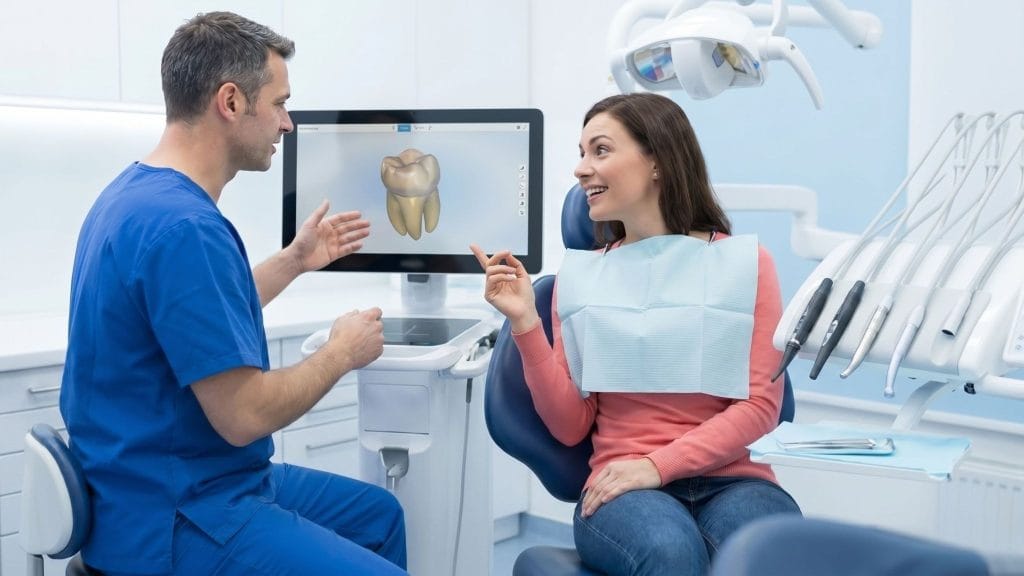
A Dental Layered Zirconia Crown is prepared and placed through a series of precise, step‑by‑step procedures that protect your tooth while creating a crown that fits snugly and looks natural. The process usually takes two visits, sometimes three, depending on your case and the technology at your dental clinic.
Initial evaluation and treatment planning
At the first visit, your dentist will:
- Take a detailed medical and dental history.
- Examine the tooth (and surrounding gum tissue) that may need the crown.
- Use X‑rays or 3D imaging to assess the root, bone support, and any existing fillings or cracks.
If the tooth has deep decay or previous root canal treatment, additional procedures may be required before the Dental Layered Zirconia Crown is placed.
What is involved in Layered zirconia crown prep?
Layered zirconia crown prep (preparation) means shaping the natural tooth so it can securely hold a Dental Layered Zirconia Crown without looking bulky or compromising strength. The goal is to remove as little healthy tooth as possible while creating enough room for both the zirconia core and the porcelain layering.
During this step, your dentist will typically:
- Numb the tooth and the surrounding area with local anesthesia for your comfort.
- Gently remove any decay or old restorations that cannot be retained.
- Shape the tooth into a slightly tapered form, reducing the top and sides by a controlled thickness to allow space for the crown’s layers.
- Smooth and refine the margins (edges) where the crown will meet your gumline to encourage a good seal and easier cleaning.
The amount and pattern of reduction in a Layered zirconia crown prep are carefully chosen to accommodate both the zirconia and the porcelain overlay. Because the layered design needs a bit more space than a purely monolithic restoration, meticulous planning is essential.
For comparison, a Monolithic zirconia crown Prep can sometimes be slightly more conservative in terms of tooth reduction, because no extra room is needed for a separate outer porcelain layer. Your dentist will consider your bite, esthetic demands, enamel thickness, and opposing teeth when choosing between a layered and a monolithic approach.
Digital impressions and crown design
After preparation, the dentist takes an impression of your tooth:
- Digital impressions with an intraoral scanner are increasingly common, capturing a 3D image of your teeth.
- Traditional impressions with trays and impression material may still be used in some clinics.
This impression is sent to a dental lab, often via a digital workflow. The lab designs the zirconia core and the porcelain layering based on your bite, shade, and facial esthetics. Advanced systems ensure that the Dental Layered Zirconia Crown follows the natural contours of your tooth while aligning with your chewing pattern.
Temporary crown and waiting period
While the final Dental Layered Zirconia Crown is being fabricated, your dentist will usually place a temporary crown to protect the prepared tooth. You will wear this temporary crown for a short time, typically one to two weeks, and should avoid very sticky, hard, or chewy foods on that side.
Final try‑in and cementation
At the second visit:
- The dentist removes the temporary crown and cleans the tooth.
- The new Dental Layered Zirconia Crown is tried in to check the fit, contact with neighboring teeth, bite alignment, and shade match.
- Any small adjustments in shape or bite are made chairside.
- Once you and your dentist are satisfied, the crown is bonded or cemented permanently to the prepared tooth.
After cementation, you should be able to bite and speak normally, although your dentist may advise eating softer foods for the first day to allow the cement to fully set.
How does a Dental Layered Zirconia Crown compare with other crown materials?
A Dental Layered Zirconia Crown offers a unique blend of strength and esthetics that sets it apart from many traditional crown materials, especially in visible areas of your smile.
Comparison with porcelain‑fused‑to‑metal (PFM) crowns
Porcelain‑fused‑to‑metal crowns have been widely used for decades. They combine a metal substructure with an outer porcelain layer. While they are strong, they have some limitations:
- The metal can sometimes show as a dark line at the gumline, especially if gums recede with age.
- Light does not pass through metal as it does through tooth and ceramic, so PFMs can appear more opaque.
- Allergies or sensitivities to certain metals are possible in a small percentage of patients.
A Dental Layered Zirconia Crown eliminates the metal base, replacing it with tooth‑colored zirconia. This often results in a more translucent, lifelike appearance and avoids the grayish margin that can appear with older PFM restorations.
Comparison with a Monolithic zirconia crown
A Monolithic zirconia crown is milled entirely from a single block of zirconia. It is known for:
- Exceptional strength and fracture resistance
- High durability for back teeth that endure heavy chewing forces
- Reduced risk of outer porcelain chipping, because there is no separate layering
However, monolithic zirconia can sometimes appear more opaque or less naturally translucent, especially in the front of the mouth. A Dental Layered Zirconia Crown, with its outer porcelain layer, can more closely imitate the natural optical properties of enamel.
For patients who grind their teeth heavily or need crowns on molars that are not very visible, a Monolithic zirconia crown may still be preferred for sheer strength. But for visible teeth where appearance is a top priority, a Dental Layered Zirconia Crown is often the better balance.
Comparison with a Full zirconia crown and other ceramics
A Full zirconia crown is similar in concept to a monolithic zirconia crown—solid zirconia without external porcelain. Newer generations of zirconia have improved translucency, making them look more natural than earlier versions. Still, a carefully characterized porcelain layering, as in a Dental Layered Zirconia Crown, often provides superior esthetics and shade matching.
Compared with traditional glass‑ceramic or feldspathic porcelain crowns, a Dental Layered Zirconia Crown typically offers:
- Higher core strength (thanks to zirconia)
- Better suitability for patients with moderate bite forces
- Reduced the risk of catastrophic fracture of the entire crown
In summary, a Dental Layered Zirconia Crown is often chosen when you and your dentist want to combine natural esthetics, metal‑free construction, and high functional strength, particularly in areas that show when you smile.
What affects Layered zirconia crown cost and is it worth it?
Layered zirconia crown cost is influenced by several factors, including the dental clinic’s location, the complexity of your case, the quality of the dental laboratory, and whether digital technologies and premium materials are used. While exact fees vary, a Dental Layered Zirconia Crown typically falls in the higher range of crown options because of the materials and artistry involved.
Key factors that shape the cost include:
- Geographic region and clinic fees: Practices in metropolitan or high‑cost areas may have higher fees than those in smaller towns.
- Dentist’s expertise and training: Clinicians with advanced training in restorative and cosmetic dentistry may charge more, reflecting their experience and outcome quality.
- Laboratory quality: A top‑tier lab with skilled technicians, premium ceramics, and precise color‑matching protocols can increase cost but also significantly improve how your Dental Layered Zirconia Crown looks and functions.
- Case complexity: Teeth with large fractures, deep decay, or prior root canal treatment may need additional procedures (such as posts, build‑ups, or gum reshaping), which add to overall treatment cost.
- Digital workflows and materials: Use of digital scans, AI‑aided design, and high‑tech milling units can affect pricing but generally provide more accurate, efficient, and comfortable experiences.
When considering the layered zirconia crown cost, it is helpful to think in terms of value over time, not just the initial fee. If a Dental Layered Zirconia Crown offers:
- Longer functional life
- More natural aesthetics
- Better comfort and bite
- Less need for future remakes
then many patients find that the investment is worthwhile, especially for teeth that are central to their smile or daily function.
Your dentist or treatment coordinator can provide a personalized estimate after a full evaluation, and may discuss insurance contributions and payment options suited to your situation.
Caring for your Dental Layered Zirconia Crown for long‑term success
A Dental Layered Zirconia Crown is designed for durability, but its longevity depends heavily on your home care and regular professional visits. With proper attention, it can serve you comfortably for many years.
Daily oral hygiene
You should care for your Dental Layered Zirconia Crown just like a natural tooth:
- Brush twice daily with a soft‑bristled toothbrush and fluoride toothpaste.
- Floss gently around the crown, including under any contact areas, to keep the gumline healthy.
- Consider interproximal brushes or water flossers if your dentist recommends them.
Good hygiene helps prevent decay in the remaining natural tooth under the crown and keeps your gums healthy, which supports the crown’s margin and appearance.
Habits and diet
To protect the porcelain layer and underlying zirconia:
- Avoid using your teeth to open packages, crack nuts, or bite ice.
- Limit very hard, sticky, or chewy foods on the crowned tooth, especially in the early period after placement.
- If you grind or clench your teeth, ask your dentist about a night guard to reduce stress on the crown.
While zirconia is exceptionally strong, the outer porcelain of a Dental Layered Zirconia Crown should still be treated with care. Small chips are sometimes repairable, but prevention is always better.
Regular dental visits
Plan regular check‑ups and cleanings, usually every six months or as advised by your dentist. At these visits, your dental team will:
- Check the integrity of your Dental Layered Zirconia Crown.
- Monitor the gums around the crown for inflammation or recession.
- Evaluate your bite and make minor adjustments if needed.
- Reinforce personalized home‑care techniques.
Consistent maintenance is one of the best ways to ensure your Dental Layered Zirconia Crown feels comfortable, looks beautiful, and serves you well for the long term.
Why you should schedule your Dental Layered Zirconia Crown appointment with Zirconia Express
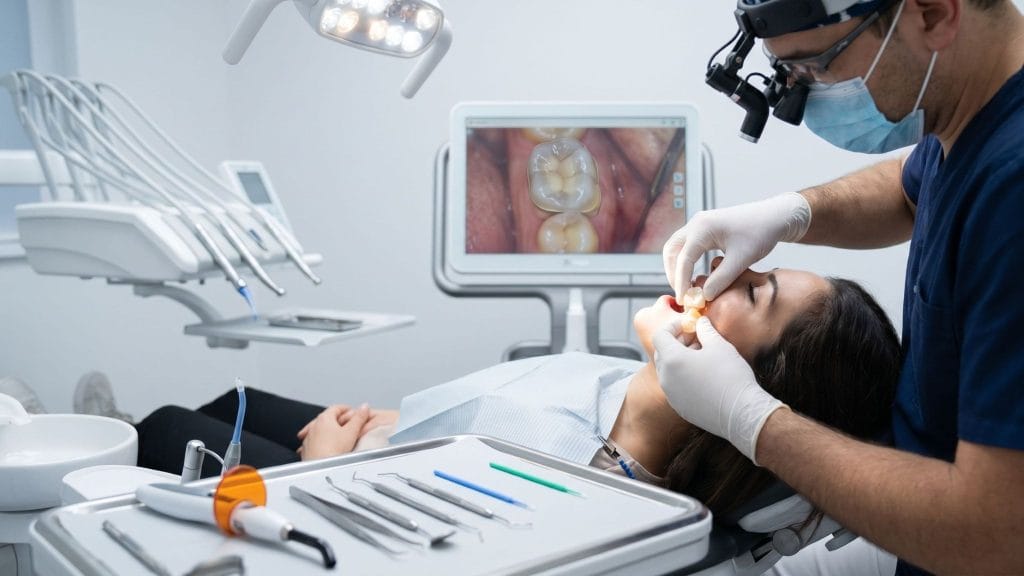
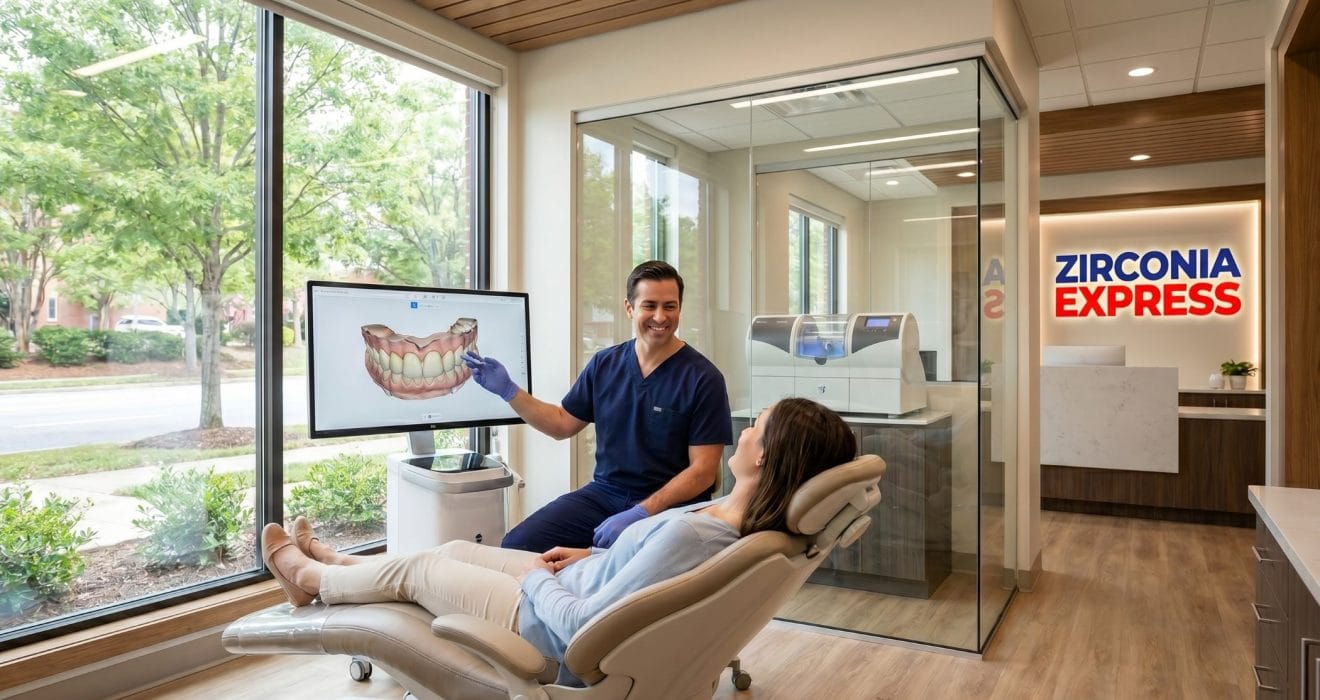
Scheduling your Dental Layered Zirconia Crown treatment with Zirconia Express in North Carolina gives you access to a clinic that focuses on advanced zirconia‑based dentistry, supported by modern digital technology and a calm, patient‑centered environment. This combination is especially valuable when you are investing in a crown that affects both your health and your confidence.
Zirconia Express offers:
- Zirconia crowns and bridges with up to a 5‑year warranty: This reflects their confidence in the materials they use, the quality of their workmanship, and their long‑term commitment to your oral health. Knowing that your restoration is backed by a warranty can provide genuine peace of mind.
- Digital cases with AI‑driven design systems and three shape options: Their digitally guided workflow helps create Dental Layered Zirconia Crowns and other restorations that are precisely tailored to your bite, facial features, and esthetic preferences. AI‑supported design, combined with the choice of three anatomical shapes, allows for a crown that feels balanced and looks naturally integrated with your smile.
At Zirconia Express, the experience is designed to be professional yet serene. From your consultation to the final placement of your Dental Layered Zirconia Crown, the team prioritizes:
- Clear explanations of each step, so you understand how your tooth is being restored.
- Respectful, gentle chairside care that supports anxious or sensitive patients.
- Thoughtful scheduling and follow‑up, so you never feel rushed.
Whether you are deciding between a Dental Layered Zirconia Crown, a Full Zirconia Crown, or another restorative option, the clinicians at Zirconia Express can guide you through the choices, explain the differences, and help you select what truly fits your needs. Their blend of human expertise and advanced digital tools is well‑suited to complex esthetic and functional cases.
For those living in or around North Carolina who are weighing their crown options, whether for a brand-new restoration or an aging one that needs replacing, a consultation at Zirconia Express offers a calm, informed starting point to determine if a Dental Layered Zirconia Crown is the right fit for your smile.
Conclusion:
A Dental Layered Zirconia Crown is often the right choice when you seek a restoration that combines strength, natural beauty, and long‑term performance. Its zirconia core offers durability for everyday chewing. At the same time, the carefully layered porcelain surface allows for precise color and translucency, so the crown blends with your smile rather than drawing attention to itself.
Compared with traditional porcelain‑fused‑to‑metal restorations, a Dental Layered Zirconia Crown eliminates the metal base and potential dark lines at the gumline. Compared with a purely Monolithic zirconia crown, it typically offers a more refined, lifelike appearance, especially in the front of the mouth, while still maintaining excellent functional strength.
Your personal suitability depends on factors such as tooth location, bite forces, esthetic goals, and overall oral health. A thorough consultation with a dentist experienced in zirconia restorations will help clarify whether a Dental Layered Zirconia Crown, a full zirconia approach, or another material is ideal in your situation.
When paired with attentive home care, regular professional check‑ups, and a thoughtful choice of provider, such as the digitally advanced, zirconia‑focused team at Zirconia Express, a Dental Layered Zirconia Crown can be a calm, confident step toward a stronger, more beautiful smile.
FAQ’s
How long does a Dental Layered Zirconia Crown last?
With proper care, it can last 10–15 years or longer. Regular brushing, flossing, and dental visits help extend its lifespan.
Is the procedure painful?
The procedure is usually painless because local anesthesia is used. Mild sensitivity after placement is normal and temporary.
What affects the cost of a layered zirconia crown?
The cost depends on clinic location, dentist expertise, lab quality, and case complexity. Advanced digital technology may also affect pricing.
Can a Dental Layered Zirconia Crown chip?
Yes, the porcelain layer can chip under heavy pressure. Avoid hard foods and wear a night guard if you grind your teeth.
How do I care for my crown?
Brush and floss daily, avoid biting hard objects, and visit your dentist regularly. Good care keeps your crown strong and long-lasting.